

Assam's 2026 Assembly Elections: A Political Map Transformed by Delimitation
The upcoming 2026 Assam assembly elections will be contested on a fundamentally altered political landscape, thanks to the comprehensive delimitation exercise completed in 2023. This boundary redrawing represents the first such overhaul in nearly fifty years, effectively dismantling traditional strongholds and re-engineering voter demographics across the state.
Redrawing the Electoral Battlefield
This new political geography has not merely adjusted lines on a map; it has fundamentally shifted the balance of power. Every major political party is now compelled to completely rethink its electoral strategies for a reconfigured battlefield. The delimitation process has particularly diluted several constituencies where Bangladesh-origin immigrant Muslims historically formed decisive voting blocs.
This demographic dilution has directly reduced the number of seats where parties like the All India United Democratic Front (AIUDF) and the Indian National Congress traditionally held considerable sway. Simultaneously, the influence of tribal voters has been amplified through an increase in reserved seats for Scheduled Tribes from 16 to 19.

Indigenous Communities as Decisive Voters
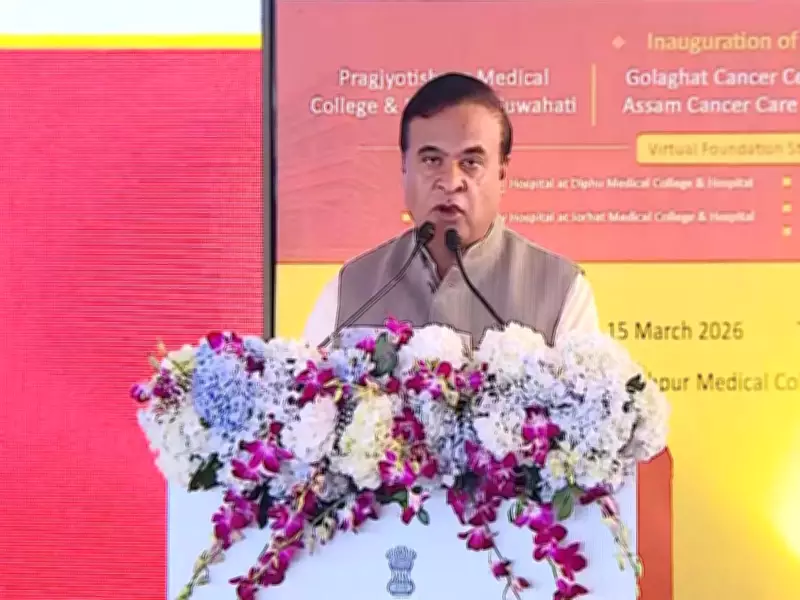
Chief Minister Himanta Biswa Sarma has emphasized that the delimitation exercise has positioned indigenous communities as decisive voters in a staggering 103 out of 126 assembly seats. Assam has long grappled with issues surrounding migration from Bangladesh, with many individuals having their citizenship regularized under the 1985 Assam Accord, yet their original identity remains a persistent political factor.
In the 2021 elections, 31 Muslim candidates secured victory, with 15 from AIUDF and the remainder from Congress. The recent boundary redrawing has fragmented many of these constituencies, merging them with areas having indigenous majorities, thereby diluting their previous demographic weight. This has reportedly shrunk the number of Muslim-decisive seats to approximately 23.
BJP's Consolidation and Strategic Positioning
The Bharatiya Janata Party, already in power for two consecutive terms, appears to have consolidated its advantage under this new electoral setup. The party is focusing intently on identity politics, extensive welfare schemes, and robust grassroots mobilization to secure support among indigenous groups.
The BJP-led government's persistent drives to evict encroachers—predominantly Bangladesh-origin Muslims—from forest and government lands, coupled with granting land pattas to indigenous landless families and descendants of tea garden workers, have strategically positioned CM Sarma. He is portrayed as a resolute leader and the primary protector of the indigenous Assamese people's jati, mati, bheti (identity, land, and homeland), a core poll plank for the BJP since 2016.
Complementing this identity-focused strategy, the government's pre-poll budget for 2025-26 unleashed financial benefits exceeding ₹5,000 crore. These allocations target women and youth empowerment, undergraduate and graduate students, young entrepreneurs, NFSA subsidies, one-time aid to tea workers, and funds for namghars (Vaishnavite temples).
Furthermore, the BJP has not only fulfilled its 2021 promise of providing one lakh government jobs but has exceeded it with an additional 60,000 appointments. A crucial factor has been the revival and cleansing of the state public service commission, restoring its credibility as a recruitment body after previous corruption allegations.
Allies and Opposition in the New Landscape
With indigenous and tribal constituencies gaining prominence, BJP's allies—including the Asom Gana Parishad (AGP), Bodoland People’s Front (BPF), United People’s Party Liberal (UPPL), and Rabha Hasong Joutha Mancha—are also well-positioned to expand their political reach.
For the Congress party, however, the delimitation poses a severe challenge. Its traditional bases have been fragmented, forcing it to attempt stitching together a mega alliance with several regional parties like the Assam Jatyia Parishad, All Party Hill Leaders Conference, CPM, and CPI(ML). While Congress remains the principal opposition, its capacity to consolidate anti-incumbency sentiment is significantly weakened.

Adding to Congress's troubles, Chief Minister Sarma's direct attacks on APCC president Gaurav Gogoi and his wife over alleged Pakistan links—buttressed by an SIT investigation report—are viewed as potential electoral dynamite ahead of the polls. Congress cries political vendetta, with Gogoi dismissing the allegations as bogus propaganda, but the BJP is amplifying the issue in rallies to paint the opposition as soft on infiltration.
Without a compelling regional narrative, Congress risks being overshadowed by BJP's dominance in the newly configured constituencies.
AIUDF's Struggle for Relevance
Amid the BJP's strong identity push, the AIUDF, led by Badruddin Ajmal, faces perhaps the most severe impact. Its strongholds in previously Muslim-decisive areas have been diluted, leaving the party with fewer winnable seats. The once influential minority-based party now struggles to maintain relevance, as its minority-centric strategy loses traction in constituencies now dominated by indigenous voters.
A Historic Political Turning Point
The last delimitation of assembly and parliamentary constituencies in Assam was conducted in 1976, based on the 1971 census. For nearly five decades, the state's political geography remained static, even as profound demographic shifts, migration patterns, and population growth altered ground realities.
This makes the 2026 elections far more than a routine contest for power. It represents a definitive turning point in Assam's political trajectory, marking the first realignment of constituencies in half a century. The outcomes will decisively reshape who holds influence and who faces marginalization in Assam's future political narrative.





