

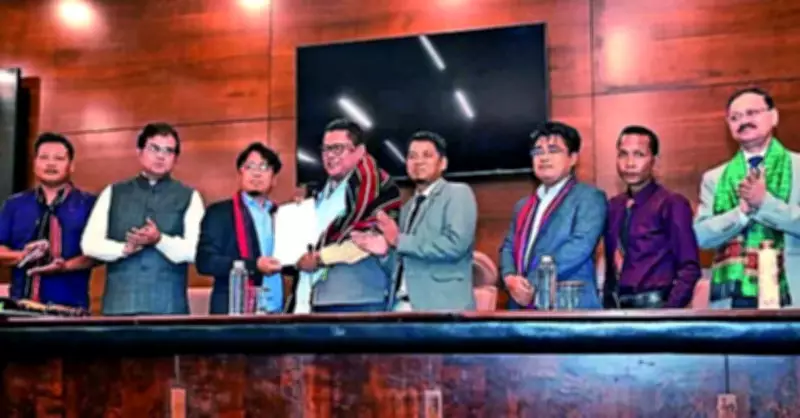
Assam Government Inks Historic Peace Agreements with Kuki and Hmar Militant Outfits
In a landmark development aimed at fostering lasting peace, the Assam government on Sunday formalized memorandums of settlement (MoS) with three Kuki militant organizations and one Hmar outfit. An official statement from the state administration declared that these accords signify the conclusive end of 'ethnic militancy' within Assam, marking a pivotal chapter in the region's journey toward stability and reconciliation.
Details of the Signatory Groups and Their Historical Context
The four groups involved in this peace process are the United Kukigam Defence Army (UKDA), Kuki Revolutionary Army (KRA), Kuki Liberation Organisation (KLO)/Kuki Liberation Army (KLA), and the Hmar People’s Convention-Democratic (HPC-D). These organizations had previously laid down their arms in 2012 under the supervision of the Government of India and then Chief Minister Tarun Gogoi, entering into a Suspension of Operations (SoO) pact at that time.
Historical formation timelines of these groups are as follows:

- UKDA was established in 2010 in the Karbi Anglong district.
- KRA originated in 2000, also within Karbi Anglong.
- KLO and KLA were founded in 1992 and 1993, respectively, in the Dima Hasao region.
- The Hmar outfit, HPC-D, came into existence during 2003-04.
Negotiation Process and Key Provisions of the Agreements
The official statement highlighted that multiple rounds of tripartite discussions involving the central government, state authorities, and the militant groups were conducted over several years. This negotiation process gained significant momentum under the current state government, ultimately culminating in the signing of these comprehensive settlements.
The agreements are structured into two distinct pacts:
- One pact with the collective Kuki groups.
- A separate pact with the Hmar outfit.
These pacts mandate the establishment of dedicated welfare and development councils for both the Kuki and Hmar communities. The councils will be headquartered in Guwahati and are designed to address the specific socio-economic needs of these populations. They will receive assured budgetary support from the state government, with the councils preparing detailed budgets based on their requirements and submitting them to the state’s transformation and development department for official approval.
Furthermore, the government has committed to rehabilitating the cadres of these groups and providing financial compensation to the families of militants who lost their lives during the insurgency period.
Broader Implications and Recent Peace Initiatives in Assam
"With these two pacts, the ethnic militancy comes to an end in the state of Assam," the statement emphatically declared. This development is part of a larger, ongoing peace initiative in the region. In recent years, the Centre and the Assam government have successfully signed similar memorandums of settlement with various other groups, including Bodo, Karbi, Adivasi factions, and the United Liberation Front of Asom (Ulfa). These efforts have led to the rehabilitation of over 9,000 former cadres.
As part of the disarmament process associated with these peace agreements, the involved groups have collectively surrendered a substantial arsenal. This includes 1,012 firearms, 25,488 rounds of ammunition, and 34 grenades, significantly enhancing the security landscape of Assam.






