

Karnataka's Ballot Paper Plan for Local Polls Sparks Congress Rift
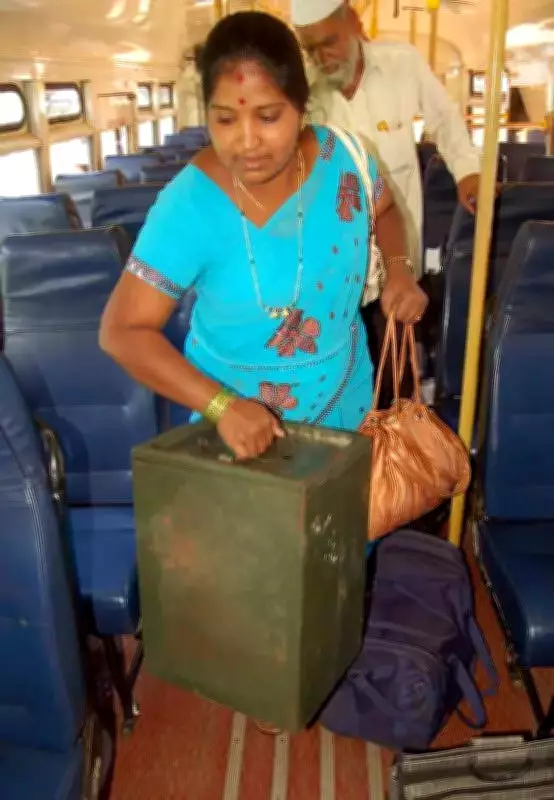
The Karnataka government's decision to use traditional ballot papers instead of electronic voting machines (EVMs) in upcoming zilla and taluk panchayat elections has triggered significant unease within the ruling Congress party. This move, part of a broader national campaign against EVMs, has exposed divisions among legislators despite official claims of enhancing electoral credibility.
Legal Framework and Government Justification
Rural Development and Panchayat Raj Minister Priyank Kharge announced that the Karnataka Gram Swaraj (Amendment) Bill, 2026, is prepared and will be introduced in both legislative houses during the budget session starting March 6. This legislation aims to provide legal sanctity to the ballot paper approach.
"The intention is to ensure credibility of elections and bring in much-needed transparency to voting and counting processes," Priyank stated emphatically. "The Centre failed to address our concerns about EVMs which forced us to prepare ballot papers."

The government has already amended the Greater Bengaluru Governance Act to permit ballot papers in civic elections for the five city corporations. Furthermore, it plans to grant the Karnataka State Election Commission (SEC) the authority to choose between EVMs or ballot papers for local body polls, which the SEC independently oversees unlike assembly and parliamentary elections conducted by the Election Commission of India.
Internal Opposition and Concerns
However, a substantial section of Congress legislators has expressed reservations, arguing this shift could revive perceptions of electoral manipulation and represent a technological regression. Deputy Chief Minister DK Shivakumar's brother and former MP DK Suresh recently declared that the move would take the system backward, a position he has reiterated publicly.
Many lawmakers privately point to the Malur assembly seat case as evidence supporting EVM reliability. Congress MLA KY Nanje Gowda's election, initially overturned by the high court after a recount, was ultimately upheld by the Supreme Court last week following detailed examination of the counting process.
Nanje Gowda, who won the 2023 polls by 248 votes against BJP's KS Manjunathgowda, credited EVMs for the favorable verdict. "It's a case in point," he noted, explaining that data from the control unit, VVPAT slips, and booth-level agents matched precisely, with only minor discrepancies in manually counted postal ballots. "But as a disciplined worker, I will toe the line of my party."
SEC Defense and Practical Considerations
State Election Commissioner GS Sangreshi defended the government's proposal, highlighting practical considerations alongside constitutional provisions. "Using ballot papers is not unconstitutional as the Constitution provides the option to use either EVM or ballot paper," he asserted.
Sangreshi pointed out that existing EVMs are approximately 15 years old and due for disposal, while questioning the inconsistency in election methods. "When ballot paper is used in gram panchayat polls, why not use them for ZP-TP polls?" This argument underscores the SEC's position that the ballot paper approach represents a viable, constitutionally permissible alternative rather than a step backward.
The debate continues as Karnataka prepares for significant local elections, with transparency concerns, party discipline, and technological reliability at the forefront of political discussions.






