

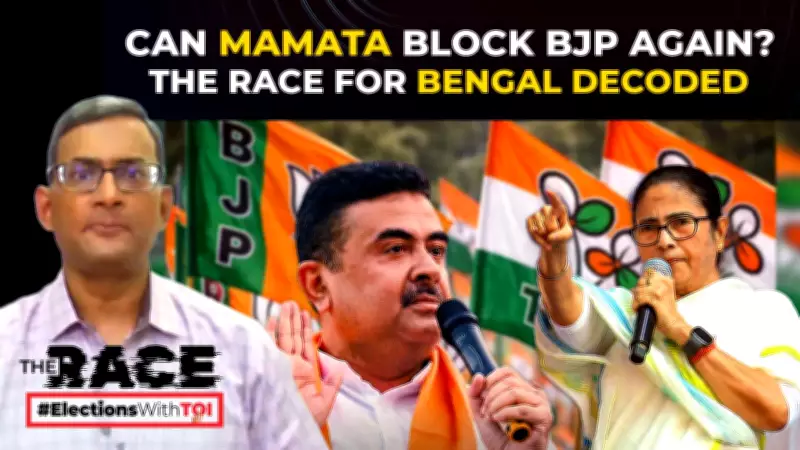
West Bengal Election 2026: K Bharathram Decodes Data, Trends, and Possible Outcomes
As West Bengal gears up for the 2026 state assembly elections, the political landscape is charged with anticipation and speculation. Political analyst K Bharathram has undertaken a comprehensive examination of the upcoming polls, leveraging hard data and ground insights to cut through the noise and offer a fact-based perspective on this crucial electoral battle.
Analyzing the Core Factors: Economy, Demographics, and Governance
Bharathram's analysis delves into multiple critical dimensions that could shape the election outcome. He scrutinizes economic growth indicators, demographic shifts, and governance performance under the current administration. By integrating data up to March 2026, his approach moves beyond mere conjecture to provide a nuanced understanding of voter sentiment and political dynamics.
Key data points include:

- Economic metrics such as employment rates, industrial development, and agricultural output.
- Demographic trends highlighting population changes, urbanization, and youth voter patterns.
- Governance assessments covering public service delivery, infrastructure projects, and policy implementations.
The Central Question: Can Mamata Banerjee Overcome Anti-Incumbency?
A pivotal aspect of Bharathram's analysis focuses on Chief Minister Mamata Banerjee and the Trinamool Congress (TMC). With the TMC aiming for a third consecutive term, the challenge of anti-incumbency looms large. Bharathram evaluates whether Banerjee's administration can leverage its track record and welfare schemes to counter voter fatigue and retain its support base.
Historical context suggests that overcoming anti-incumbency for a third term is a formidable task, but Bharathram's data reveals specific strengths and vulnerabilities within the TMC's strategy.
BJP's Quest: Can It Conquer Its Final Frontier?
On the opposing side, the Bharatiya Janata Party (BJP) views West Bengal as a critical battleground in its national expansion. Bharathram assesses the BJP's campaign efforts, leadership dynamics, and electoral promises. He examines whether the party can translate its increased presence in recent years into a decisive victory, potentially unseating the incumbent TMC government.
Factors influencing BJP's prospects include:
- Organizational strength and grassroots mobilization.
- Alliance strategies and candidate selections.
- Response to local issues and regional aspirations.
Sharp Seat Projections and Ground Insights
Backed by meticulous number-crunching and field reports, Bharathram provides detailed seat projections for the 2026 elections. These projections are not based on speculation but on a synthesis of polling data, historical trends, and current political developments. His insights offer a clearer picture of potential outcomes, highlighting key constituencies and swing regions that could determine the final result.
The analysis also considers micro-level factors such as local leadership, community alliances, and issue-based voting patterns, ensuring a holistic view of the electoral contest.
Beyond the Headlines: Decoding Bengal's Political Battle
In his special coverage, Elections With TOI, Bharathram emphasizes the importance of facts over speculation. He addresses common narratives and media hype, redirecting attention to substantive issues and verifiable data. This approach aims to empower voters and observers with a deeper understanding of the stakes involved in West Bengal's political future.
As the election date approaches, Bharathram's data-driven decode serves as a valuable resource for anyone seeking to grasp the complexities of this high-stakes political battle. The ultimate question remains: Will Bengal witness a historic third term for Mamata Banerjee, or will the BJP achieve a breakthrough in its final frontier? Only the voters will decide, but Bharathram's analysis provides a compelling roadmap to the possible outcomes.






