

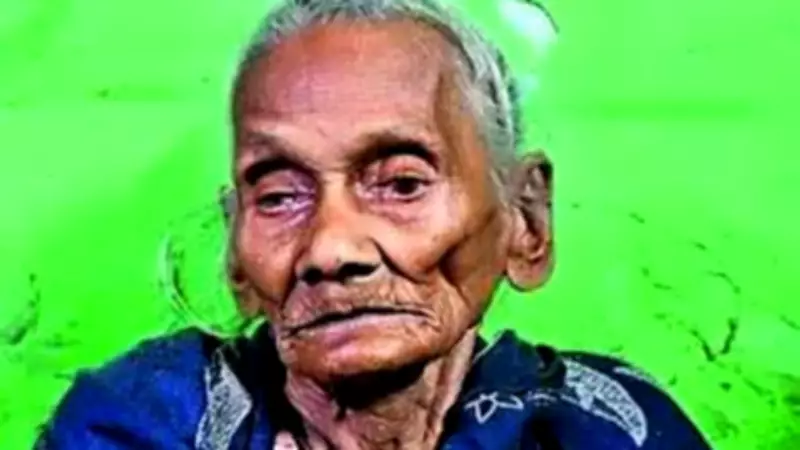
Elderly Citizens Stripped of Voting Rights in West Bengal Amid Voter Roll Revision
The fundamental democratic right to vote is being called into question for numerous elderly residents across West Bengal, as the Summary Revision of Rolls (SRR) process has resulted in the unexpected deletion of long-time voters from electoral lists. The situation has sparked confusion, distress, and allegations of administrative failure.
97-Year-Old Partition Refugee Finds Her Name Missing
Subarna Bala Poddar, a 97-year-old woman who was displaced during the Partition of 1947, has participated in every single election since India's independence. Born in undivided Bengal, she has consistently exercised her franchise, even utilizing the home voting facility in recent years due to her age. However, her name has now been inexplicably removed from the voter rolls.
Unaware of this omission, Poddar expressed her determination to vote, stating in Bengali, "Shorir dile vote debo" (If health permits, I will vote). When questioned about the possibility of not being able to vote, she responded defiantly, "I have a voter's card. Why can't I vote?"

Her family from Narkeldanga in Kolkata revealed that despite submitting comprehensive documentation—including her voter ID card, Aadhaar card, bank passbook, and widow pension records—her claim for inclusion was rejected. The issue reportedly stemmed from a minor spelling discrepancy; her name was recorded as "Swarna Bala" in the 2002 electoral rolls, which triggered a hearing where her documents were ultimately deemed insufficient. A subsequent application via Form 6 also failed to reinstate her voting rights.
The impact extends beyond Poddar alone. In her household, four out of eight family members will be able to vote in the upcoming elections, while four others—including two of her grandsons—have also lost their voting rights. A local Trinamool Congress (TMC) booth agent noted that the voter rolls in their area have significantly decreased, dropping from 1,326 to just 1,092 individuals.
Retired Teacher and Former Presiding Officer Deleted Despite Proven Record
In Hooghly district, S Asraful Haque, a 72-year-old retired teacher who served as a presiding officer in twelve separate elections, faces a similar predicament. While his family members remain on the voter lists, his name has been deleted without clear justification.
Haque presented an extensive array of documents to prove his identity and residency, including his passport, land records dating back to 1944, PAN card, Aadhaar card, and bank statements. He even possesses the 1956 voter list which includes his parents' names, as well as documentation showing his own inclusion in the 2002 electoral roll.
"We have been living here for generations. I have ancestral land records from 1944. In the 1956 voter list, my parents' names were there, and I have that document. My name was there in the 2002 list. Still, I was called for a hearing. No specific reason was mentioned in the notice," Haque explained.
Following the hearing, he found himself placed under adjudication and subsequently listed in a supplementary deletion list. He has now appealed to a tribunal, questioning the logic behind removing someone with such well-documented proof of identity and residence. "Is it possible to delete the name of a person who has a passport, land records and pension order?" he asked rhetorically.
Tragic Death in Tribunal Queue Highlights Systemic Stress
The human cost of this administrative chaos was tragically underscored in Nadia's Ranaghat area, where 68-year-old Jibankrishna Biswas collapsed and died while waiting in a queue outside the Sub-Divisional Officer's office. He was there to file an appeal regarding the deletion of both his and his daughter's names from the voter lists.
His family members directly attributed his death to the stress and exhaustion caused by the SRR process. The incident prompted the TMC to stage a protest, blaming the central government for his demise. His daughter lamented, "Politics took his life," highlighting the emotional and physical toll of the situation.

Widespread Confusion and Bureaucratic Hurdles Plague Voters
Across multiple districts in West Bengal, similar stories are emerging. Families report attending hearings where no clear reasons for deletion were provided, submitting documents only to have them deemed insufficient, and experiencing sudden transitions from "adjudication" status to outright deletion without explanation.
For many citizens, the constitutional right to vote has transformed into an arduous bureaucratic marathon. It involves navigating through various government offices, enduring long queues, and compiling extensive paperwork—all with no guarantee of a successful outcome. The process has left elderly voters, in particular, feeling disenfranchised and bewildered by a system they have faithfully participated in for decades.
The ongoing situation raises serious questions about the implementation of the voter roll revision process and its impact on democratic participation in one of India's most politically active states.





