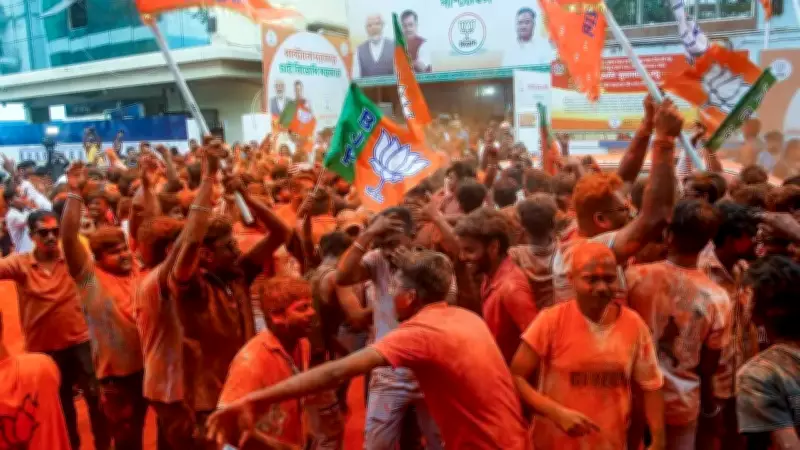
The 2026 West Bengal assembly elections delivered a decisive and transformative verdict, reshaping the state's political landscape. The Bharatiya Janata Party (BJP) surged to an unprecedented victory, securing 206 seats with a commanding 45.84% vote share, while the Trinamool Congress (TMC), which had dominated with 225 seats in 2021, was reduced to double digits, polling only 40.8% of the vote. This outcome was not a narrow swing but a profound expression of anti-incumbency against the Mamata Banerjee regime.
Unprecedented Voter Turnout
Over 92.5% of Bengal's electorate turned out to vote, a level of participation unseen since Independence. Such a surge in turnout signaled a powerful undercurrent of discontent. With nine out of ten voters casting ballots against a 15-year incumbent, the message was unmistakable. Allegations of corruption, unemployment, and a collapse of law and order had eroded public trust, leading to a demand for complete change, or shompurno poriborton.
Roots of Anti-Incumbency
Fifteen years of TMC rule under Mamata Banerjee had created deep fatigue across rural and urban Bengal. What began as a movement against the Left Front's stagnation in 2011 had come full circle. The TMC's governance became associated with terms like cut money, syndicate control, and tolabazi, reflecting everyday failures. Local syndicates controlled economic activities, and governance appeared outsourced to party foot soldiers. The disconnect between Mamata's grassroots image and her party's machinery proved politically fatal.

Corruption Scandals
Corruption scandals hardened public sentiment. The teacher recruitment scam, where over 25,000 appointments were canceled by the Supreme Court, transformed abstract charges into a personal crisis for thousands of families. Government jobs carry immense social value in Bengal, and the scandal symbolized a breakdown of trust.
Law and Order Concerns
The rape and murder of a trainee doctor at RG Kar Medical College in 2024 became a turning point, especially among women voters who had been the backbone of TMC's electoral strength. The government's perceived lack of urgency and empathy deepened the damage.
Women Voters' Shift
Women voters turned out in large numbers but did not vote for TMC. Welfare schemes like Lakshmi Bhandar and Kanyashree had once secured support, but by 2026, that backing became conditional. Women weighed safety, employment, and long-term prospects alongside financial assistance. The BJP recognized this shift and promised higher cash transfers while foregrounding safety and dignity, eroding TMC's advantage.
Economic Anxiety
Economic anxiety drove the BJP's performance. Bengal's de-industrialization narrative reached a tipping point; migration became a symbol of failure. Families spoke of children leaving for work in other states, including BJP-governed ones. The promise of industrial revival and employment gave the BJP a credible economic plank. This impact was visible in industrial belts like Barrackpore and Howrah, where decades of decline had left voters impatient for change.
Identity Politics
Identity politics paved the way for Hindutva. Consolidation of Hindu votes across caste and linguistic lines provided the BJP with a stable base. Allegations of appeasement created fertile ground. The BJP's messaging was consistent, positioning itself as a party that would restore balance and address concerns about illegal immigration and demographic change. However, the party also localized its appeal, invoking Bengali culture—Maa Kali, local idioms, fish, jhalmuri, and festivals—to shed the outsider tag that hurt it in 2021.
Campaign Strategy
Prime Minister Narendra Modi and Union Home Minister Amit Shah maintained a relentless presence, with Shah staying in the state for 15 days. Their messaging evolved from broad ideological appeals to hyper-local issues. The call for poriborton became a resonant slogan.

Institutional Factors
The revision of electoral rolls under the Special Intensive Revision (SIR) process became contentious. While TMC framed it as targeted exclusion, the BJP argued it was a necessary correction. Improved polling conditions and central forces emboldened voters. The Matua community, a significant electoral bloc, largely aligned with the BJP despite concerns over citizenship and voter list revisions, ensuring key constituencies in North 24 Parganas and Nadia stayed in the BJP's fold.
Urban and Suburban Shift
Urban and suburban voters emerged as decisive factors. The decimation of TMC's dominance in the Kolkata belt and surrounding districts marked the tipping point. Economic dissatisfaction, governance concerns, and a desire for change combined to produce a decisive swing.
Narrative Battle
Mamata Banerjee failed to set her own narrative, playing on her rival's turf. The BJP crafted a multi-layered narrative addressing different constituencies: higher financial support for welfare beneficiaries, jobs for the unemployed, safety for women, and identity for Hindu voters. This broad-based approach created a coalition difficult for TMC to counter. In contrast, TMC's welfare model became predictable, and its Bengali identity narrative lost resonance. Gratitude-based politics gave way to transactional expectations, making voters open to alternatives.
Migration, industrial decline, corruption, safety concerns, and identity politics converged to make change inevitable. The BJP recognized and capitalized on these conditions effectively. By the time votes were cast, the outcome was no longer in doubt. The unprecedented turnout and visible anger confirmed what had been set in stone: May 4th was Poriborton.