Bengaluru Commuter Opts for Longer Route to Escape Traffic Gridlock
In a striking example of Bengaluru's notorious traffic problems, a resident recently made a drastic decision to avoid peak-hour congestion. Shravika Jain, a local woman, chose to drive 47 kilometers instead of the usual 23-kilometer route to bypass the city's clogged roads. This incident, shared on social media, has sparked discussions about the daily struggles faced by commuters in India's tech capital.
The Social Media Revelation and Public Reaction
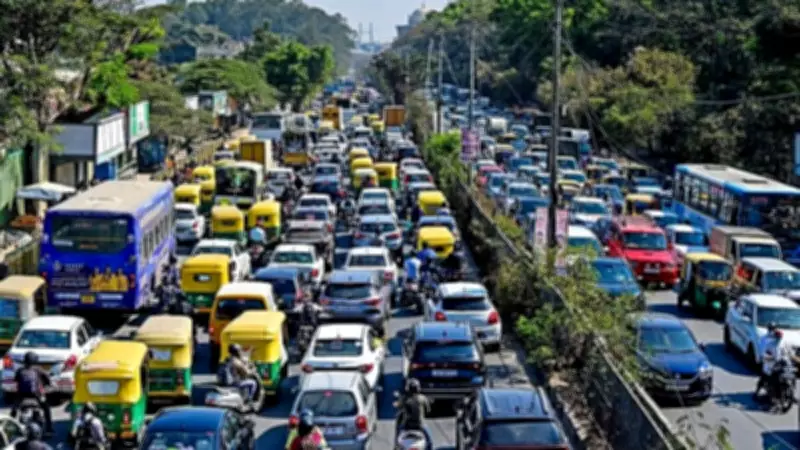
Shravika Jain posted about her experience on X (formerly Twitter) on March 5, 2026, with a simple caption: "Regular day :)" accompanied by an image. Her post quickly garnered attention, with many users relating to the extreme measures taken to navigate Bengaluru's traffic. One comment highlighted a key factor: "Looks like the short route has no toll hence a lot of people are using it and clogging it." This observation points to how toll-free roads can become bottlenecks during rush hours, forcing drivers to seek alternatives.
Analyzing the Traffic Dynamics in Bengaluru
Bengaluru, known for its rapid urbanization and IT industry growth, has long grappled with severe traffic congestion. The city's infrastructure often struggles to keep pace with its expanding population and vehicle density. Commuters like Jain are increasingly resorting to creative strategies, such as taking longer detours, to save time despite the increased distance. This trend underscores the broader issues of urban planning and transportation management in metropolitan areas.

- The 23-kilometer route, likely toll-free, attracts heavy traffic, making it slower during peak hours.
- Driving an extra 24 kilometers (totaling 47 km) can sometimes be faster due to smoother traffic flow on alternative roads.
- This behavior reflects a growing reliance on real-time navigation apps and social media for traffic updates.
Broader Implications for Urban Commuting
This incident is not isolated but part of a larger pattern in cities like Bengaluru, where traffic congestion impacts productivity, health, and quality of life. Experts suggest that solutions may include better public transportation, staggered work hours, and improved road infrastructure. However, until systemic changes are implemented, commuters will continue to adapt in personal ways, as demonstrated by Jain's decision.