Bengaluru's Zoning Controversy Puts Small Businesses at Risk
What started as a technical adjustment to zoning regulations has erupted into a major controversy over the future of neighborhood commerce in Bengaluru. The Greater Bengaluru Authority's latest classification rules, which restrict trade licenses for businesses established after 2015 on roads narrower than 40 feet in residential zones, have triggered widespread alarm among traders and elected representatives who fear the policy could devastate livelihoods and empty out local economies.
Road Width Rule Threatens Community Backbone
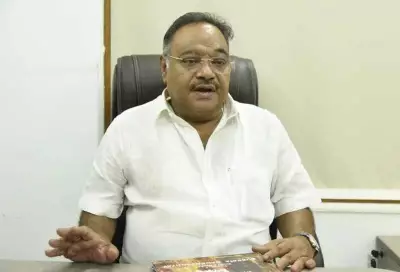
Critics argue that by linking licensing eligibility to road width, the GBA risks punishing the small traders who form the essential backbone of community life—including kirana stores, clinics, eateries, and workshops—many of which operate in the narrow bylanes that characterize Bengaluru's older residential layouts. The controversy intensified on Tuesday when former minister and Rajajinagar MLA Suresh Kumar sent a strongly worded letter to GBA chief commissioner M Maheshwar Rao, describing the decision as "shocking and deeply concerning" and demanding immediate withdrawal of the January 31 circular.
Kumar warned that enforcement of this regulation would disproportionately impact residential neighborhoods—areas that evolved organically over decades and were never designed with broad arterial roads in mind. Highlighting Bengaluru's urban reality, Kumar pointed out that approximately 46–48% of the city's 741 square kilometer area is residential, much of it featuring narrow internal roads.

Questioning Practicality and Planning History
The MLA noted that numerous villages were incorporated into the city during the 2008 expansion of the Bruhat Bengaluru Mahanagara Palike and again in recent years, raising questions about whether these areas were ever planned with 40-foot-wide roads. "Unplanned development and unauthorized layouts exist because planning agencies looked the other way. Penalizing traders now is unjust," Kumar asserted.
Citing available estimates, Kumar revealed that Bengaluru hosts between 250,000 and 400,000 street vendors and approximately 160,000 to 180,000 grocery shops, with only about 120,000 to 130,000 currently holding valid trade licenses. He cautioned that the proposed restrictions would directly affect nearly 2 million dependent family members whose livelihoods are tied to these businesses.
Resident Convenience and Economic Impact
Kumar further questioned the practicality of requiring traders to relocate exclusively to roads wider than 40 feet, warning that such a mandate would prove unworkable while severely inconveniencing residents who depend on neighborhood shops for daily essentials like vegetables, milk, medicines, and groceries. The impact would extend beyond storefronts to home-based livelihoods as well, including tailoring units and small ancillary businesses operating within residential zones.
"Statutory authorities are meant to uplift vulnerable sections of society, not push them deeper into poverty," Kumar emphasized. Trader associations across Bengaluru have echoed these concerns, warning that rigid enforcement of the 40-foot rule could disrupt long-established commercial hubs and residential markets alike.
Traders Voice Their Opposition
Trade associations argue that many businesses have operated in these areas for decades—often predating the formation of the GBA—and that policy changes implemented without proper consultation could severely damage the city's economic ecosystem.
Sajjan Raj Mehta, a trade activist, stated: "This has become a huge challenge for traders. GBA officials do not take us seriously. If they wanted to bring in changes, they should have held public consultations first. What they are doing will lead to the shutdown of an entire industry, which is unacceptable. The Central Business District will be the first to be affected. Have they even thought about the revenue loss this will cause?"

SG Aditya, general secretary of the Indiranagar Owners and Traders Association, added: "We have been fighting this issue since 2014 and have submitted representations to HD Kumaraswamy and BS Yediyurappa when they were chief ministers. Trade licenses cannot be cancelled in this manner. Areas such as Indiranagar's 40-foot, 60-foot and 80-foot Roads, as well as Malleswaram, Chickpet, Rajajinagar and West of Chord Road, have narrow streets where traders existed long before the GBA was formed. Cancelling licenses now is simply not possible."
Santosh Kausthaubs of the Gandhinagar Traders Association commented: "If rules are to be enforced, the focus should be on regulating street vendors rather than targeting established traders."
Prakash Mandoth, president of the Federation of Karnataka Traders Association, expressed stronger concerns: "This is nothing short of a mass killing—not just of traders, but of entire families and the network of people who depend on these businesses for their livelihood. What the GBA is doing is unacceptable. Rules are being framed according to their whims and fancies, and we will not accept this."
Calls for Dialogue and Infrastructure Focus
Mandoth further emphasized that new GBA rules for retail and wholesale traders in Central Business Districts and extension areas should prioritize ease of doing business. He suggested the focus should shift toward developing local infrastructure—including greenery, efficient waste management, clean and encroachment-free footpaths, parking complexes, and proper street lighting—for customer benefit, rather than reviving what he termed "inspector raj."
"Rules must be framed through dialogue with traders' associations, not in boardrooms," Mandoth insisted. "Long-pending issues from the BBMP era, unresolved for over 20 years, must be addressed first. Implementation should follow consultation, not arbitrary enforcement. Traders have existed here for over 150 years, and non-food businesses that pose no public health risk should not be targeted merely for revenue mobilization."
Official Response and Next Steps
In response to the growing controversy, GBA chief commissioner M Maheshwar Rao stated: "Trade license fees are being collected annually as per the existing rules; there has been no change. We will review the MLA's letter and make a decision after consulting with the government."
As the debate intensifies, the future of thousands of small businesses hangs in the balance, with traders demanding meaningful consultation and policymakers facing pressure to reconsider regulations that could reshape Bengaluru's commercial landscape.