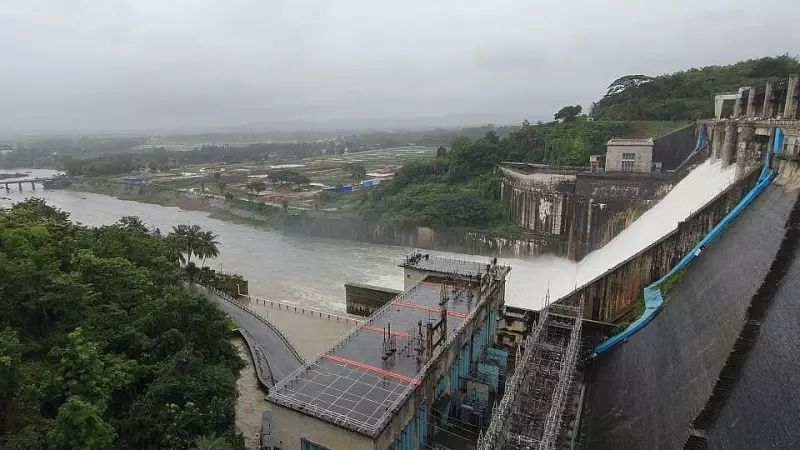
In a significant development for the agricultural community in Karnataka, authorities have announced the release of water from the Bhadra reservoir. This decision comes as a direct response to growing concerns raised by local farmers, particularly those cultivating areca nut, who have been facing severe irrigation challenges due to a crumbling canal network.
Farmers' Concerns Prompt Immediate Action
The catalyst for this decision was the vocal appeal from farmers in the region, who highlighted the critical threat to their areca nut plantations. A prominent voice in this movement was A.B. Karibasappa from Shiramgondanahalli. He spearheaded the demand for immediate governmental intervention, stressing that the extensive network of canals meant to distribute water from the Bhadra reservoir is in an almost dilapidated state.
Karibasappa's primary demand was clear and urgent: he called for a detailed technical assessment. He insisted that the authorities must obtain a report from experts to evaluate the exact condition of the canal infrastructure. Following this assessment, concrete action must be taken to repair and restore the canals to full functionality, ensuring water reaches the farms that depend on it.

The State of Bhadra's Canal Infrastructure
The Bhadra canal system is a vital lifeline for agriculture in several parts of Karnataka. For years, it has facilitated the irrigation of thousands of hectares, supporting crops like the economically important areca nut. However, years of wear and tear, coupled with inadequate maintenance, have left the network in a precarious condition.
This deterioration has led to massive water losses through leaks and breaches, significantly reducing the volume of water that finally reaches the tail-end farmers. The areca nut crop, which requires consistent and reliable water supply, is especially vulnerable to these irregularities, putting the livelihoods of countless farming families at risk.
Official Response and Future Implications
The announcement of water release, reported on 02 January 2026, signifies the administration's acknowledgment of the crisis. While the immediate release will provide some respite, the larger issue of canal repair remains unresolved. The call for an expert report is a crucial step towards a long-term solution.
A comprehensive repair project for the Bhadra canals would involve:
- Detailed surveying of the entire canal network to identify critical breach points.
- Expert recommendations on modern lining and reinforcement techniques to prevent future water loss.
- A structured timeline and budget allocation for the execution of repairs.
The outcome of this situation will set a precedent for how Karnataka addresses its aging irrigation infrastructure. Successful intervention can secure water for areca farmers and other cultivators, ensuring agricultural stability in the region. Failure to act decisively could lead to further crop distress and economic hardship for the rural economy dependent on the Bhadra reservoir.