Bhopal's Aging Water Pipeline Bursts Near Raj Bhavan, Exposing Critical Infrastructure Strain
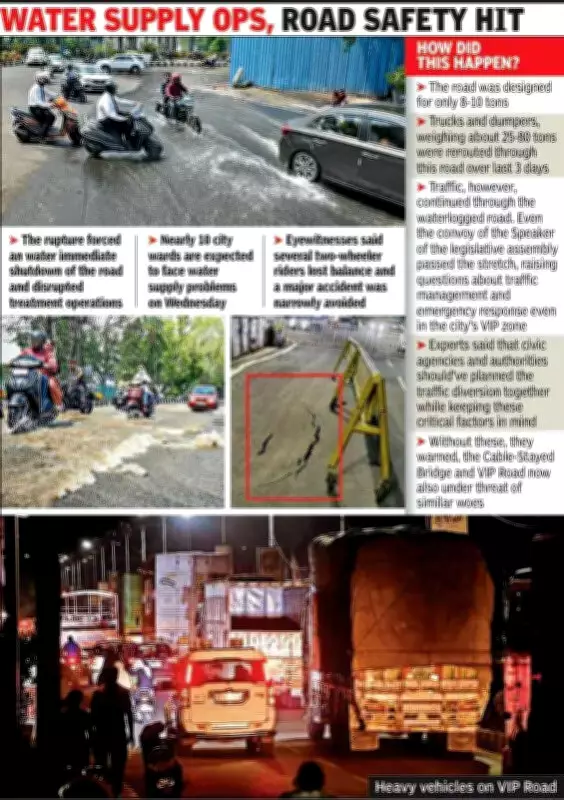
A major water pipeline burst in front of Raj Bhavan in Bhopal on Tuesday afternoon, causing significant road damage and exposing the severe strain on the city's aging infrastructure. The incident occurred following a diversion of heavy vehicles from the Sukhi Sewaniya Overbridge that began approximately two weeks ago, highlighting systemic vulnerabilities in urban planning.
Immediate Impact and Water Supply Disruption
The rupture forced an immediate shutdown of water services, severely disrupting treatment operations at the 5 MGD filtration plant in Arera Hills. According to the BMC city engineer for Water Works, the damaged pipeline carries water from the Upper Lake to the plant, and nearly ten city wards are expected to face supply problems on Wednesday. The engineer stated, "First there was a depression in the road and then the pipeline burst was reported. It is the direct result of heavy vehicle movement on this stretch."
Root Cause: Overloading of Aging Infrastructure
The 500 mm pipeline, originally laid in 1965, gave way after trucks and dumpers weighing between 25 to 80 tons were rerouted through the area over the past three days. This road was designed to handle only 8 to 10 tons, and it collapsed under the combined pressure of the excessive traffic above and the deteriorating pipeline beneath. At around 1:30 PM, water gushed out with such force that it peeled away the asphalt and swept gravel and debris, flooding the area extensively.

Shafiq Ahmed, a retired municipal engineer, emphasized the inevitability of such failures, noting, "A road designed for an 8–10 ton capacity subjected to a 30-ton load? A collapse is inevitable." Experts stress that authorities must conduct thorough load capacity assessments, traffic category planning, and underground utility audits before implementing any diversions to prevent similar incidents.
Traffic Chaos and Safety Concerns
Eyewitnesses reported that several two-wheeler riders lost their balance due to the sudden flooding, narrowly avoiding a major accident. Despite the hazardous conditions, traffic continued to move through the waterlogged road. Notably, even the convoy of the Speaker of the legislative assembly passed through the stretch, raising serious questions about traffic management and emergency response protocols in Bhopal's VIP zone.
Systemic Issues and Official Responses
The incident has brought to light broader systemic issues in the city's infrastructure management. Additional DCP (traffic) Basant Kaul explained to TOI that no-entry zones are routinely opened from 11 PM to 6 AM under a long-standing collector's order, with minimal traffic police deployment at night. He stated, "Since traffic cops are generally not deployed at night, there is no question of them diverting heavy commercial vehicles during those hours. Such movement across the city is permitted at night. If the BMC is facing issues on any specific stretch, they should flag it with us and seek curbs."
Future Risks and Urgent Warnings
Experts warn that without immediate corrective measures, Bhopal risks further infrastructure failures. Critical areas like the Cable-Stayed Bridge and VIP Road are now under threat due to similar overloading and lack of proper audits. The incident serves as a stark reminder of the urgent need for coordinated planning between municipal and traffic authorities to safeguard the city's vital utilities and public safety.