Bhubaneswar Municipal Corporation Implements Non-Vegetarian Food Ban for Mahashivratri
The Bhubaneswar Municipal Corporation (BMC) enacted a temporary prohibition on the sale of non-vegetarian food items within a 500-meter radius of the historic Lingaraj Temple on Sunday. This decisive action was taken in anticipation of the large influx of devotees celebrating Mahashivratri, a major Hindu festival dedicated to Lord Shiva.
Addressing Traffic Congestion and Crowd Management
Officials cited severe traffic congestion caused by meat, chicken, and fish vendors along the roads leading to the temple as the primary reason for the ban. The restriction aimed to ensure smooth pedestrian and vehicular movement, facilitating hassle-free access for worshippers during the peak festival hours.
"From Sunday morning until late night, no roadside vendor selling non-vegetarian food was permitted within the designated zone," stated BMC Additional Commissioner Kailash Chandra Das. The affected areas extended from the temple towards Vivekanand Marg on one side and towards Rabi Talkies, Kedar Gouri, and Rajarani Temple on the other.

By afternoon, as devotees began to congregate in large numbers, officials observed that the restriction significantly helped clear the rush and ensured free traffic flow around the sacred site.
Comprehensive Sanitation and Anti-Plastic Initiatives
In addition to the food sale ban, the BMC launched a multi-faceted campaign to maintain cleanliness and environmental sustainability. Teams conducted street plays to educate the public on avoiding polythene carry bags, while mannequins with placards displayed awareness messages against plastic use.
"This Mahashivratri, we made concerted efforts to discourage the use of polythene bags," explained a BMC officer. Devotees carrying puja items in such bags were advised to dispose of them at designated collection points before entering the temple periphery.
Enhanced Waste Management Strategies
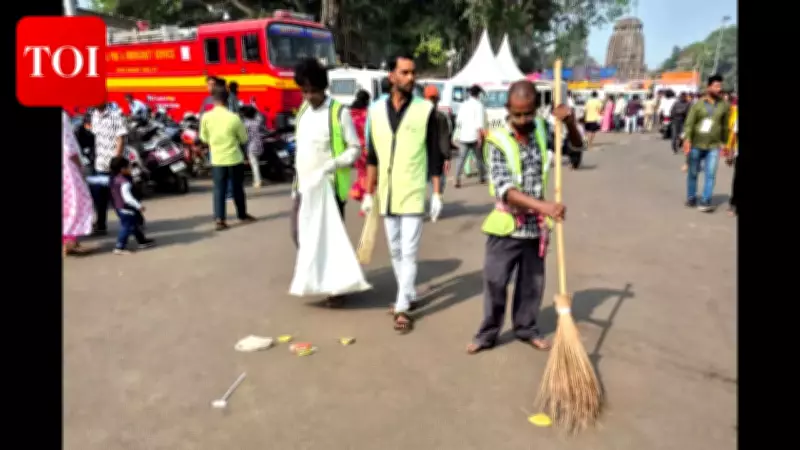
The corporation deployed 90 sanitary workers in three shifts to oversee sanitation around the Lingaraj Temple. These workers received specific training to pick up waste manually rather than sweeping, a method chosen to prevent air pollution and accommodate the limited space available in the crowded area.
Reflecting on previous years, officials noted that the temple generated waste requiring 30 trips for clearance during last year's festivities. With an expected increase in devotee turnout this year, the volume of puja waste—added to the city's daily garbage—posed a significant challenge.
"We are striving to ensure that Old Town, where the shrine is located, remains clean," the officer emphasized. Public cooperation is essential to achieve this objective, and this year's initiatives focused on minimizing waste generation as much as possible.
The BMC's integrated approach, combining regulatory measures with community engagement, underscores a proactive effort to balance religious observance with urban management during one of the city's most significant cultural events.