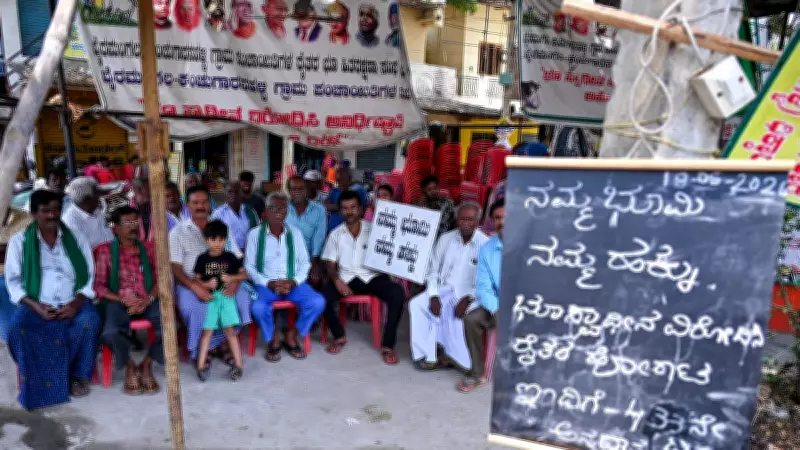
Farmers in Bidadi are protesting against the Greater Bengaluru Integrated Township (GBIT) project, a massive 7,481-acre development that threatens their fertile agricultural land and livelihoods. The project, which has faced resistance since early 2025, is now moving forward with final land acquisition notifications expected soon.
Farmers' Livelihoods at Risk
Families like that of Girish, who rely on 4.5 acres of farmland producing silk, coconuts, and bananas, are at the forefront of the protest. Despite modest wealth, the abundant water supply ensures financial stability for these farmers. The loss of their land would devastate their income and way of life.
The Township Project Details
The GBIT project will cover 7,481 acres, with final land acquisition notifications expected soon. Initial resistance in early 2025 delayed the process, but the government is now pushing ahead. The project aims to create a modern integrated township to accommodate Bengaluru's growing population.

Protests and Resistance
Farmers have been protesting for 434 days, blocking survey teams and camping at project sites. They demand a referendum on the acquisition and reject compensation offers, which include developed land options. The farmers argue that their land is priceless due to its fertility and water resources.
Government's Justification
Officials claim that declining agricultural returns and pollution justify the project. They offer compensation of up to Rs 2.55 crore per acre, along with developed land options, to incentivize landowners. The government believes the township will boost economic growth and provide housing.
Community's Counterarguments
Farmers highlight Bidadi's significant agricultural contributions, including 6 lakh litres of milk daily and 2 lakh coconut trees. They argue that the land's fertility must be preserved for food security and the local economy. The community insists that the project will destroy a vital agricultural hub.
The standoff continues, with both sides refusing to back down. The farmers remain determined to protect their land, while the government pushes forward with the township plans.