

Bihar's Liquor Prohibition to Continue Under New Leadership
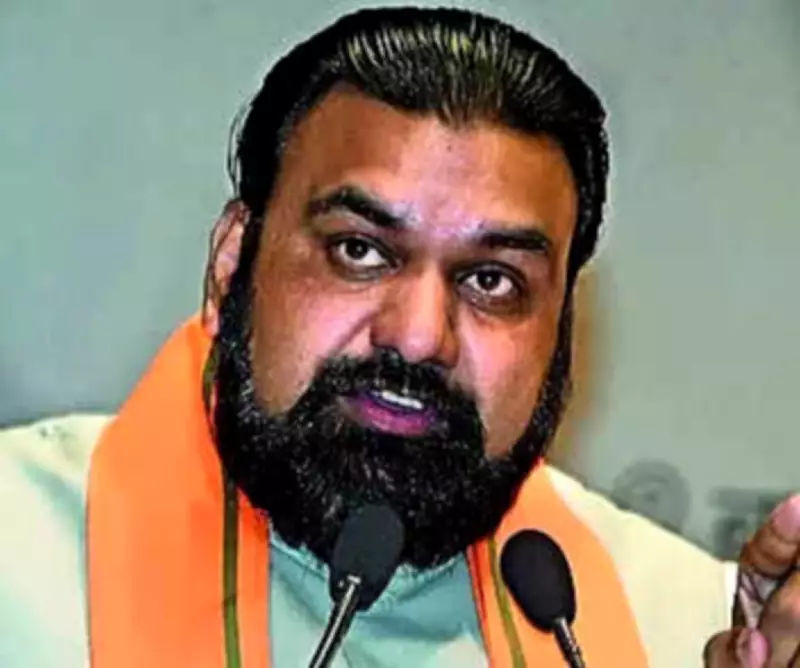
Patna: The comprehensive ban on the manufacture, sale, and consumption of alcohol will remain firmly in place across Bihar, as confirmed by newly appointed Chief Minister Samrat Choudhary. Speaking to journalists at the chief minister's secretariat on Friday, Choudhary explicitly stated his administration would not consider lifting or providing any concessions regarding the state's liquor prohibition policy.
"Who Will Dare to Lift This Ban?"
During an informal media interaction, Choudhary posed a rhetorical question that underscored his position: "Who will dare to lift the liquor ban, which was enforced by a personality like Nitish Kumar and appreciated by Prime Minister Narendra Modi?" The gathering was organized at the invitation of the chief minister's office, where journalists had assembled to hear the new administration's priorities.
Choudhary, who marks the first BJP chief minister in Bihar's history, recalled Prime Minister Modi's public endorsement of former Chief Minister Nitish Kumar's decision to implement the alcohol ban. The prohibition was initially introduced statewide in April 2016 under Nitish Kumar's leadership, creating one of India's most stringent anti-liquor policies.

Addressing Internal Dissent and Setting Economic Goals
This reaffirmation comes amid recent voices within the ruling National Democratic Alliance (NDA) expressing opposition to the liquor ban following Choudhary's assumption of power. Some coalition members had openly called for the withdrawal of prohibition, citing various economic and social concerns.
Beyond the liquor policy, Chief Minister Choudhary outlined ambitious economic objectives for his administration. He announced plans to attract substantial investments totaling approximately Rs 5 lakh crore to Bihar within the coming year. Emphasizing the critical link between industrial development and revenue generation, Choudhary questioned, "If big industries are not invited, how will revenue be generated?" This statement highlights his commitment to transforming Bihar's economic landscape through large-scale investment initiatives.
Governance Reforms and Electoral Roll Updates
The chief minister also disclosed significant administrative actions, revealing that identity cards and documents belonging to around 22 lakh individuals classified as 'infiltrators' have been deleted in Bihar. These individuals form part of a larger group of 89 lakh electors whose names were removed during the Election Commission's Special Intensive Revision (SIR) of electoral rolls, according to Choudhary's explanation.
Regarding governance improvements, Choudhary identified enhancing functionality at the circle, block, and police station levels as a primary focus for his government. He noted that most common citizens' administrative needs are connected to these three offices, making their efficiency paramount. The chief minister's office will directly monitor the performance of each circle, block, and police station, with District Magistrates (DMs) tasked specifically with improving operations at these grassroots administrative units.
Choudhary further warned that non-performing District Magistrates and Superintendents of Police (SPs) would face disciplinary action in due course, signaling a strict accountability framework for Bihar's administrative and law enforcement officials under his leadership.






