Political Storm Erupts in Bihar Over CBI Investigation into Student's Death
In a development that has exposed deep political fault lines, the Bihar government's recommendation for a Central Bureau of Investigation (CBI) probe into the tragic death of a medical aspirant from Jehanabad has sparked intense controversy. The decision, announced on Saturday, has drawn sharp criticism from opposition parties while receiving staunch defense from the ruling coalition.
Opposition Questions Credibility of CBI Probe
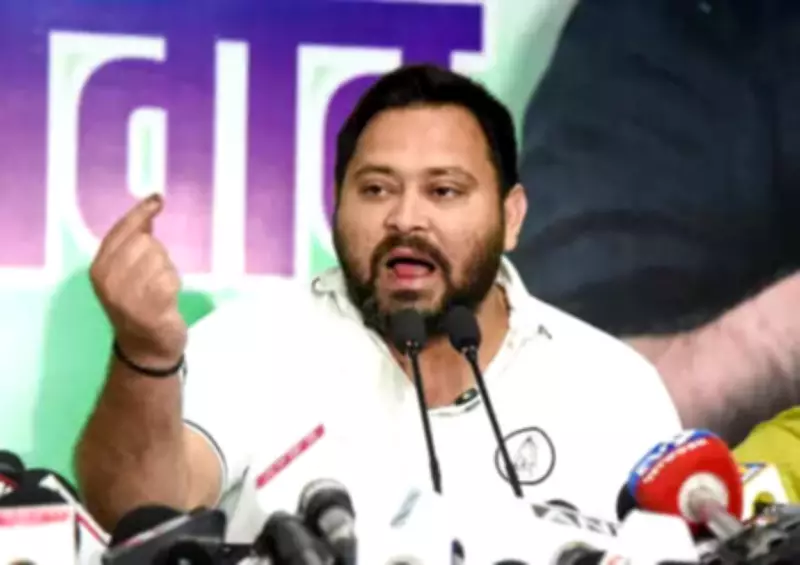
Tejashwi Prasad Yadav, the Rashtriya Janata Dal (RJD) working president and leader of opposition in the state assembly, expressed serious doubts about the effectiveness of a CBI inquiry. He pointed to the agency's track record in previous cases, particularly highlighting the Navruna kidnapping-cum-murder case where the CBI eventually closed its investigation without apprehending the culprits.
"In the last 12-13 years, the CBI could not nab the criminals in several cases, including the kidnapping-cum-murder case of Navruna," Yadav stated. "The same would happen in the NEET student case, too." He characterized this pattern as evidence of systemic failure within investigative agencies.

The RJD leader went further, alleging that the state government's decision to hand over the case to the CBI instead of resolving it through state police channels exposed fundamental weaknesses in Bihar's administrative structure. "The state government has once again proved that Bihar's administrative structure is so corrupt, incapable, unskilled and unprofessional that it cannot solve a case of rape and murder," he asserted, directly linking this failure to what he called "the corrupt and compromised system of the NDA government."
Left Parties Demand Judicial Oversight
Communist Party of India (Marxist-Leninist) general secretary Dipankar Bhattacharya, who recently met with the victim's family, expressed skepticism about the CBI probe's potential outcomes. He emphasized that meaningful results would only be possible if the investigation were conducted under "strict and transparent monitoring" by a Supreme Court judge.
Bhattacharya suggested that the government's recommendation came primarily in response to mounting public pressure and widespread agitation demanding justice and arrests in the case. The CPI(ML) has announced plans for a 'Beti Bachao-Nyay Yatra' (Save Daughter Justice March), organized by its women's and students' wings, scheduled to begin on February 4 from Makhdumpur in Jehanabad and culminate in a march to the state assembly on February 10.
Congress Joins Criticism
The state Congress unit echoed the opposition's concerns, with spokesperson Rajesh Rathorre characterizing the CBI probe as "just an attempt to save the government from the taint that has come due to the unsuccessful and inefficient investigation by the state police." He went on to describe the move as "a cover-up exercise" rather than a genuine effort to deliver justice.
Ruling Coalition Defends Decision
Bharatiya Janata Party (BJP) spokesperson Prabhakar Kumar Mishra strongly defended the government's decision, accusing the RJD of making baseless statements that disrupt political decorum. He emphasized that the recommendation was made in the interest of justice and transparency.
Industries Minister Dilip Jaiswal provided additional context, stating, "In view of the demand made by the victim's mother, father and family members for a CBI probe, the state government wants to reach the perpetrators and ensure they are punished." This statement positioned the decision as responsive to the family's explicit request for central agency involvement.
Janata Dal (United) national spokesperson Rajeev Ranjan Prasad highlighted Chief Minister Nitish Kumar's role, noting that "CM Nitish Kumar has urged the Centre for a fair and transparent investigation." He added that "if anyone has suspicion, their sentiments have been respected" through this decision-making process.
Rashtriya Lok Morcha chief Upendra Kushwaha offered a more optimistic assessment, terming the recommendation "a positive development" that could potentially lead to a more thorough investigation.

Broader Implications
This controversy has reignited debates about law and order in Bihar, with opposition parties using the case to question the effectiveness of the state's administrative and policing systems. The political divisions reflect deeper tensions between the ruling National Democratic Alliance (NDA) and the opposition Grand Alliance (GA), particularly as both sides position themselves on issues of governance and justice delivery.
The case has also drawn attention to broader concerns about student safety and the pressures faced by medical aspirants in India's competitive education landscape. As the political battle intensifies, all eyes remain on how the CBI will proceed with its investigation and whether it can deliver the transparency and justice that all parties claim to seek.