Bihar Rajya Sabha Election Sparks Controversy Over MLA Abstentions
In a significant political development in Patna, the Grand Alliance candidate from the RJD, Amarendra Dhari Singh, faced defeat in the crucial Rajya Sabha election held on Monday. The loss has triggered strong reactions from opposition leaders, who are pointing fingers at what they describe as systematic pressure tactics employed by the ruling BJP.
Allegations of Coercion and Administrative Misuse
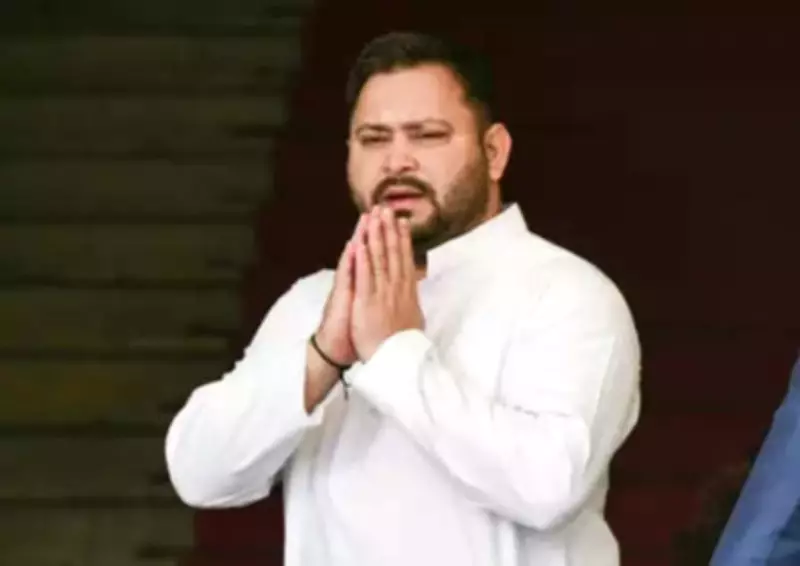
RJD working president Tejashwi Yadav and Bihar Congress chief Rajesh Ram have jointly alleged that the BJP utilized a comprehensive strategy of "carrot and stick" policies combined with localized administrative pressure to prevent four of their MLAs from participating in the voting process. This alleged interference, they claim, directly resulted in the electoral setback for their candidate.
"The BJP's use of deception, tricks, tactics, and financial manipulation along with the misuse of administrative machinery became evident during the Rajya Sabha election in Bihar," Tejashwi Yadav stated emphatically to reporters outside the assembly building following the announcement of results. He further indicated that similar patterns of interference have been reported from other states as well.

The Four Absent MLAs and Social Media Backlash
The legislators who abstained from voting include three Congress MLAs: Surendra Kushwaha from Valmiki Nagar, Manoj Biswas from Forbesganj, and Manohar Prasad Singh from Manihari. Additionally, RJD MLA Faisal Rehman from Dhaka also did not cast his vote. Following the declaration of results, which saw victory for all five NDA nominees, the names and photographs of these four MLAs circulated rapidly across social media platforms.
Several social media users branded the absent legislators as "traitors" and "Jaichands," referencing historical figures known for betrayal. The viral nature of these posts added a layer of public scrutiny to an already contentious political situation.
Numerical Breakdown and Strategic Calculations
Amarendra Dhari Singh, who is a sitting Rajya Sabha member, received support from the RJD, AIMIM, CPI(ML), CPM, and the Indian Inclusive Party (IIP). Despite this broad coalition, he fell short of the required vote count by precisely four votes, highlighting the critical impact of the abstentions.
Tejashwi Yadav provided a detailed numerical analysis of the situation: "Everyone knew the Grand Alliance had the support of 35 MLAs and needed six more votes to secure victory. After gaining the support of five AIMIM MLAs and the lone BSP legislator, our strength increased to 41. The fifth NDA candidate required three MLAs from outside the NDA fold. However, our four MLAs were deliberately kept away from polling, which directly caused our defeat." He added that the alliance would conduct a thorough review of the election outcome in the coming days.
Conflicting Explanations and Unanswered Questions
In the aftermath of the voting, RJD MLA Faisal Rehman took to social media to explain his absence, stating that he was in Delhi attending to his mother's medical treatment and therefore could not participate in the voting process. Meanwhile, the three Congress MLAs have remained silent, offering no public explanation for their failure to cast votes.
Congress state chief Rajesh Ram expressed his concerns about the situation: "Our three MLAs might have been prevented from voting due to pressure, fear, or various inducements." He revealed that on March 13, he had met with six Congress MLAs to discuss the Rajya Sabha election and the party's support for the RJD nominee. However, from the following day, three of those legislators became unreachable by phone.
"This sudden lack of communication made me suspect that something was amiss, though I could not anticipate exactly what would transpire," Ram admitted. He further claimed that one Congress MLA had met him around March 9 and reported that six policemen had been stationed outside his residence in the constituency, suggesting possible intimidation tactics.

Pattern of Political Pressure Allegations
Rajesh Ram elaborated on what he described as established patterns of political pressure: "It has been the BJP's consistent practice to exert influence through various means including inducements, investigative agencies, or administrative pressure. The same methods appear to have been deployed against our MLAs in this instance."
The allegations highlight growing concerns about the integrity of legislative processes and the independence of elected representatives in Bihar's political landscape. As the Grand Alliance prepares to review the election outcome, the incident raises important questions about political coercion and the safeguarding of democratic procedures in state politics.