

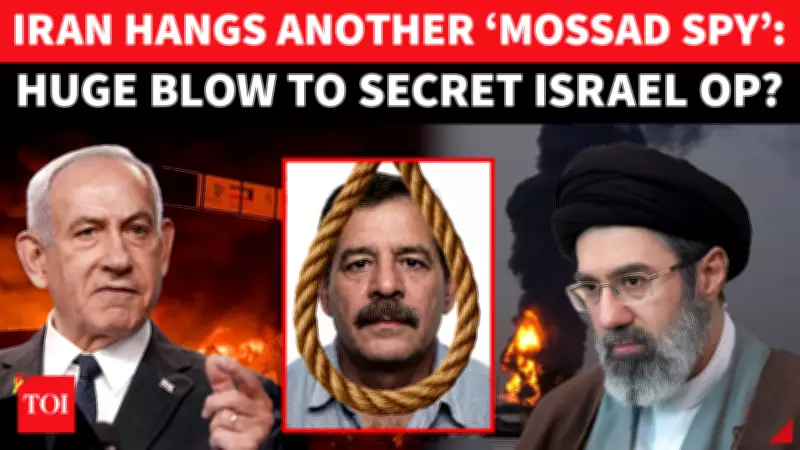
Iran has executed Soltanali Shirzadi-Fakhr, a man authorities claim was a veteran militant of the Mujahedin-e-Khalq (MKO) and a recruited asset for Israel's Mossad intelligence agency. The execution, reported on April 23, 2026, marks the second political execution in just one week, signaling an accelerating internal crackdown despite an existing ceasefire.
Background of the Case
According to Iranian officials, Shirzadi-Fakhr underwent training in Saddam Hussein-era Iraq and was later recruited by Mossad. He was arrested after returning to Iran from Spain, where Tehran alleges he engaged in espionage activities. The government described him as a "terrorist" who took secrets to his grave.
Timeline of Events
- Shirzadi-Fakhr trained in Iraq during Saddam's regime as an MKO militant.
- He later became an asset for Mossad, Israel's intelligence service.
- After returning from Spain, he was arrested by Iranian authorities.
- He was tried and convicted on charges of espionage and terrorism.
- Execution was carried out on April 23, 2026.
Significance of the Execution
This execution comes amid heightened tensions between Iran and Israel, with Iran accusing Israel of running spy networks within its borders. It also reflects the regime's ongoing crackdown on dissent and perceived espionage, even during periods of relative calm in international conflicts. The execution of Shirzadi-Fakhr follows another political execution earlier in the week, underscoring the regime's zero-tolerance policy toward opposition and foreign links.

Reactions and Implications
Human rights groups have condemned the execution, calling it a violation of due process. The MKO, an exiled opposition group, has denied any connection to Shirzadi-Fakhr. Meanwhile, Israel has not officially commented on the execution. Analysts suggest that the execution may be part of a broader strategy to deter espionage and consolidate internal control amid regional instability.
Iran's judiciary has stated that the execution was carried out after a fair trial, though details of the proceedings have not been made public. The case highlights the ongoing shadow war between Iran and Israel, which has often played out through covert operations and proxy conflicts.






