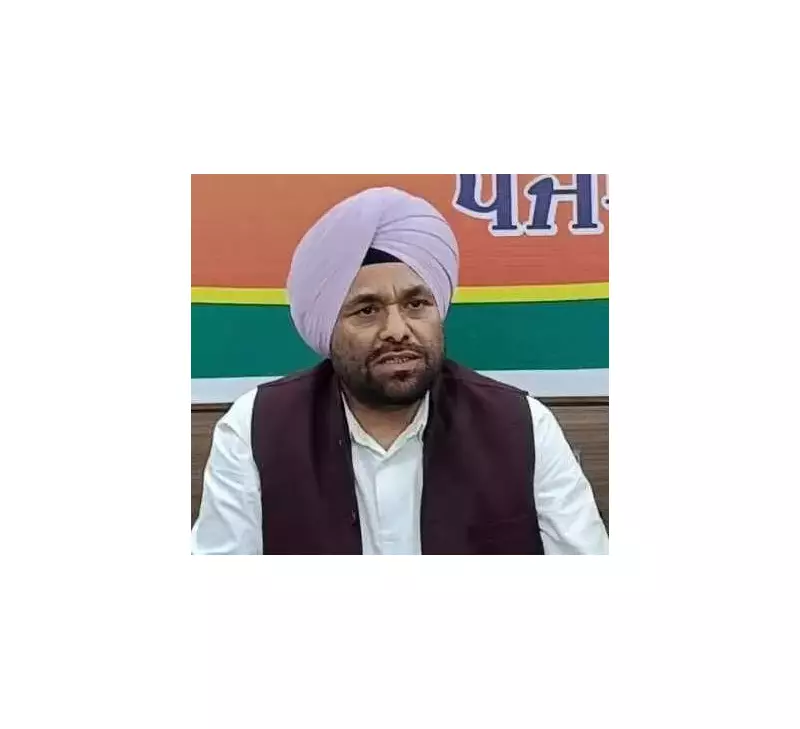
In a sharp critique of the Aam Aadmi Party (AAP) administration in Punjab, the Bharatiya Janata Party (BJP) has strongly condemned what it describes as the government's complete failure to execute any meaningful work under the Scheduled Caste Sub-Plan. The allegations were voiced by Paramjit Singh Kainth, the vice-president of the Punjab BJP Scheduled Caste Morcha, during a press interaction in Chandigarh on Sunday.
Absence of Tangible Results Despite High Dalit Population
Kainth emphasized that despite the Punjab government's frequent proclamations of being Dalit-friendly, there has been a conspicuous lack of concrete, visible, or result-oriented initiatives under the SC Sub-Plan. He pointed out that not a single official report has been produced to demonstrate that the allocated funds have actually led to any measurable improvement in the living conditions of Dalit settlements across the state.
Demographic Significance and Government Inaction
Highlighting the critical demographic context, Kainth noted that Punjab holds the highest proportion of Scheduled Caste population in India. While the national SC population stands at 16.6%, Punjab's figure is significantly higher at 31.94%, which translates to approximately 8.86 million individuals. Although Punjab accounts for only 2.3% of India's total population, it contributes 4.3% to the country's total SC population.

Despite this substantial demographic presence, Kainth lamented that the SC Sub-Plan has remained largely confined to budget speeches and paper announcements, with little to no on-ground implementation. He revealed that 73.33% of Punjab's SC population resides in rural areas, with 14 out of 23 districts having an SC population exceeding 30%. In 4,799 villages, this figure surpasses 40%, and alarmingly, there are 57 villages where 100% of the population belongs to the SC community, yet no targeted interventions have been undertaken in these areas.
Critical Shortcomings in Education and Employment
Kainth drew attention to the severe challenges in the education sector, where the SC literacy rate in Punjab is 64.81%, compared to the state's overall literacy rate of 75.84%. Literacy among SC women is even lower at 58.39%, and participation of SC students in higher education remains dismal. He criticized the Bhagwant Mann-led government for neither formulating a robust scholarship policy nor establishing a structured skill development framework to address these disparities.
Employment and Housing Crisis
On the employment front, the situation is described as deeply concerning. Only 35.88% of the SC population is part of the labor force, with a large number trapped in agricultural labor or low-wage, insecure jobs. Additionally, nearly 59% of SC families live in dilapidated housing conditions, reflecting a profound failure in infrastructure and social development initiatives.
Allegations of Poor Implementation of Central Schemes
Kainth further alleged that several major welfare schemes of the central government are being deliberately poorly implemented in Punjab. These include the Pradhan Mantri Awas Yojana, Ayushman Bharat, Ujjwala Yojana, Jal Jeevan Mission, Pradhan Mantri Kaushal Vikas Yojana, and various pension schemes. As a result, poor and Dalit families are being systematically deprived of essential economic opportunities and benefits.
Call for Transparency and Accountability
In light of these issues, Kainth demanded that the Mann government immediately release a white paper detailing the utilization of SC Sub-Plan funds. He urged the administration to implement a transparent, accountable, and outcome-oriented system to ensure the real empowerment of the Dalit community in Punjab.
The BJP's critique underscores growing political tensions over social welfare policies in the state, with the Scheduled Caste community's welfare becoming a focal point of contention between the ruling AAP and the opposition BJP.