BJP Corporators Intensify Campaign Against PCMC's Additional Property Transfer Fee
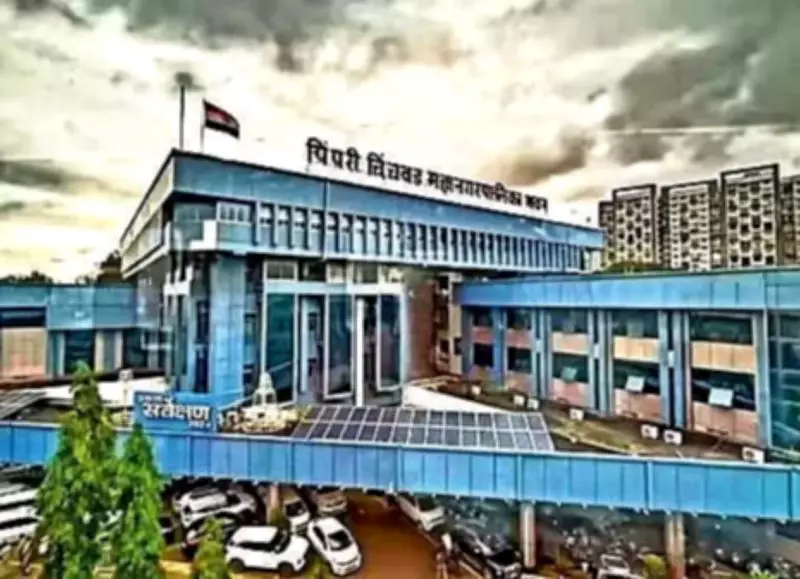
In Pimpri Chinchwad, Bharatiya Janata Party (BJP) corporators and representatives from housing societies have significantly escalated their demand for the immediate abolition of an extra 0.5% charge imposed on property ownership transfers. They have labeled this fee as an "unjust burden" that unfairly impacts local residents and complicates real estate transactions in the area.
Redundant Taxation Argument Presented to Municipal Commissioner
Shatrughna Kate, who serves as both a BJP corporator and the president of the city unit, has formally written to Municipal Commissioner Vijay Suryawanshi to argue against the charge. In his communication, Kate emphasized that the fee is redundant because the Pimpri Chinchwad Municipal Corporation (PCMC) already levies a 1% local body tax on property value during ownership transfers. He contends that this existing tax makes the additional 0.5% fee completely unnecessary and places an excessive financial strain on citizens.
Historical Context and Revenue Generation of the Fee
The PCMC introduced this supplementary transfer fee in 2022, a period marked by administrative rule without an elected body. Unlike the previous system, which calculated charges based on 10% of the property's rateable value derived from annual rental income, the new norm requires 0.5% of the total market value, incorporating ready reckoner rates. This shift was implemented specifically to bolster civic revenue, but it has resulted in a significant inflation of costs for both buyers and sellers involved in property transactions.

While the administration maintained a firm stance on the fee during the absence of elected representatives, the return of corporators to office has reignited calls for its withdrawal. "The civic body already collects multiple taxes from its residents. There is no justification for this additional load," stated Kate. He further warned that if the administration fails to act on their demand, the matter will be escalated to the general body meeting for broader discussion and potential action.
Housing Federation's Persistent Opposition and Alternative Solutions
Sanjeevan Sangle, president of the Chikhali-Moshi Pimpri Chinchwad Housing Societies Federation, reported that the federation has been actively fighting this charge since its inception. "We approached the chief minister for intervention and met the municipal commissioner, but our efforts went in vain," Sangle explained. With elected representatives now in place, there is renewed hope for a resolution. He urged the civic body to explore alternative revenue streams instead of overtaxing residents, suggesting that more sustainable financial models should be considered to support municipal operations without burdening property owners.
Official Response and Comparative Analysis with Pune Municipal Corporation
A senior PCMC official acknowledged that the matter has not yet been formally deliberated but assured that any decision would be made after careful consideration. The official highlighted the fee's importance as a revenue generator, noting that in the 2025–26 fiscal year alone, it contributed approximately Rs 45 crore to civic funds. This substantial income underscores the financial implications of potentially scrapping the charge.
In contrast, officials from the Pune Municipal Corporation (PMC) stated that they do not use market value as a base for transfer fees. "PMC charges 30% of the rateable value for property transfers, a system that has remained consistent and avoids high costs associated with market-value calculations," a PMC official clarified. This difference in approach highlights the varied strategies employed by municipal bodies in the region and adds context to the ongoing debate in Pimpri Chinchwad.
The intensified demands from BJP corporators and housing society representatives reflect growing discontent with what they perceive as excessive taxation. As discussions continue, stakeholders await a formal response from the PCMC administration, which will weigh the financial benefits against the public outcry in determining the future of this contentious property transfer fee.