

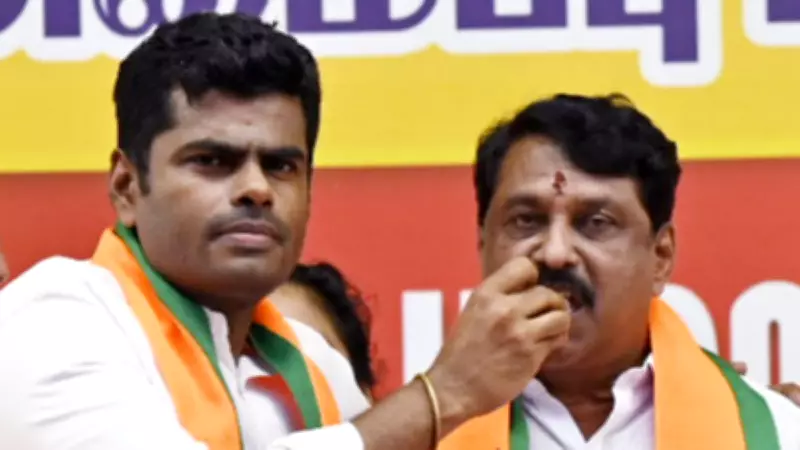
BJP's Calculated Decision: Annamalai Excluded from 2026 Tamil Nadu Election Ticket List
In a significant political development, the Bharatiya Janata Party (BJP) has made a major announcement regarding its strategy for the upcoming Tamil Nadu assembly elections in 2026. The party has decided not to grant a ticket to its state president, K. Annamalai, for contesting in the state polls. This decision marks a pivotal shift in the BJP's approach to electoral politics in Tamil Nadu and has sparked widespread discussion among political analysts and observers.
Strategic Alliance Considerations Drive the Decision
The primary reason behind this move is the BJP's focus on forging and strengthening alliances with regional parties in Tamil Nadu. The party leadership believes that fielding Annamalai, who has been a prominent and sometimes controversial figure in state politics, could potentially hinder negotiations with potential allies. By opting not to nominate him, the BJP aims to present a more flexible and cooperative image, which is crucial for building a broad-based coalition to challenge the dominant Dravidian parties.
Internal party dynamics have also played a role in this decision. While Annamalai has been instrumental in revitalizing the BJP's presence in Tamil Nadu, his assertive style and direct confrontations with rival parties have sometimes created friction within the party ranks. Some senior leaders feel that a more moderate candidate might be better suited to lead the electoral charge, ensuring unity and minimizing internal discord during the high-stakes election campaign.

Implications for Tamil Nadu's Political Landscape
This decision is expected to have far-reaching implications for the political landscape of Tamil Nadu. Annamalai's exclusion from the ticket list signals the BJP's intent to prioritize alliance-building over individual prominence. It reflects a strategic calculation that the party's growth in the state depends more on collaborative efforts with local partners than on relying solely on high-profile leaders.
Moreover, this move could influence the BJP's campaign narrative in the run-up to the 2026 elections. Without Annamalai as a candidate, the party may shift its focus towards issues like governance, development, and regional aspirations, rather than personality-driven politics. This could help the BJP appeal to a broader electorate, including voters who are disillusioned with the traditional Dravidian parties but wary of polarizing figures.
Reactions and Future Prospects
The announcement has elicited mixed reactions from political circles. Supporters of Annamalai have expressed disappointment, arguing that his grassroots connect and vigorous campaigning have been key to the BJP's recent gains in the state. On the other hand, alliance partners and some within the BJP have welcomed the decision, viewing it as a pragmatic step towards electoral success.
Looking ahead, the BJP's strategy will be closely watched as the 2026 elections approach. The party's ability to secure strong alliances and effectively communicate its message without Annamalai on the ticket will be critical. This decision underscores the evolving nature of Indian politics, where regional considerations and coalition dynamics often take precedence over individual ambitions.
In conclusion, the BJP's call to deny a ticket to Annamalai for the Tamil Nadu elections is a calculated move aimed at enhancing the party's electoral prospects through strategic alliances and internal cohesion. As the political drama unfolds, it will shape the contours of the upcoming battle for power in one of India's most politically vibrant states.






