

BJP and Election Commission Seal Controversy Sparks Political Firestorm in Kerala
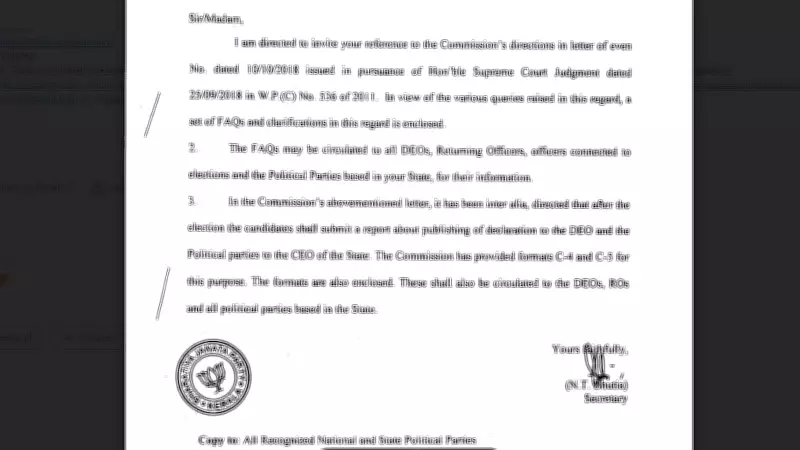
A major political controversy has erupted in Kerala, with the Congress and Communist Party of India (Marxist) leveling serious allegations against the Bharatiya Janata Party and the Election Commission of India. The dispute centers on official communications that appear to show the Election Commission using BJP party seals, raising fundamental questions about institutional independence and electoral integrity.
Political Parties Launch Scathing Accusations
The controversy began when CPI(M) Kerala's official Twitter account posted a scathing message on March 23, 2026, questioning whether all pretenses had been dropped regarding the relationship between the BJP and the Election Commission. "It is no secret that the same power centre seems to control both the Election Commission of India and the BJP," the party stated bluntly. "Even then, at least maintain the courtesy of two separate desks. Now even that seems unnecessary."
Simultaneously, Congress Kerala's official account directed pointed questions at the Election Commission's official handle. "Dear @ECISVEEP, in a letter shared by you to all states and Union Territories, the seal of @BJP4Keralam is found," the party's tweet read. "Are you operating out of BJP's office? How did you get access to their seals? Or is it BJP's letter to all Electoral Officers with your letterhead? Can you explain this?"

The Core of the Controversy
At the heart of this political firestorm is what appears to be an official Election Commission communication that somehow incorporates or references the official seal of the BJP's Kerala unit. This has triggered widespread concern about:
- Institutional Independence: Whether the Election Commission maintains proper separation from political parties
- Electoral Integrity: How such apparent mixing of official and party materials could affect fair elections
- Procedural Standards: The protocols followed in official communications between electoral bodies and political entities
The timing of these allegations is particularly sensitive, coming during what appears to be an election period or preparation phase, when the Election Commission's neutrality is paramount.
Broader Implications for Democratic Institutions
This controversy extends beyond Kerala's borders, touching on fundamental questions about India's democratic institutions. The Election Commission of India, as the constitutional body responsible for conducting free and fair elections, operates under strict protocols designed to maintain absolute neutrality.
- The apparent mixing of official Election Commission communications with BJP party seals represents a potential breach of established protocols
- Opposition parties are framing this as evidence of institutional capture or improper coordination
- The controversy raises questions about whether similar issues might exist in other states or at the national level
Political observers note that such allegations, if substantiated, could have far-reaching consequences for public trust in electoral processes. The very foundation of democratic governance relies on citizens believing that elections are conducted fairly and without partisan interference.
Response and Next Steps
As of now, neither the Election Commission nor the BJP has issued an official response to these specific allegations. However, the public nature of the accusations—made through verified political party accounts with photographic evidence—makes some form of official clarification inevitable.
The controversy highlights the intense scrutiny that surrounds electoral processes in India, particularly in politically active states like Kerala. Both the Congress and CPI(M) have positioned themselves as guardians of democratic norms, using social media platforms to directly challenge what they perceive as institutional overreach or improper coordination.

This incident serves as a reminder of how digital platforms have transformed political accountability, allowing opposition parties to immediately challenge perceived irregularities and demand transparency from constitutional bodies. The coming days will likely see increased political pressure for a comprehensive explanation and potential corrective measures to restore confidence in electoral administration.





