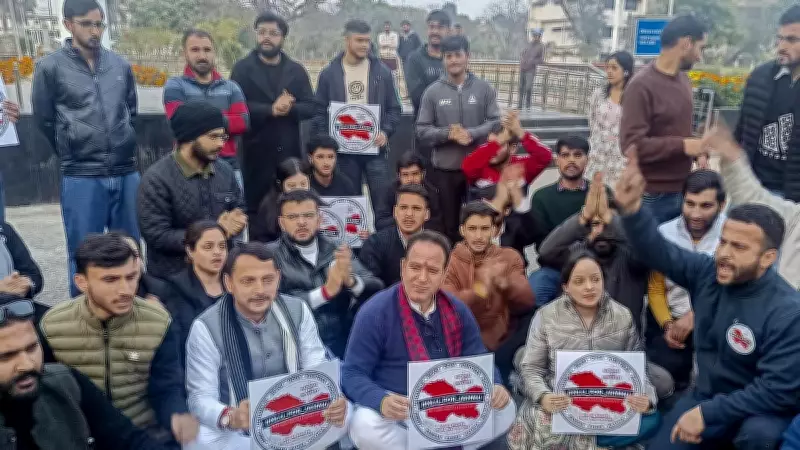
BJP Legislators Rally Behind Jammu Students' Demand for National Law University
In a notable show of political solidarity, Bharatiya Janata Party (BJP) members of the legislative assembly in Jammu and Kashmir have actively participated in student-led protests, vocally supporting the demand for the establishment of a National Law University (NLU) in Jammu. This development underscores a growing consensus on the urgent need to bolster legal education infrastructure in the region, with legislators aligning themselves with grassroots academic aspirations.
Amplifying Student Voices for Legal Education Reform
The protest, spearheaded by students from various educational institutions in Jammu, has gained significant momentum with the involvement of BJP MLAs. Students have been advocating for an NLU to address the shortage of premier legal education opportunities in Jammu and Kashmir, arguing that such an institution would not only enhance access to quality law programs but also foster a more robust legal fraternity in the area. The participation of elected representatives has lent considerable weight to these demands, highlighting the issue's importance in regional development agendas.
Political Implications and Broader Educational Goals
The BJP MLAs' engagement in the protest signals a strategic move to connect with youth and educational stakeholders in Jammu and Kashmir. By backing the students' cause, the legislators are emphasizing their commitment to improving higher education infrastructure, particularly in specialized fields like law. This alignment may also reflect broader political objectives to strengthen the party's presence and address local concerns in the union territory. The demand for an NLU is seen as part of a larger push to elevate Jammu's status as an educational hub, potentially attracting students from across India and boosting the local economy through academic investments.

Experts suggest that establishing a National Law University in Jammu could have far-reaching benefits, including increased enrollment in legal studies, improved research opportunities, and enhanced career prospects for graduates. The protesters and their political supporters argue that such an institution would align with national educational policies aimed at expanding access to professional courses in underserved regions. As the movement gains traction, it remains to be seen how state and central authorities will respond to these concerted calls for action.