

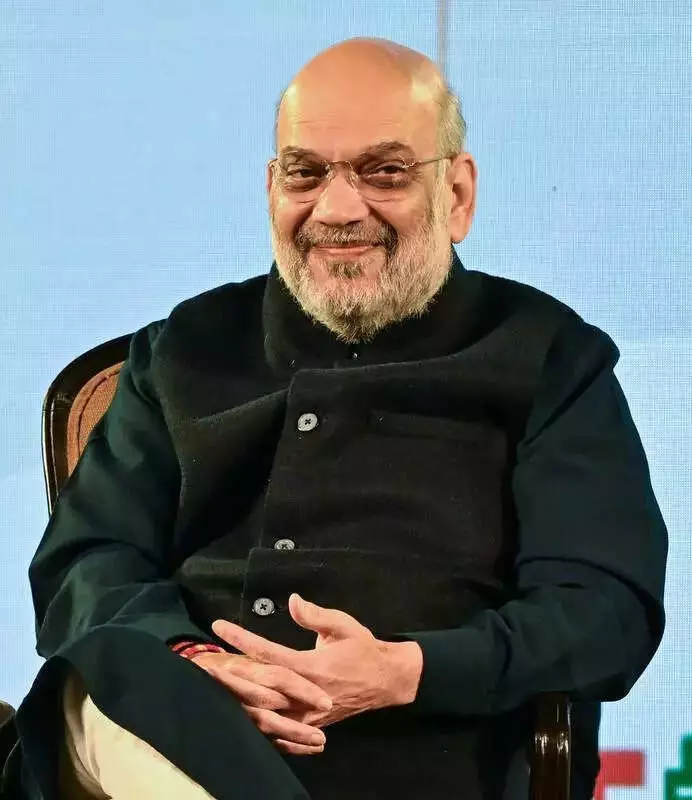
The Bharatiya Janata Party (BJP) has achieved a landmark victory in Maharashtra's local body elections, decisively expanding its footprint into the state's rural heartlands. This strategic win, following Union Home Minister Amit Shah's directive to secure victories from Parliament to panchayats, signals a significant shift in the state's political dynamics.
From Urban Stronghold to Rural Dominance
Historically perceived as a party with an urban base, the BJP has now managed to secure a commanding presence in rural Maharashtra. The results for 288 civic bodies, announced on Sunday, saw the BJP winning the president's post in more than 120 municipal councils and nagar panchayats. This performance establishes the BJP as the party with the largest base in local bodies across the state, including regions once considered Congress-NCP bastions.
State cabinet minister and senior BJP functionary Chandrashekhar Bawankule hailed the outcome, stating, "This victory is quite big for the party. BJP has not seen such a massive victory in this sphere before this." He added that the win reflects public trust in the party's vision for a developed India and Maharashtra, extending to the municipal council level.

A Campaign Fought Like State Elections
In a departure from the norm where civic polls are managed by local units, the ruling Mahayuti alliance—comprising the BJP, Shiv Sena, and NCP—treated these elections on par with assembly polls. The senior leadership of these parties crisscrossed the state, with campaign schedules and logistics, including the use of helicopters to address multiple rallies, mirroring a full-scale state election effort.
Political analyst Parimal Maya Sudhakar noted that the BJP capitalized on the weakening position of the Congress. "Earlier, BJP's concentration in rural areas was limited only to Vidarbha, but after sensing that Congress was getting weak, it seized the opportunity to penetrate rural pockets in other regions as well," he explained.
The Long Game: Building for 2029
The victory is seen as a crucial step in the BJP's long-term strategy for Maharashtra. Amit Shah's recent statement in Mumbai that the BJP does not require crutches in the state gains substantial weight from these results. Observers believe the party is systematically working towards the 2029 elections, aiming to contest without depending on allies.
Parimal Maya Sudhakar added, "There is no doubt that the party's goal is 2029, for which it is trying to show its presence in every section." He also pointed out that the migration of opposition politicians to the BJP, anticipating stable governance for the next four years, is further bolstering the party's rural base.
The momentum from this first phase of local body polls is expected to benefit the Mahayuti partners in the upcoming municipal corporation elections scheduled for January 15. This comprehensive win not only reshapes the grassroots political map of Maharashtra but also sets the stage for the next major electoral battles in the state.






