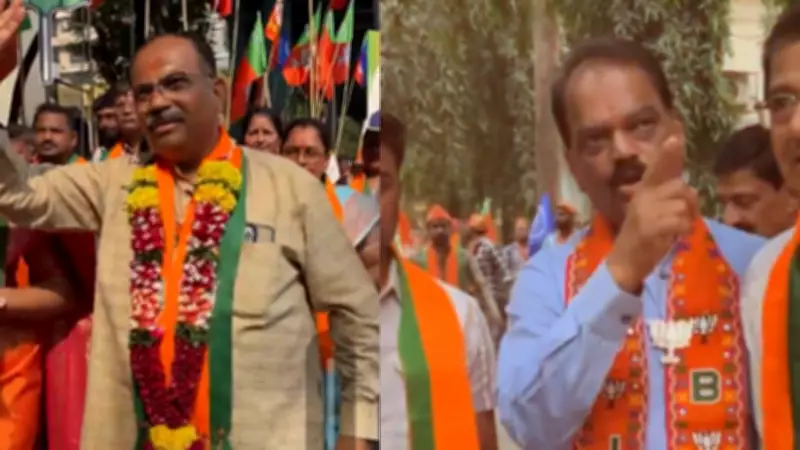
BJP's Khankar and Shinde Emerge as Frontrunners for BMC Leadership Roles
As the Bharatiya Janata Party (BJP) and Shiv Sena prepare to register their groups for the Brihanmumbai Municipal Corporation (BMC) on Monday, two prominent BJP corporators have surfaced as leading candidates for key leadership positions. Ganesh Khankar and Prabhakar Shinde are currently positioned as the frontrunners for the crucial post of group leaders within Mumbai's influential civic body.
Power-Sharing Formula Paves Way for MahaYuti Alliance
Shiv Sena functionaries have indicated that the two political parties are likely to register a joint MahaYuti group, provided the BJP agrees to their proposed power-sharing arrangement. The formula reportedly includes assurances for the Mayor's post for at least 1.25 years, if not the complete 2.5-year term. This strategic alliance could reshape the political dynamics within Mumbai's municipal governance structure.
Background of the Leading Contenders
Ganesh Khankar represents the BJP's traditional base as an experienced party hand and corporator from Borivli. His Marathi background and longstanding association with the BJP make him a suitable candidate according to party insiders. Meanwhile, Prabhakar Shinde brings a different perspective as a senior BJP corporator from Mulund who previously served in the Shiv Sena before joining the BJP in 2017.

Shinde's political experience includes serving as the BJP's group leader when the BMC's term concluded in 2022, along with membership in the influential Standing Committee. His cross-party background provides valuable insight into the workings of both major political entities in Maharashtra.
Strategic Leadership Distribution
If Khankar secures the BJP's group leader position, he would automatically become the leader of the house since the BJP currently stands as the single-largest party in the BMC. In this scenario, Shinde would likely emerge as the leading candidate for the Chairperson of the all-important Standing Committee.
It's important to note the differing term structures:
- The group leader's position typically spans five years, unless the appointing party decides to make changes
- The Standing Committee Chairperson serves only a one-year term, with annual elections determining the position holder
Party Strategy Behind the Selections
A senior BJP functionary explained the strategic thinking behind these potential appointments: "The party wants to nominate an original BJP man as the group leader. Plus, the nominee has to be Marathi. So, Khankar fits this bill perfectly. Prabhakar Shinde, on the other hand, originates from the Sena but possesses extensive experience, making him particularly suitable to handle the complexities of the Standing Committee."
Comprehensive Power-Sharing Arrangement
Functionaries from both parties have confirmed that a detailed power-sharing formula has been finalized between the BJP and Shiv Sena. Under this arrangement:
- The BJP will lead the joint group with its appointed group leader
- The whip position for the combined group of 118 corporators will be held by a Shiv Sena representative
- This ensures that while the Sena may not secure the group leader's post, they maintain significant influence through control of the whip position
Committee and Position Distribution
The proposed distribution of key positions reveals a carefully negotiated balance of power:
- The BJP is likely to retain the Mayor's position and Standing Committee Chairperson's role
- The Shiv Sena is expected to secure the Chairperson positions for the Improvements Committee, Health Committee, and BEST Committee
- The Deputy Mayor's post would also go to the Shiv Sena under this arrangement
Shiv Sena corporator Amey Ghole has been identified as the probable candidate for the Sena's whip position, further solidifying their influence within the joint group structure.

Final Decision Pending High-Level Approval
While the path for joint group registration appears largely cleared according to party functionaries, the ultimate decision rests with Chief Minister Devendra Fadnavis and Deputy Chief Minister Eknath Shinde. Their forthcoming discussions will determine whether this strategic MahaYuti alliance materializes as planned, potentially creating a new paradigm in Mumbai's municipal politics.
The proposed alliance represents a significant development in Maharashtra's political landscape, particularly in Mumbai where the BMC controls substantial resources and influences urban development policies affecting millions of residents. The outcome of these leadership selections and power-sharing arrangements will have far-reaching implications for governance in India's financial capital.