

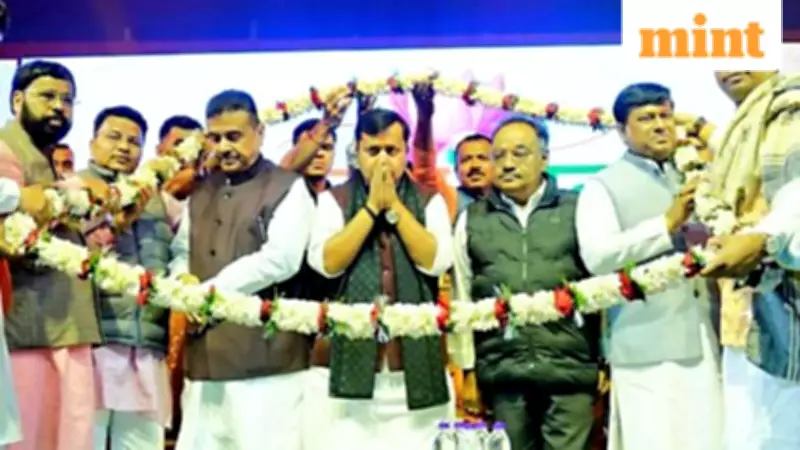
Bharatiya Janata Party (BJP) president Nitin Nabin has unleashed a fierce assault on the Mamata Banerjee-led Trinamool Congress (TMC) administration in West Bengal, as the state gears up for crucial assembly elections scheduled later this year. In a series of pointed allegations, Nabin has framed the TMC government as a grave threat to national security, while also lambasting its governance record.
Accusations of National Security Compromise and Voter Intimidation
Nabin has directly accused the TMC regime of patronising infiltration across borders, thereby endangering India's security framework. He further alleged that during the Special Intensive Exercise (SIR), state machinery—including District Magistrates (DMs), Sub-Divisional Officers (SDOs), and Block Development Officers (BDOs)—acted as puppets of the TMC government to intimidate citizens. This, he claimed, was a deliberate attempt to malign the Election Commission of India, a constitutional authority.
Historical Context and Current Parallels
Invoking the legacy of Jana Sangh founder Syama Prasad Mookerjee, Nabin asserted that West Bengal exists in its present form due to Mookerjee's resistance against attempts to merge it with East Pakistan, now Bangladesh. Similar forces are active even today, he warned, emphasising that those not native to Bengal cannot claim rights here. He vowed that BJP workers are prepared to make any sacrifice to prevent Bengal from being merged with Bangladesh, accusing the TMC of attempting such a transformation.

Governance Failures and Economic Decline
Nabin linked the infiltration issue to the broader political battle, accusing Mamata Banerjee of crying foul in Delhi while presiding over misrule at home. He described Bengal under TMC as a maha jungle raj, where corruption has replaced administration and fear has supplanted democracy. Specifically, he highlighted Durgapur in Paschim Bardhaman district as a symbol of the state's industrial decline.
- Once a magnet for workers and students from Bihar and Jharkhand, Durgapur's industrial identity is now fading.
- Banerjee's promises of industrialisation during the Singur movement remain unfulfilled after fifteen years.
- Old factories are shutting down, forcing Bengal's youth to migrate out of state for employment.
Nabin labelled Singur a stark symbol of broken promises and lost opportunities, underscoring the TMC's failure to deliver on economic fronts.
Digital Outreach and Electoral Strategy
Prior to addressing the rally, Nabin launched the BJP's Digital Warrior campaign, aimed at strengthening digital outreach and engagement with Bengalis across the state, other parts of India, and abroad. This initiative seeks to bolster the party's presence in the run-up to the elections.
Call for a Double-Engine Government
Casting the 294-member Assembly polls as a direct contest between the TMC's jungle raj and the BJP's governance model, Nabin argued that only a double-engine government under Prime Minister Narendra Modi can restore order, revive development, and secure Bengal's borders. He stressed that Modi's vision for a Viksit Bharat (Developed India) is incomplete without a developed Bengal, declaring that Mamata Banerjee's countdown has begun.
Nabin urged supporters to raise their voices so loudly that they resonate in Delhi, signalling an intensified campaign phase. His remarks reflect a broader narrative where the BJP positions itself as the guardian of national security and good governance, while painting the TMC as a regime of failure and threat.






