

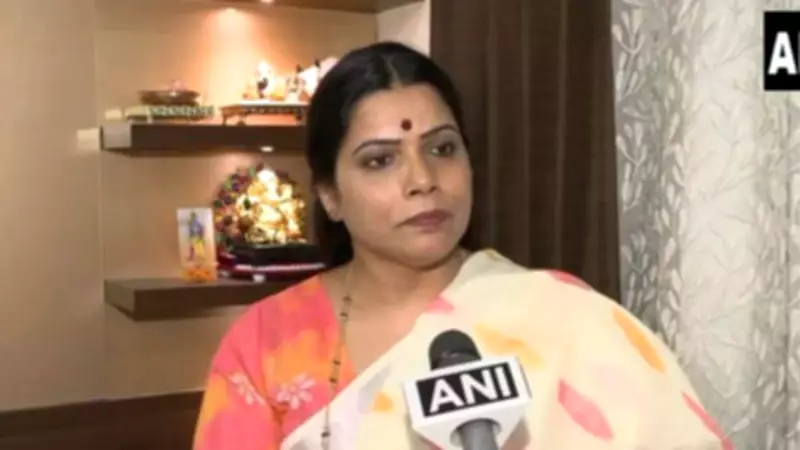
Ritu Tawde Elected Unopposed as Mumbai Mayor, Breaking Shiv Sena's 25-Year Hold
In a significant political shift for India's richest civic body, BJP corporator Ritu Tawde has been elected unopposed as the Mayor of Mumbai's Brihanmumbai Municipal Corporation (BMC). The election marks a historic moment, ending the Shiv Sena's quarter-century grip on the mayoral position and representing the BJP's first return to the office since 1982-83.
Who is Ritu Tawde?
Ritu Tawde, a two-time corporator from Ghatkopar East, will formally assume office as Mumbai's mayor today. Her election positions her as the city's eighth woman mayor and establishes her as a prominent BJP face in Mumbai's civic politics at a crucial juncture when the party is seeking to expand its organizational footprint in the metropolitan region.
Tawde's political background includes:

- Serving twice as corporator from Ghatkopar East, a politically significant suburban ward
- Becoming a key figure in the BJP's municipal strategy
- Joining the distinguished list of women who have held Mumbai's mayoral office
Political Significance of the Unopposed Election
The mayoral election became uncontested after the Uddhav Thackeray-led Shiv Sena (UBT) opted not to field a candidate, clearing the path for the Mahayuti alliance's victory without a floor contest. This strategic withdrawal transformed what could have been a numerical test into a statement of political momentum for the ruling alliance.
The uncontested nature of the election underscores the shifting political dynamics within Mumbai's municipal governance and represents a consolidation of power for the Mahayuti alliance.
End of an Era: Shiv Sena's 25-Year Dominance Concludes
Tawde's appointment concludes a remarkable 25-year period during which the Shiv Sena dominated the symbolic top office of the BMC. This political milestone occurs even as the BMC continues to function under an administrator, raising ongoing questions about democratic accountability in Mumbai's civic governance.
The transition represents more than just a change in personnel—it signals a potential realignment in how Mumbai's municipal politics will unfold in the coming years, with implications that may extend to state-level political narratives.
Power-Sharing Arrangement Within Mahayuti Alliance
Under a rotational arrangement within the Mahayuti alliance, Sanjay Ghadi of the Eknath Shinde-led Shiv Sena will serve as deputy mayor. This pairing demonstrates the internal power-sharing structure of the alliance, which includes both the BJP and the Shinde faction of the Shiv Sena.
The leadership distribution reflects:
- The careful calibration of political positions within the ruling coalition
- How civic positions are being allocated amid broader political realignments in Maharashtra
- The strategic partnership between BJP and Shinde's Shiv Sena faction
High-Profile Attendance and Political Implications
Maharashtra Chief Minister Devendra Fadnavis and Deputy Chief Minister Eknath Shinde are expected to attend the proceedings at BMC headquarters, underscoring the political importance the alliance attaches to this mayoral transition. Their presence frames the event as a consolidation moment for the Mahayuti rather than a routine municipal ceremony.
While the mayor's office does not directly control the BMC's administrative machinery—which remains under a municipal commissioner—the position retains significant political value as a platform for visibility, agenda-setting, and citywide messaging.
What Tawde's Mayoralty Means for Mumbai's Future
Tawde's rise is expected to sharpen the BJP's claim to civic leadership in Mumbai and provide the party with a symbolic anchor in the corporation. In a city where municipal politics often set the tone for state-level narratives, the unopposed election of a BJP mayor—and the strategic retreat of Shiv Sena (UBT) from the contest—is likely to reverberate beyond the BMC chamber.
The transition occurs as the BMC oversees critical infrastructure, public health initiatives, road networks, and major capital projects, making the mayor's role particularly significant despite the administrative limitations of the position.

This political development represents not just a change in leadership but potentially a new chapter in Mumbai's civic governance, with implications for how India's financial capital addresses its urban challenges in the years ahead.





