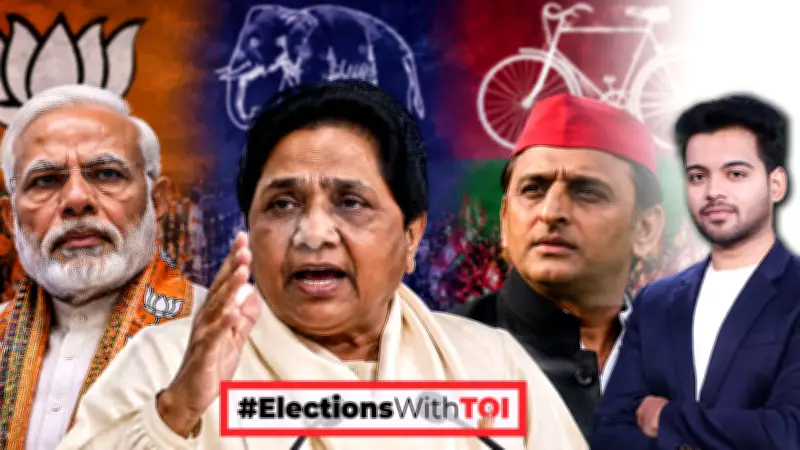
With the 2027 Uttar Pradesh Assembly elections on the horizon, Bahujan Samaj Party (BSP) chief Mayawati has begun sharpening her party's political strategy once again. At a key organisational meeting in Lucknow, the BSP leadership reviewed poll preparedness, cadre mobilisation, and caste outreach efforts as the party seeks to regain political relevance in the state.
Revival of the 2007 Social Engineering Formula
The renewed focus has revived discussions around Mayawati's famous 2007 social engineering formula, which brought together Dalits, Brahmins, Muslims, and sections of non-Yadav Other Backward Classes (OBCs) to deliver the BSP a historic majority in Uttar Pradesh. While the party's electoral strength has declined sharply over the past decade, the BSP still retains influence among core Jatav voters and sections of Dalit communities.
Impact on Samajwadi Party's Strategy
Political analysts believe a stronger BSP could significantly complicate the Samajwadi Party's strategy ahead of 2027. Samajwadi Party chief Akhilesh Yadav has been aggressively pushing the PDA narrative — Pichhda, Dalit, Alpsankhyak — to consolidate backward castes, Dalits, and Muslims against the Bharatiya Janata Party (BJP). However, a BSP revival could split this social coalition by reclaiming Dalit voters and attracting sections of Muslim voters in triangular contests.

Caste Arithmetic and Electoral Equations
The possibility of the BSP reopening its Brahmin outreach programmes has added a new layer to Uttar Pradesh's caste arithmetic. Even a limited shift in upper-caste support in select constituencies could alter electoral equations and hurt the opposition more than the BJP. As Uttar Pradesh moves closer to the 2027 battle, the key question is no longer whether the BSP can independently return to power, but whether Mayawati can once again reshape the state's political contest through caste consolidation and strategic social engineering.