

The Enduring Influence of Caste in Tamil Nadu's Political Landscape
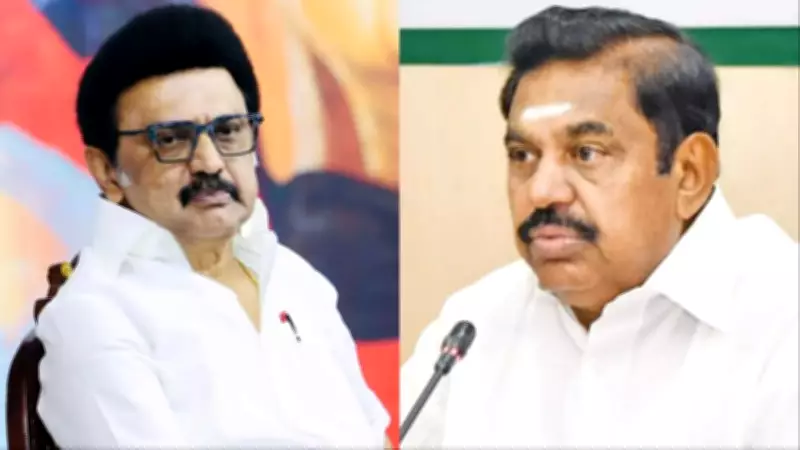
On April 3 last year, Chief Minister M K Stalin made a significant announcement in the state assembly. He declared that a memorial would be constructed in Usilampatti to honor All India Forward Bloc leader P K Mookiah Thevar, commemorating his 103rd birth anniversary. Stalin highlighted Mookiah's crucial role as a pillar of support to former Chief Minister C N Annadurai when the DMK government assumed power in 1967. "The great Anna had said Mookiah stands for justice," remarked Stalin, amidst enthusiastic desk-thumping from assembly members.
Historical Foundations and Political Realities
P K Mookiah Thevar, famously known as 'Urangapuli' or the 'sleepless tiger', was a dedicated disciple of freedom fighter and AIFB leader U Muthuramalinga Thevar. He served as the pro-tem speaker, administering oaths to newly elected MLAs. At his urging, Annadurai established educational institutions in Kamuthi, Usilampatti, and Melaneelithanallur to promote the welfare of the Thevar community. This episode underscores a broader political reality in Tamil Nadu, where caste-based parties have long aligned with major Dravidian factions to secure legislative representation.
These parties frequently switch allegiances during elections, contesting under symbols like the DMK's 'rising sun' or the AIADMK's 'two leaves' to boost their vote share. Often, it is not ideology but electoral prospects that drive these shifts. Their influence becomes particularly pivotal in multi-cornered contests, such as the upcoming assembly elections. Recently, after Stalin secured an electoral deal with K K Selvakumar's Tamilar Desam Katchi, which advocates for the Mutharaiyar community in the delta region, AIADMK general secretary Edappadi K Palaniswami allocated the Manachanallur seat to Singa Tamilar Munnetra Kazhagam, another group linked to the same community, marking its electoral debut.

Strategic Roots and Evolution
This strategic approach has deep roots in the eras of M Karunanidhi and M G Ramachandran, when major parties routinely promoted leaders from dominant local communities as district functionaries, MLAs, and ministers. The trend intensified under AIADMK general secretary J Jayalalithaa, who leveraged her close aide V K Sasikala's influence within the Mukkulathor community. Despite their anti-Brahmin ideological origins, Dravidian parties have historically treated non-Brahmin communities as a cohesive political bloc, despite underlying social inequalities.
"Historically, most leaders backed by numerically dominant non-Brahmin groups emerged victorious. Operating under the guise of empowering non-Brahmins, major parties strategically project an image of inclusivity as a tool for electoral gain," explains writer and historian Stalin Rajangam. The history of the All India Forward Bloc illustrates this dynamic vividly. Under Mookiah Thevar, the AIFB allied with the DMK-led Progressive Front in the 1971 election, securing seven seats in Mukkulathor-dominated areas like Andipatti, Sedapatti, Thirumangalam, and Usilampatti. Later, it shifted allegiance to the AIADMK under MGR, maintaining influence in Usilampatti by 1977, and continued to rely on Dravidian parties for electoral success.
Case Studies: PMK and Emerging Parties
A similar trajectory is evident with the Pattali Makkal Katchi (PMK). After leading the Vanniyar Sangam agitation for exclusive reservations in 1989, S Ramadoss's PMK contested 194 seats in 1991, losing deposits in 165 and winning only Panruti through former AIADMK minister S Ramachandran. However, by aligning with principal Dravidian parties, PMK gradually established a stronghold in the Vanniyar-dominated northern belt. The rise of PMK also created space for other caste-based outfits. In 2001, Dalit leaders Thol Thirumavalavan of Viduthalai Chiruthaigal Katchi and K Krishnasamy of Puthiya Tamilagam entered the electoral arena more assertively.

The DMK-led NDA alliance that year included several such parties: Dheeran's Tamil Pattali Makkal Katchi, Tamil Nadu Mutharaiyar Sangam, R S Raja Kannappan's Makkal Tamil Desam Katchi, Kongunadu Makkal Katchi, and A C Shanmugam's Puthiya Needhi Katchi. Most contested on the DMK's rising sun symbol for better prospects, but only Thirumavalavan won from the Mangalur reserved constituency. Voters rejected the DMK-BJP alliance, while PMK, aligned with Jayalalithaa, won 20 seats, emerging as the fourth-largest party in the assembly.
Contemporary Dynamics and Criticisms
Since then, caste-based parties have remained fixtures in alliances led by DMK or AIADMK, often switching sides between elections. Smaller outfits that contested independently, such as Ambedkar Puratchikara Makkal Katchi and Puratchi Bharatham, generally failed to make an impact. VCK leader D Ravikumar rejects the classification of his party as caste-based, asserting it stands for the annihilation of caste. "Caste and Hindu religion are inseparable. If caste organizations thrive, it means Hindutva is strengthened. Hindutva or caste ideology transcends party limits," says Ravikumar. "It is dangerous when caste parties thrive. It is encouraged by BJP and Sangh Parivar."
The electoral utility of these parties lies less in their independent strength and more in their inclusion in alliances, which reassures specific communities that their interests are recognized. Their success typically depends on the popularity and machinery of the larger ally. However, some parties have managed to carve out niches. T R Paarivendhar's Indhiya Jananayaka Katchi, associated with the Udayar community in Perambalur, won a Lok Sabha seat on the DMK's rising sun symbol in 2019 and now contests on BJP's lotus symbol in two seats, including Kunnam in Perambalur.
Current Electoral Strategies and Future Outlook
Actor Karunaas's Mukkulathor Pulipadai has gained visibility among Thevar voters in Ramanathapuram. He won the Thiruvadanai seat in 2016 on the AIADMK symbol and is now contesting Sivaganga on the DMK symbol. A C Shanmugam explains that his Puthiya Needhi Katchi was formed because communities like Mudaliyars and Pillaimars felt sidelined despite earlier government representation. "We are a lineage that once ruled (Aanda Parambarai). We had ministers such as Navalar V R Nedunchezhiyan and S Madhavan in Anna and Puratchi Thalaivar (MGR)'s cabinets. However, our community was continuously sidelined later," says Shanmugam. His party has nominated film director C Sundar in Madurai Central on the AIADMK symbol against DMK minister Palanivel Thiaga Rajan and will also contest from the BJP quota in the AIADMK-led NDA alliance on the lotus symbol.
While parties like Congress, Left, MDMK, VCK, Kongunadu Makkal Desiya Katchi, IUML, and other Muslim outfits have remained with the DMK since 2021, the AIADMK alliance includes PMK, Tamizhaga Makkal Munnetra Kazhagam, Puratchi Bharatham, and Perunthalaivar Makkal Katchi, representing Vanniyars, Devendrakula Vellalars, Dalits, and Nadars. Dravidar Kazhagam leader K Veeramani notes that in a state known as the 'cradle of social justice', parties are using caste to win votes, contrary to the principle of eradicating discrimination. "It won't last long. These parties are like people who sell mosquito repellants. For them, the more the mosquitoes, the more the sales. The formula of social engineering will not be successful in the Periyar land that is Tamil Nadu. People can distinguish between social justice and a casteist approach," he asserts.
This complex interplay of caste and politics continues to shape Tamil Nadu's electoral dynamics, with historical precedents informing current strategies as parties navigate the upcoming elections.





