

Centre's Revenue Deficit Grant Withdrawal Puts Himachal Pradesh in Financial Peril
The discontinuation of the Revenue Deficit Grant (RDG) to Himachal Pradesh by the Central government has sparked a fierce political confrontation between the ruling Congress and the Opposition BJP, setting the stage for a bitter political battle in the state. This withdrawal, recommended by the 16th Finance Commission, results in an annual loss of nearly Rs 9,000 crore for Himachal Pradesh, which could severely cripple development projects and the disbursement of pensions and arrears to employees.
Understanding the Revenue Deficit Grant
The RDG is a crucial financial transfer from the Central government to states under Article 275 of the Constitution. Based on Finance Commission recommendations, these grants are designed to cover the gap between a state's revenue expenditure and income, ensuring the provision of all essential services. They help bridge revenue account deficits after tax devolution and address inter-state disparities in financial resources, making them vital for states with limited earning avenues.
Mounting Debt and Financial Stress in Himachal Pradesh
Himachal Pradesh has been heavily reliant on RDG, receiving Rs 10,249 crore in 2021-22, Rs 9,377 crore in 2022-23, Rs 8,058 crore in 2023-24, and Rs 6,258 crore in 2024-25. Contrary to the state government's expectations of an increase during the 2026-31 period, the cessation of RDG has come as a severe shock. With the state's debt burden exceeding Rs 1 lakh crore, this discontinuation is set to compound financial distress. Annually, close to Rs 30,000 crore is required to meet committed liabilities such as salaries and pensions, alongside recurrent expenditures like subsidies and interest payments.

According to the latest report from the 16th Finance Commission, Himachal Pradesh's debt-to-GDSP ratio stands at over 32 per cent. During the Covid-19 pandemic in 2020-21, this ratio sharply rose to 45 per cent, falling to 40.8 per cent the following year but rebounding to 42.7 per cent in 2022-23. The state has also seen its deficit rise alarmingly, reaching 6.4 per cent in 2022-23 and 5.3 per cent in 2023-24, highlighting a worrisome financial trajectory.
Political Slugfest Over Financial Crisis
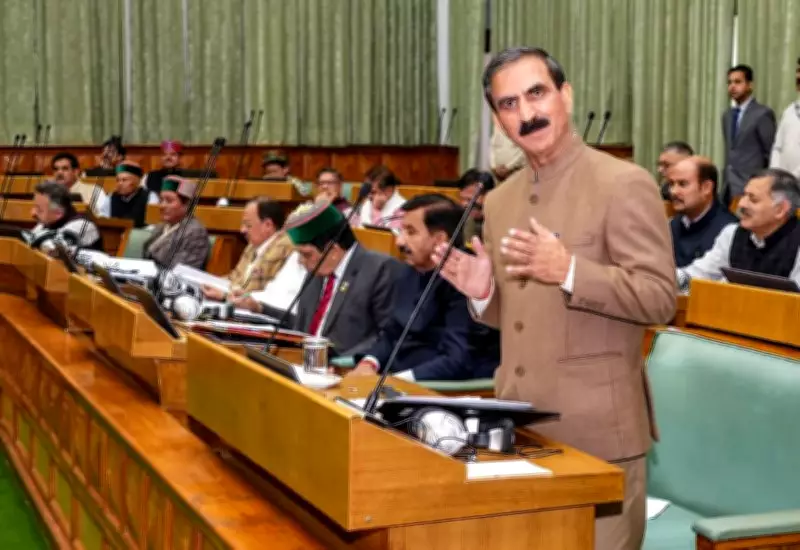
Recognizing the sensitivity of the issue, Chief Minister Sukhvinder Singh Sukhu has convened a special session of the Vidhan Sabha on February 17. This move could place the BJP in a difficult position, as Sukhu has framed it as a fight for Himachal Pradesh's rights. The Chief Minister has acknowledged that the discontinuation of RDG will make circumstances even more challenging for the financially-starved state.
The BJP, however, claims that the state received significantly higher allocations under the Modi regime compared to the UPA era. Leader of Opposition Jai Ram Thakur attributes the financial distress to fiscal mismanagement and the burden of guarantees provided by the Congress government. In response, Sukhu has accused the Centre of neglecting its responsibility to support Himachal Pradesh, a state with geographical constraints and limited resource mobilization avenues that was never intended to function as a revenue-surplus entity. He also emphasized that a small consumer state like Himachal has already been adversely affected by GST, and the withdrawal of RDG will only exacerbate the situation.
For a state struggling to pay salaries and pensions, the discontinuation of RDG threatens to cripple the economy entirely. There are growing contentions that Himachal Pradesh should be treated on par with Jammu and Kashmir and the Northeastern states, receiving liberal financial assistance to navigate its unique challenges.






