Chennai's Mobility Crisis: PwDs Face Inaccessible Footpaths, Untrained Staff
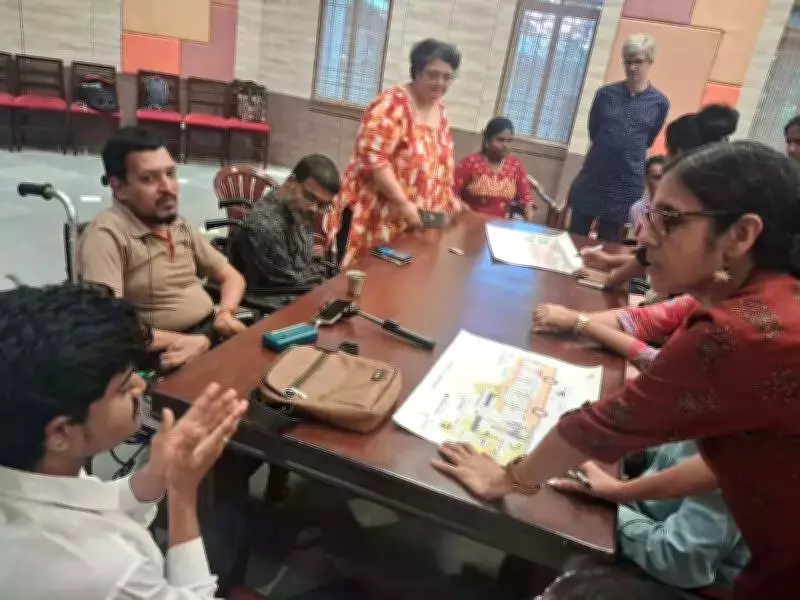
In Chennai, persons with disabilities (PwDs) are confronting severe mobility challenges, with inaccessible footpaths, untrained public transport staff, unplanned constructions, and poor last-mile connectivity ranking among their top concerns. These issues were highlighted during a recent focus group discussion organized by the citizen, consumer and civic action group (CAG) on Saturday, where individuals with various disabilities shared their experiences and called on the government to implement barrier-free mobility solutions.
Daily Struggles with Basic Infrastructure
K Anushya, a resident of Poonamallee, emphasized the difficulty in accessing something as fundamental as footpaths. "Bulky bollards often block our paths, making it hard to navigate. Traveling on public transport, especially in suburban and local trains, is a constant hassle. Once we disembark, wheelchair users like me struggle to find cabs to reach our final destinations, and we are frequently overcharged," she explained.
Public Transport Staff Lack Training and Awareness
A common concern raised was the rude attitude and lack of training among public transport staff. Rajeev, a PwD activist, pointed out ongoing issues: "Conductors are often ill-informed and illegally charge us for carrying wheelchairs. In low-floor buses, they are not trained to assist with boarding or alighting, leading to falls and injuries." This highlights a critical gap in staff education and enforcement of existing laws.

Need for Proactive Planning and Construction
Sathish, another PwD activist, stressed that changes must occur at the inception stage of projects. "At railway stations, the gap between trains and platforms is dangerously wide, posing risks. Such errors should be corrected during construction. For roads, simple measures like removing low-hanging cable wires and building ramps would significantly improve accessibility," he added, advocating for better planning to prevent future barriers.
Research Aims to Drive Policy Improvements
The discussion was part of an effort to collect inputs from PwDs for a comprehensive report on mobility, according to Nina Subramani, a researcher at CAG. "We are studying how accessible public transport and spaces are for commuters with disabilities. Key findings include the dismal lack of continuous, accessible, and encroached footpaths, along with inadequate training for bus drivers and conductors. When people with disabilities can travel comfortably and independently, the city becomes safer and more accessible for everyone," she told TOI.
This initiative underscores the urgent need for systemic changes to enhance mobility for PwDs in Chennai, promoting inclusivity and safety for all residents.