

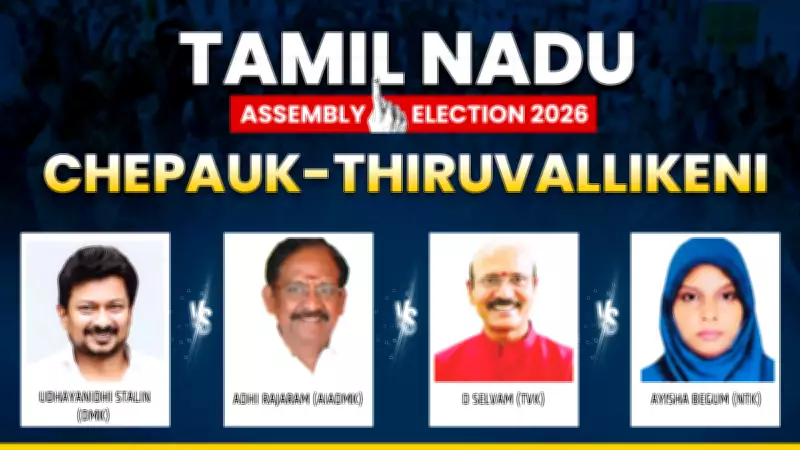
Chepauk-Thiruvallikeni Constituency Gears Up for Intense Four-Cornered Electoral Battle in 2026 Tamil Nadu Assembly Elections
The Chepauk-Thiruvallikeni assembly constituency in Tamil Nadu is poised for a significant political showdown as the 2026 state assembly elections approach, with a four-cornered fight emerging that could reshape the electoral landscape of this historically significant region. This constituency, long considered a bastion of the Dravida Munnetra Kazhagam (DMK), is now witnessing heightened competition from multiple political fronts, signaling a potential shift in voter allegiances and strategic campaigning.
Historical Stronghold of DMK Faces Unprecedented Challenge
Traditionally, the Chepauk-Thiruvallikeni constituency has been a stronghold for the DMK, with the party consistently securing victories in past elections due to its deep-rooted support base and effective grassroots mobilization. However, recent political developments and evolving voter sentiments have created an environment where the DMK's dominance is being tested like never before. The emergence of new political alliances and the resurgence of rival parties have contributed to a more fragmented electoral scenario, making this constituency a critical battleground for the upcoming polls.
The four-cornered contest is expected to involve the DMK, the All India Anna Dravida Munnetra Kazhagam (AIADMK), the Bharatiya Janata Party (BJP), and possibly a coalition of smaller regional parties or independent candidates. This multi-party competition reflects broader trends in Tamil Nadu politics, where traditional two-party dynamics are giving way to more complex electoral equations. Each party is likely to leverage local issues, development promises, and caste-based calculations to woo voters, adding layers of complexity to the campaign strategies.

Key Factors Driving the Electoral Dynamics in Chepauk
Several factors are contributing to the intensified political contest in Chepauk-Thiruvallikeni. Urban development concerns, infrastructure projects, and socio-economic issues such as employment and housing are expected to be central themes in the election discourse. Additionally, the constituency's diverse demographic profile, including a mix of urban residents, students, and traditional communities, means that parties will need to tailor their messages to address varied interests and aspirations.
The role of local leaders and their ability to connect with voters on ground-level issues will be crucial in determining the outcome of this four-cornered fight. Incumbency factors, performance of the sitting MLA, and public perception of governance at both state and local levels will also play significant roles in shaping voter decisions. Moreover, the impact of national political narratives, especially those propagated by the BJP, could influence the electoral calculus, given the party's efforts to expand its footprint in Tamil Nadu.Strategic Implications for Tamil Nadu's Political Landscape
The outcome of the Chepauk-Thiruvallikeni contest will have broader implications for Tamil Nadu's political landscape, potentially setting trends for other constituencies in the state. A victory for the DMK would reinforce its stronghold and boost morale for the party ahead of the 2026 elections, while a win for any of the rival parties could signal a shift in voter preferences and open up new opportunities for political realignments.
- Increased voter engagement and turnout are anticipated due to the competitive nature of the race.
- Parties are likely to invest heavily in campaign resources, including rallies, digital outreach, and door-to-door canvassing.
- The focus on development and local governance issues may lead to more substantive policy debates during the election period.
As the 2026 Tamil Nadu assembly elections draw nearer, all eyes will be on Chepauk-Thiruvallikeni to gauge the evolving political dynamics and the potential for surprises in one of the state's most watched constituencies. The four-cornered fight underscores the fluidity of Tamil Nadu politics and the importance of adaptive strategies in a rapidly changing electoral environment.






