

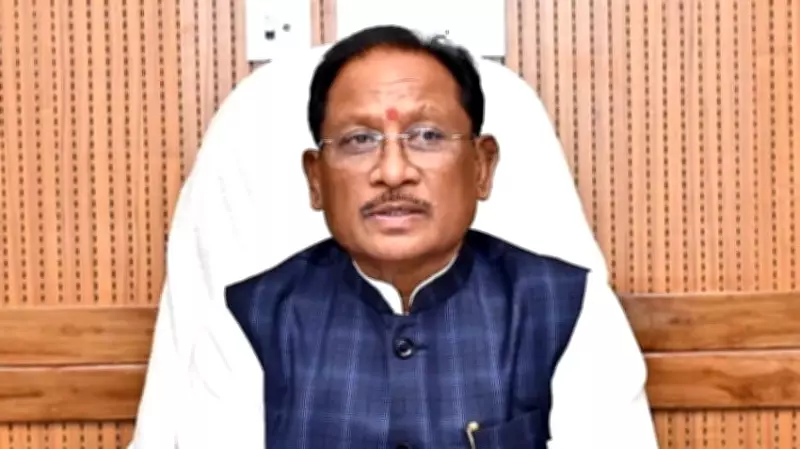
Chhattisgarh Government Introduces Bill to Curb Forced Religious Conversions
The Chhattisgarh government, led by Chief Minister Vishnu Deo Sai, has tabled a significant legislative proposal aimed at preventing forced religious conversions in the state. The bill, officially titled the 'Dharma Swatantrya Bill', was presented in the state assembly on March 19, 2026, marking a pivotal moment in the region's political and social landscape.
Congress Opposition and Boycott of Proceedings
In response to the bill's introduction, the Congress party raised strong objections, demanding that the legislation be referred to a 'Select Committee' for a thorough review and scrutiny. The party argued that such a move was necessary to ensure the bill's provisions align with constitutional principles and do not infringe upon individual freedoms.
However, the Chair of the assembly rejected the Congress's objection, leading to a dramatic escalation in tensions. As a result, the Congress party staged a complete boycott of the day's legislative proceedings. This boycott underscores the deepening political divide over the issue of religious conversion in Chhattisgarh.

Chief Minister's Statement and Legislative Process
Chief Minister Vishnu Deo Sai addressed the assembly, confirming the bill's presentation and outlining the government's intent. "Today, the 'Dharma Swatantrya Bill' will be presented in the House. There will also be a discussion on it, and it will be passed," he stated, as reported by ANI. This declaration highlights the government's determination to push the bill through the legislative process without delay.
The bill is designed to address concerns over coerced religious conversions, which have been a contentious topic in various parts of India. By introducing this legislation, the Chhattisgarh government aims to establish legal safeguards to protect individuals from being forced into changing their religion against their will.
Political Implications and Future Steps
The Congress boycott reflects broader political strategies and disagreements within the state assembly. The party's insistence on a committee review suggests they view the bill as potentially problematic or in need of amendments. Without their participation, the legislative process may proceed with reduced opposition, potentially facilitating the bill's passage.
As the discussion on the bill moves forward, it is expected to generate significant debate both within the assembly and among the public. The outcome could have lasting implications for religious freedom and state governance in Chhattisgarh, influencing similar legislative efforts in other regions.
This development comes at a time when issues of religious conversion are increasingly prominent in Indian politics, making the Chhattisgarh bill a focal point for national attention. The government's approach and the Congress's response will likely shape future political dynamics in the state.






