Opposition Parties Launch Scathing Attack on BJP's First Year in Delhi
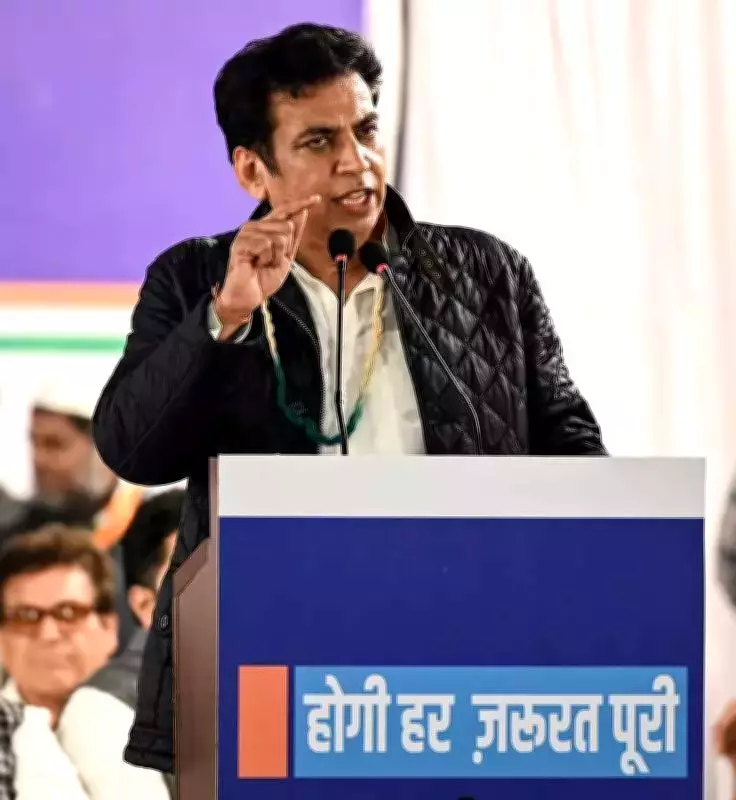
In a sharp political confrontation, the Congress party has characterized the inaugural year of the BJP government in Delhi as a timeline of "unfulfilled promises," asserting that numerous crucial commitments made to citizens prior to last year's assembly elections remain incomplete. The Delhi Pradesh Congress Committee president, Devender Yadav, articulated that the administration's tenure has revealed twelve significant misdeeds over twelve months of what he termed misrule.
AAP Joins Criticism with Its Own Assessment
Echoing the discontent, the Aam Aadmi Party (AAP) has similarly labeled the BJP administration a failure across multiple key sectors, accusing it of betraying the trust of Delhi residents. AAP presented its independent 'report card' evaluating the government's first-year performance, which included severe criticism of its governance record.
Specific Allegations from Political Leaders
Party veteran and former deputy chief minister Manish Sisodia highlighted specific grievances, noting that Prime Minister Narendra Modi's guarantee of a Rs 2,500 monthly assistance to Delhi women by March 8, 2025, has not materialized, with not a single rupee distributed after one year. Sisodia further claimed that the condition of government schools, hospitals, water supply, and essential public services has sharply deteriorated, leading citizens to reminisce about Arvind Kejriwal's tenure. He added that over one lakh youth are mourning job losses, and fatalities from pothole accidents persist, juxtaposed with celebrations by figures like Rekha Gupta.

Congress leader Devender Yadav accused the administration of insufficient action to curb rising pollution levels and alleged increases in school fees, thereby imposing financial burdens on families. He also questioned the status of promised subsidized LPG cylinders for economically weaker sections, emphasizing unmet welfare initiatives.
Allegations of Data Manipulation and Infrastructure Failures
Yadav alleged that despite pledges to clean the Yamuna River, data on its pollution levels was not released, and Chhath devotees did not receive adequate relief arrangements at ghats. He further claimed tampering with data at air quality monitoring stations, stating that the Air Quality Index (AQI) exceeded 700 in certain areas during the winter, indicating severe pollution.
Regarding financial management, Yadav pointed out that out of an annual budget outlay of Rs 1 lakh crore, nearly Rs 58,000 crore remained unspent, adversely affecting the delivery of promised services. He also alleged that 2,032 buses have been phased out from the Delhi Transport Corporation fleet without adequate replacement, compromising public transportation.
Yadav asserted that Delhi residents have been supplied with contaminated drinking water for a year, with water quality deteriorating further and the tanker mafia expanding its influence, highlighting critical public health concerns.
BJP Defends Its Record and Highlights Achievements
In contrast, Delhi BJP president Virendra Sachdeva emphasized the "achievements" of the current government, stating it has taken steps to improve the city's sewerage infrastructure. He alleged that previous Congress and AAP governments were involved in irregularities in laying sewer lines and their maintenance, which historically led to frequent waterlogging issues.
Sachdeva congratulated the government and described its first year as a "year of responsibility and accountability" towards Delhiites. He claimed the administration has kept its doors open to the public for airing grievances and has remained answerable on every issue, portraying a responsive governance model.
The political clash underscores deep divisions in Delhi's governance narrative, with opposition parties demanding accountability and the BJP defending its proactive measures, setting the stage for continued debate over public service delivery and policy implementation in the capital.