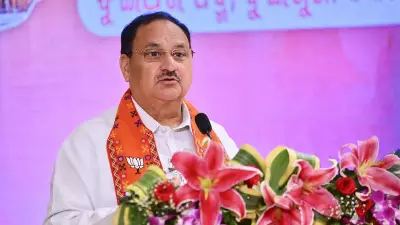
Congress Leaders Slam BJP Government Over Delayed Panchayati Raj Elections in Rajasthan
Jaipur witnessed a significant political gathering on Wednesday as the Rajasthan Pradesh Congress Committee organized a Panchayati Raj Empowerment Conference at the Birla Auditorium. Senior Congress functionaries launched a scathing attack on the BJP-led state government, accusing it of intentionally delaying civic body elections and systematically weakening grassroots democratic institutions across Rajasthan.
Constitutional Violations and Election Delays
Addressing the conference, Rajasthan Congress President Govind Singh Dotasra highlighted what he called blatant constitutional violations. "More than six years have elapsed since the last Panchayati Raj elections in our state," Dotasra stated emphatically. "The government has consistently failed to conduct these crucial polls, directly contravening constitutional provisions that mandate elections every five years."
He specifically referenced Articles 243E and 243U of the Indian Constitution, which establish clear timelines for elections to Panchayati Raj institutions and urban local bodies. "Elections here have been pending for a full year beyond their constitutional deadline," Dotasra added, emphasizing the democratic deficit created by these delays.

Administrative Takeover and Funding Freeze
The Congress president detailed several concerning developments:
- Sarpanches have been replaced by government-appointed administrators
- Pradhans and district council members have been relieved of their duties
- Panchayati Raj institutions have received no development funds for two consecutive years
- Selective suspension of pradhans with remaining tenures, including those reinstated by courts
"This complete funding freeze has brought rural development to a virtual standstill," Dotasra asserted. He contrasted this with previous Congress administrations, where elected representatives received non-discriminatory treatment, development funds were released promptly, and by-elections were conducted according to schedule.
Alleged Systemic Undermining of Grassroots Democracy
Recalling the historic 73rd and 74th Constitutional Amendments that granted constitutional status to panchayats and urban local bodies, Dotasra made serious allegations against the ruling party. "The BJP has demonstrated consistent opposition to the Panchayati Raj system," he claimed. "They are systematically dismantling institutions that have empowered marginalized communities including the poor, backward classes, Dalits, youth, and minorities."
Dotasra further explained the complications surrounding OBC reservations in Panchayati Raj elections, which require recommendations from a dedicated OBC Commission. "The BJP government has deliberately delayed forming this commission and failed to provide adequate resources," he alleged, creating uncertainty about when elections could realistically be conducted.
Congress Leadership Voices Concerns
Rajasthan Congress in-charge Sukhjinder Singh Randhawa addressed the gathering with additional criticisms. "Panchayati Raj institutions were established by the Congress party to strengthen grassroots governance," Randhawa reminded attendees. "The BJP is now attempting to undermine these very institutions that have served rural communities for decades."
He also mentioned ongoing party reforms, noting that "tickets would be allotted based on merit rather than recommendations" in future elections.
Leader of Opposition Tikaram Jully highlighted the crucial role of Panchayati Raj institutions in grassroots governance. "MGNREGA has been the strongest pillar of rural development," Jully stated. "The BJP has systematically weakened this scheme, causing significant harm to rural livelihoods across Rajasthan."
Dotasra concluded with another serious allegation, accusing the BJP of allowing rural development funds to lapse under the pretext of implementing its 'One State, One Election' policy, further exacerbating the challenges facing local governance in Rajasthan.