Congress Councillor's Vande Mataram Refusal Ignites Political Firestorm in Indore
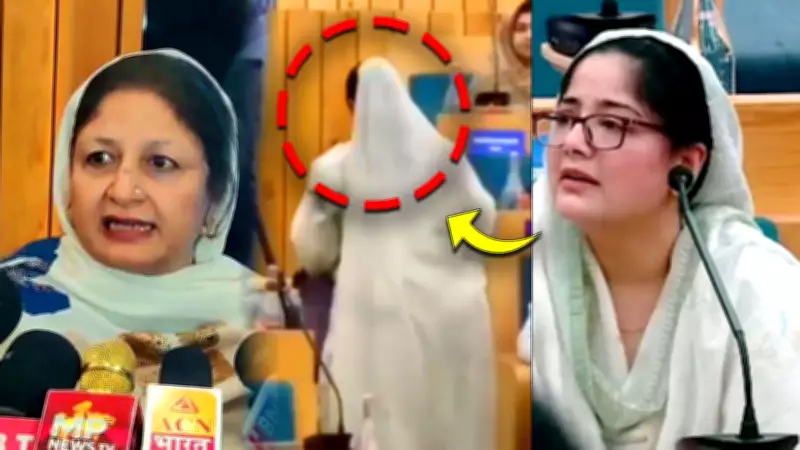
The Indore Municipal Corporation has erupted into a fierce political and ideological confrontation following the refusal of two Congress councillors to sing the patriotic song Vande Mataram. Councillors Fauzia Sheikh Aleem and Rubina Iqbal have triggered widespread uproar and heated exchanges by declining to participate in the singing, with their actions sparking intense debate about national sentiment, religious freedom, and political loyalty.
Religious Grounds and Legal Demands Fuel Controversy
The controversy began when Fauzia Sheikh Aleem demanded a clear legal basis for the directive to sing Vande Mataram, questioning the mandatory nature of the practice. This demand ignited immediate and fierce reactions from BJP councillors, who accused both Congress members of disrespecting national symbols and undermining patriotic sentiment.
The situation escalated dramatically when Rubina Iqbal publicly justified her refusal on religious grounds, stating unequivocally that her faith does not permit her to sing the song. In a surprising turn, Rubina did not limit her criticism to the BJP alone but also launched pointed attacks against her own party leadership, creating a complex political dynamic that has left the Congress organization deeply divided.

Sharp Political Reactions and Internal Party Conflict
The remarks from both councillors have triggered sharp political reactions across the spectrum. BJP members have been particularly vocal in their condemnation, calling for legal action against what they perceive as disrespect toward national symbols. Within the Congress party itself, the controversy has exposed significant internal fractures.
Congress spokesperson KK Mishra has taken the extraordinary step of calling for Rubina Iqbal's expulsion from the party, highlighting the depth of the internal divide. This call for disciplinary action underscores the serious nature of the controversy and the challenges it presents for party unity and public perception.
Broader Implications for Faith, Law, and National Expression
As the issue continues to snowball, it raises critical questions about the intersection of multiple complex elements in India's political landscape:
- Religious Freedom vs. National Expression: The controversy highlights the tension between individual religious beliefs and expressions of national patriotism.
- Legal Framework: Fauzia's demand for legal basis brings into question the mandatory nature of such patriotic practices in official settings.
- Political Loyalty: Rubina's criticism of both opposition and her own party leadership creates unusual political dynamics.
- Party Discipline: The call for expulsion demonstrates how such controversies can test party unity and internal governance.
The Indore Municipal Corporation now finds itself at the center of a national conversation about how India balances diverse religious beliefs with unified national expression. The controversy has transformed what might have been a local political disagreement into a significant ideological debate with implications far beyond the city's boundaries.
As political parties grapple with the fallout, the incident serves as a powerful reminder of how seemingly simple acts can become lightning rods for broader societal and political tensions. The resolution of this controversy will likely influence how similar situations are handled in municipal corporations and political organizations across the country in the future.