

In a sharp escalation of political tensions in Punjab, Congress legislators have launched a scathing attack on the ruling Aam Aadmi Party (AAP) government. The criticism centers on the administration's perceived failure to deliver justice in two highly sensitive cases: the 2015 Bargari sacrilege incidents and the 2017 Maur bomb blast.
Akal Takht's Questions Spark Political Firestorm
The renewed controversy was ignited after the acting jathedar of the Akal Takht, Giani Kuldeep Singh Gargaj, publicly questioned Punjab Chief Minister Bhagwant Mann on Monday. Gargaj sought clarity on the actions taken by the state government so far in both the Bargari and Maur cases. He specifically pointed out that despite the names of Dera Sacha Sauda chief Gurmeet Ram Rahim and his aide Honeypreet surfacing in the Bargari investigation, the Punjab government had yet to take any concrete legal action against them.
This direct questioning from the highest temporal seat of Sikh authority provided fresh ammunition to the opposition. Congress MLAs Sukhpal Singh Khaira and Pargat Singh seized the opportunity to lambast the AAP government, accusing it of using the promise of justice as a political tool to come to power, only to deliberately delay and deny it afterward.

Congress MLAs Level Serious Allegations
In a strongly-worded statement issued on Tuesday, Congress MLA Sukhpal Singh Khaira urged the Akal Takht jathedar to hold Chief Minister Bhagwant Mann and Assembly Speaker Kultar Singh Sandhwan accountable. He highlighted their "continued failure and deliberate inaction" in delivering justice in what he termed the "most sensitive and painful cases concerning the Sikh Panth." Khaira's statement explicitly referenced the 2015 sacrilege incidents, the subsequent Behbal Kalan police firing that killed two protestors, and the Maur bomb blast case.
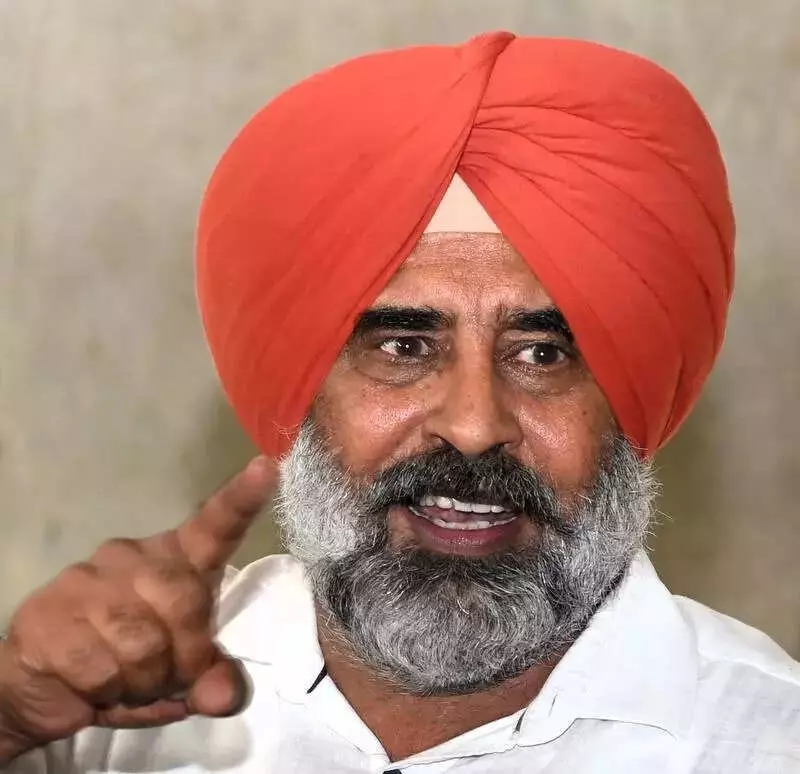
Echoing these sentiments, fellow Congress MLA and former Indian hockey captain Pargat Singh took to social media to voice his criticism. In a video posted on his accounts, Pargat Singh recalled that Chief Minister Mann had assured the Punjab Assembly that permission would be granted to prosecute Dera chief Gurmeet Ram Rahim in the sacrilege cases. However, Pargat Singh claimed that no consequential action has followed that declaration.
"On the other hand," he alleged, "the BJP made a mockery of the law by repeatedly granting parole to the dera chief. It is clear that both AAP and BJP are working hand in glove to protect Ram Rahim." This accusation suggests a political collusion between the two parties to shield the controversial religious leader from legal consequences in Punjab.
A Promise of Justice Remains Unfulfilled
Pargat Singh further elaborated on his repeated attempts to hold the government accountable within the legislative framework. He stated that he had consistently questioned the government about the glaring lack of action in the sacrilege cases, the refusal to prosecute the Dera chief, and the failure to issue summons for further proceedings despite individuals being named. His experience, he said, was that the AAP government, which rode to power on a promise of delivering justice within 24 hours, consistently engaged in diversionary tactics instead of addressing this painful and sensitive issue head-on.
The core of the opposition's attack hinges on a broken promise. The AAP, in the run-up to the state elections, had positioned itself as the champion of justice for the sacrilege and related violence, which had deeply hurt Sikh sentiments. The current allegations from Congress MLAs paint a picture of a government that has failed to translate its electoral rhetoric into administrative action, allowing key figures like Gurmeet Ram Rahim to remain untouched by Punjab's legal machinery years after the incidents occurred.
This development signals a potentially significant political vulnerability for the AAP government in Punjab, where matters of religious sentiment and justice carry immense weight. The intervention of the Akal Takht jathedar elevates the issue beyond mere political sparring, applying moral and religious pressure on the administration to act. As the opposition rallies around this perceived failure, the government's response and subsequent action—or lack thereof—will be closely watched.






