

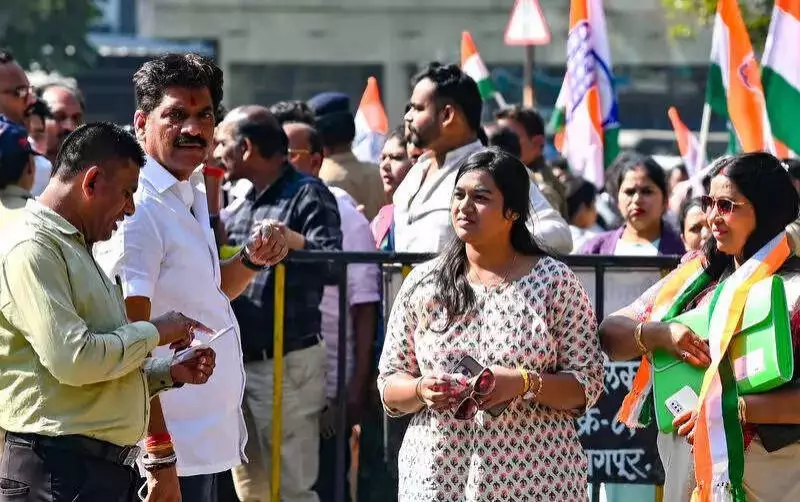
In a significant political development, the much-anticipated electoral alliance between the Congress and the Nationalist Congress Party (Sharadchandra Pawar) for the upcoming Nagpur Municipal Corporation (NMC) polls has fallen apart. The seat-sharing negotiations, which continued into the early hours of Tuesday, ultimately collapsed, forcing both parties to contest the elections independently.
Marathon Talks End in Deadlock Over North Nagpur Wards
The talks, which stretched past 3 am on Tuesday, broke down primarily due to unresolved differences over seat allocation in North Nagpur. While there was an initial understanding that the NCP(SP) would be allotted 15 seats, the two sides could not reach a consensus on specific prabhags (ward clusters). The contentious wards included 2A, 7D, and 5D, which became the sticking point that derailed the entire alliance.
NCP(SP) leader Anil Deshmukh squarely blamed the Congress for the breakdown. He stated that the Congress refused to concede the disputed wards despite earlier agreements. "Late-night talks with the Congress have failed. They refused to leave these seats for us," Deshmukh said. He emphasized that the Congress could not backtrack after signing a joint statement of intent, a move that ultimately led to the collapse.

Congress Cites Advanced Preparations, Finalized Candidates
Congress leaders, however, presented a different perspective. They claimed they were unable to accommodate last-minute demands from their ally because their preparations were already at an advanced stage. Congress general secretary Atul Kotecha revealed that the party had already finalized its candidates by the time the late-night negotiations were underway.
"We tried to reconcile till the last minute, but the alliance did not materialise," Kotecha stated, indicating that the party's hands were tied due to its own internal processes and commitments to prospective candidates.
Specific Candidate Disputes and the Road Ahead
According to Anil Deshmukh, the disagreement over three specific candidates—Varsha Shyamkule, Mahendra Bhange, and Saurabh Dubey—was the final nail in the coffin for the alliance. These competing claims highlighted the deep-seated local-level rivalries that often supersede national or state-level political understandings.
The collapse is particularly notable because the city presidents of both parties had earlier issued a joint statement expressing their intent to contest the civic polls together. With the alliance now off the table, the NCP(SP) has decided to contest on 79 seats on its own strength, setting the stage for a multi-cornered contest in the Nagpur civic elections.
This development is expected to significantly alter the political calculus in Nagpur, potentially splitting votes and creating advantages for other major players like the BJP. The failure to forge a united opposition front underscores the challenges of coalition politics at the municipal level, where local loyalties and candidate viability often trump broader strategic alliances.






