The Congress party in Rajasthan has launched a fierce attack against the state's Bharatiya Janata Party (BJP) government over a sudden, late-night decision to alter the administrative boundaries of Barmer and Balotra districts. The move, executed just hours before a crucial deadline, has sparked allegations of being arbitrary and disconnected from ground realities.
A Midnight Notification Sparks Outrage
According to a notification issued by the state's Revenue Department, the government undertook a significant reshuffle of areas between Barmer and Balotra districts on the night of December 31, 2025. This timing was critical as it preceded the freezing of all administrative boundaries from January 1, 2026, in preparation for the upcoming Census 2027. The Registrar General and Census Commissioner of India had mandated that no changes be made after December 31, 2025, until the census operations conclude.
The restructuring involved swapping several key sub-divisions. Notably, the Dhorimanna and Gudhamalani sub-divisions were shifted from Barmer district to the newly formed Balotra district. Similarly, the Baytoo sub-division was also moved from Barmer to Balotra. Following these changes, Balotra district now comprises 5 sub-divisions and 9 tehsils, while Barmer has 7 sub-divisions and 11 tehsils.
Congress Leaders Voice Strong Opposition
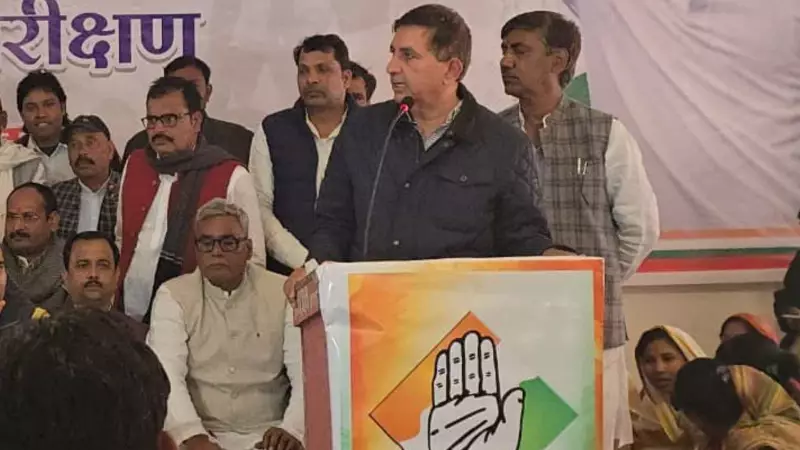
Senior Congress leaders from the affected regions have vehemently opposed the decision. Harish Chaudhary, the All India Congress Committee (AICC) in-charge for Madhya Pradesh and the sitting MLA from Baytoo, expressed his defiance in a poetic statement. He asserted his commitment to his constituents regardless of map alterations, signaling that the political connection transcends administrative lines.
The most detailed criticism came from Hemaram Choudhary, a six-time MLA from Gudhamalani, former cabinet minister, and ex-Leader of the Opposition. He labeled the decision as "completely contrary to ground realities, geographical conditions, and the basic facilities of the common people." He argued that while such changes might appear as administrative reforms on paper, they severely complicate daily life for citizens.
Practical Challenges and Public Inconvenience
Hemaram Choudhary elaborated on the practical difficulties the redrawn boundaries would create. He cited the example of Maangta village, whose residents will now face excessively long travel to reach their designated tehsil and sub-division offices for routine work, making governance cumbersome.
A major point of contention is the shifting of the Nokhda sub-division office from Gudhamalani to Barmer. This move, according to Choudhary, forces numerous gram panchayats with stronger social and geographical ties to Dhorimanna and Gudhamalani to travel to a distant Barmer for revenue, development, and administrative matters. This results in a significant waste of time, money, and effort for villagers.
The Congress leader also raised law-and-order concerns. With Nokhda tehsil now falling under the jurisdiction of the far-away Barmer police station, response times in emergencies could be delayed. Furthermore, access to courts and other critical administrative offices would become more difficult for rural residents.
Choudhary has demanded that the state government "immediately reconsider" the notification. He urged authorities to retain the Dhorimanna sub-division within Barmer and rectify the changes affecting villages in Gudhamalani to ensure governance remains accessible and just.
Political and Demographic Implications
The boundary changes are not merely administrative; they carry significant political weight. The restructuring alters the demographic profile of the affected Lok Sabha and Assembly constituencies. Currently, Congress's Ummeda Ram Beniwal represents the Barmer Lok Sabha seat, while BJP's K K Vishnoi is the MLA from Gudhamalani and also serves as the Minister of State for the Industry and Commerce Department.
Despite the strong opposition, a reversal of the decision appears unlikely due to the frozen boundary mandate for the census. The episode has set the stage for a continued political confrontation in Rajasthan, with the Congress positioning itself as the defender of public interest against what it calls an abrupt and ill-conceived government action.