Congress Announces Plan for Legislation Mandating RSS Registration
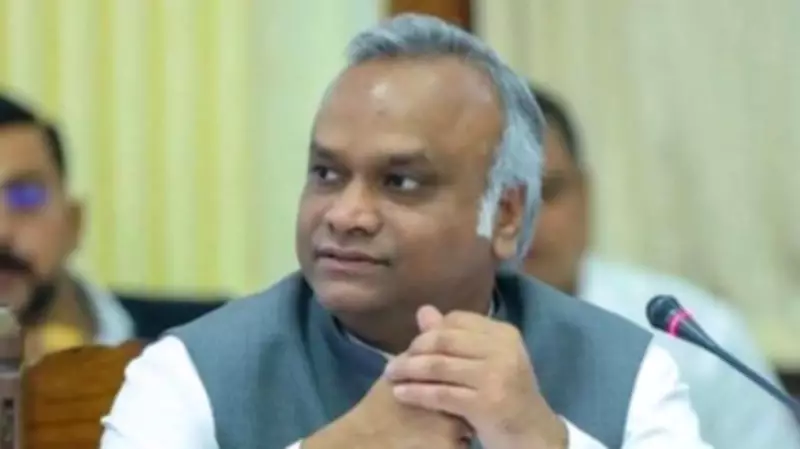
In a significant political development, Congress leader Priyank Kharge has declared that the party intends to introduce a new law requiring the Rashtriya Swayamsevak Sangh (RSS) to undergo official registration. This announcement, made on February 17, 2026, has sparked widespread discussion and debate across Karnataka and national political circles.
Kharge's Statement on Government Action
Priyank Kharge, a prominent Congress figure, elaborated on the party's stance, emphasizing a firm approach towards the RSS. He stated that if the RSS chooses not to register voluntarily under the proposed framework, the government would not hesitate to enact legislation to address this issue. This move is seen as part of a broader strategy to ensure transparency and accountability among all major organizations operating within the country.
The proposed law aims to bring the RSS under a formal regulatory umbrella, similar to other registered entities, which could involve compliance with specific legal standards and reporting requirements. Kharge's comments highlight the Congress party's commitment to implementing policies that promote organizational oversight, particularly for groups with significant influence in social and political spheres.

Context and Implications for Karnataka and National Politics
This announcement comes at a time when political dynamics in Karnataka are increasingly charged, with the Congress positioning itself on key issues ahead of upcoming elections. The focus on the RSS, a long-standing ideological opponent of the Congress, underscores the deepening political divisions and the party's efforts to assert its agenda on a national scale.
Experts suggest that such a law could have far-reaching consequences, potentially affecting the RSS's operations and its role in Indian society. It may also set a precedent for how other unregistered or loosely structured organizations are treated under future governance models. The debate is expected to intensify as stakeholders from various political backgrounds weigh in on the proposal's merits and challenges.
Reactions and Future Steps
Initial reactions to Kharge's statement have been mixed, with supporters praising the move as a step towards greater accountability, while critics argue it could be politically motivated. The Congress party has indicated that further details of the legislation will be unveiled in the coming months, pending discussions and potential amendments based on feedback from legal experts and the public.
As this story develops, it remains a focal point in India's political landscape, reflecting ongoing tensions and the evolving strategies of major parties. The outcome could influence not only the RSS's future but also broader policies on organizational registration and governance in India.