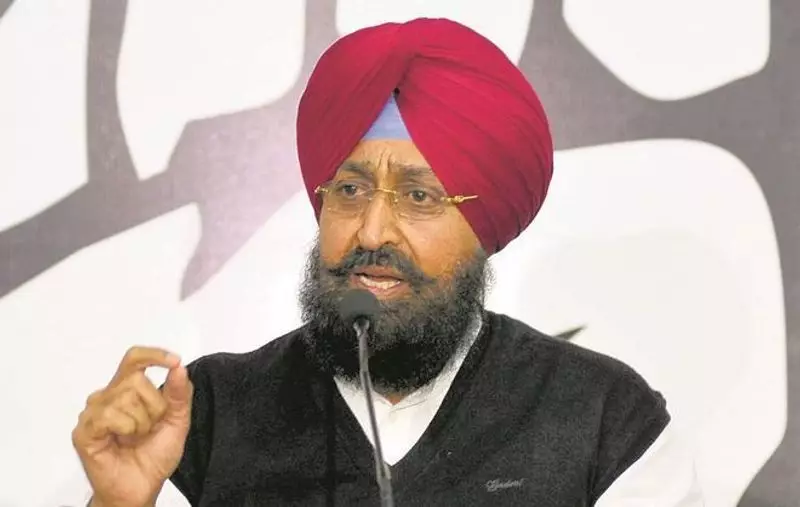
The Punjab Congress has launched a strong protest against the State Scheduled Caste Commission, accusing the constitutional body of exceeding its jurisdiction in a high-profile political confrontation. The controversy erupted when the commission summoned senior Congress leader and Rajya Sabha MP Partap Singh Bajwa, prompting sharp reactions from the opposition party.
Congress Raises Constitutional Objections
In a formal communication addressed to the chairman of the Punjab State Scheduled Caste Commission, the Congress party has raised serious questions about the body's authority to summon a Member of Parliament. The party contends that the commission is operating beyond its constitutional mandate by involving itself in matters that fall outside its designated scope of work.
The confrontation began when the commission issued summons to Bajwa, seeking his appearance in connection with undisclosed proceedings. The Congress response has been swift and firm, with party representatives asserting that such actions represent an unacceptable overreach that could undermine the functioning of democratic institutions.

Legal and Political Implications
This development has significant implications for the relationship between constitutional bodies and elected representatives in Punjab. The Congress party has emphasized the need to maintain clear boundaries between different institutions to preserve the balance of power envisioned by the Constitution.
Political observers note that this confrontation comes at a sensitive time in Punjab politics, where issues concerning scheduled castes and their representation have gained increased prominence. The Congress party's strong stance indicates their determination to challenge what they perceive as institutional overreach, even when it involves bodies created to protect marginalized communities.
The party's official communication to the commission chairman outlines their legal and constitutional objections in detail, suggesting that the current approach could set a problematic precedent for future interactions between constitutional bodies and elected representatives.
Broader Political Context
This incident reflects the ongoing political tensions in Punjab, where institutional actions are increasingly being viewed through a political lens. The Congress party has positioned itself as a defender of constitutional propriety, even as it challenges the actions of a body meant to protect scheduled caste communities.
The situation remains fluid, with potential implications for how constitutional bodies exercise their powers and how political parties engage with these institutions. The outcome of this confrontation could influence future interactions between political representatives and statutory commissions in Punjab and beyond.
As the situation develops, all eyes are on how the State Scheduled Caste Commission will respond to the Congress party's objections and whether this will lead to a recalibration of institutional relationships in Punjab's political landscape.