Dehradun Road Widening Project Sparks Renewed Environmental Concerns Over Tree Felling
A recent government advertisement regarding land acquisition in Dehradun has reignited significant public concern and environmental apprehensions among residents. The advertisement, focused on acquiring 0.02 hectares of land in Parsoliwala Maichak Narsinghwala village, is part of the contentious project to widen the New Cantonment road from two lanes to four. This development has prompted residents and environmental activists to question whether earlier official assurances that no trees would be felled will ultimately be honored.
Background of Public Agitation and Official Assurances
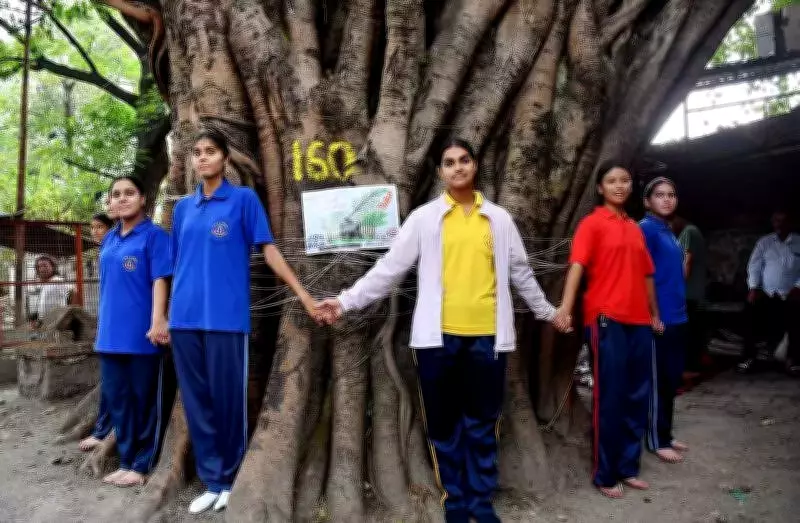
The controversy surrounding this infrastructure project is not new. In June 2024, widespread public agitations erupted over the initial proposal, which involved the potential felling of approximately 250 trees along the designated stretch. The strong public backlash led to a significant intervention. Chief Minister Pushkar Singh Dhami provided a clear assurance at that time, stating unequivocally that no trees would be cut for the project. Following this commitment, the project was subsequently put on hold to address public concerns.
Later, during a public meeting held in April 2025, officials from the Public Works Department (PWD) reiterated this stance. They confirmed that no trees would be felled, while simultaneously maintaining that the widening of the road near Dilaram Chowk remained a necessary measure to alleviate persistent traffic congestion in the area.

Latest Developments and Rising Apprehensions
The publication of the latest land acquisition advertisement in local newspapers has acted as a catalyst, once again raising serious apprehensions among Dehradun's residents and various environmental groups. This move has cast doubt on the future course of the project and the government's adherence to its previous promises.
"If the government goes back on its promise, it will be a green betrayal of the public of Dehradun when we are already facing severe ecological loss," said social activist Anoop Nautiyal. "City residents gave their mandate when we took to the streets, and authorities should respect it." In response to the renewed concerns, several citizen groups have begun mobilizing and are actively discussing the possibility of organizing fresh public protests over the issue.
Voices from the Community and Environmental Groups
Himanshu Arora of Citizens for Green Doon, the group that spearheaded the 2024 protests, expressed deep skepticism and frustration. "Is PWD going beyond the word of the chief minister? We were assured that no trees would be felled, and now authorities are talking about 'minimum' tree cutting. Why are they going back and forth? Agencies cannot reverse a promise made to the public. Dehradun residents will not take this quietly," Arora stated, highlighting the community's resolve to protect the city's green cover.
Official Stance from PWD Authorities
In contrast to the public's fears, PWD officials have maintained that the project has been substantially revised following the earlier public objections. They claim the new plan is designed to ensure a negligible loss of trees. "It is a 14-month project to widen the road to four lanes, which we expect to complete by early next year. All public concerns have been taken into account," said OP Singh, Superintending Engineer of the PWD. This statement suggests an attempt to balance infrastructure development with environmental preservation, though it has yet to fully assuage public doubt.
The situation in Dehradun remains tense, with the community vigilantly watching the government's next steps. The core issue revolves around the trust between citizens and authorities regarding environmental commitments. As the project potentially moves forward, the dialogue between the Public Works Department and the residents of Dehradun will be crucial in determining a path that addresses both the city's traffic needs and its invaluable ecological heritage.