

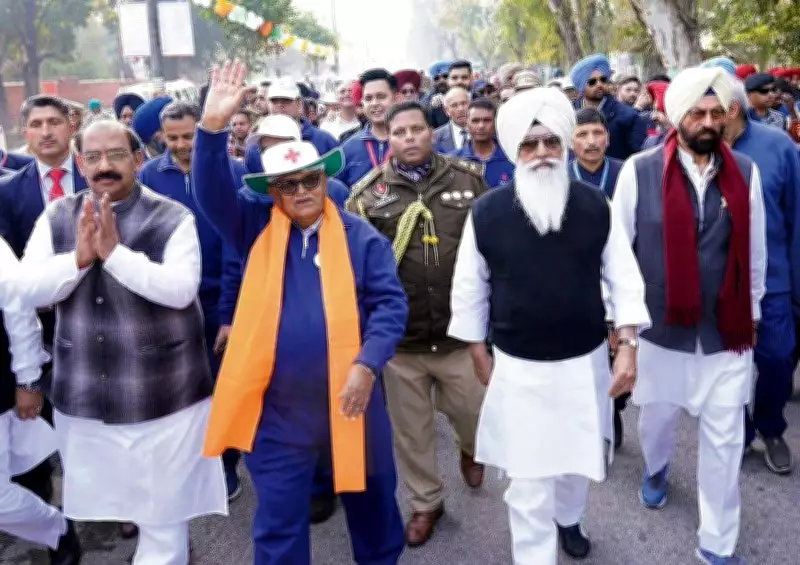
Dera Beas Chief and Sukhbir Singh Badal Join Governor's Foot March, Igniting Political Firestorm in Punjab
The political landscape of Punjab has been thrown into turmoil following the unexpected participation of Dera Beas chief Baba Gurinder Singh Dhillon and Shiromani Akali Dal (SAD) president Sukhbir Singh Badal in a foot march led by Governor Banwarilal Purohit. This joint appearance has sparked intense debate and criticism across party lines, with opponents accusing it of blurring the lines between religious institutions and political agendas.
Event Details and Immediate Reactions
The foot march, organized by Governor Purohit as part of a public outreach initiative, took place in the Beas region of Punjab. Observers noted that the presence of the Dera Beas spiritual leader alongside a prominent political figure like Sukhbir Badal added a significant symbolic weight to the event. The ruling Aam Aadmi Party (AAP) and the Congress party were quick to condemn the move, labeling it as an attempt to leverage religious influence for electoral gains ahead of upcoming state elections.
Political analysts suggest that this development could reshape alliances and voter perceptions in Punjab, a state where deras (religious sects) have historically wielded considerable sway over large segments of the population. The SAD, which has been striving to regain its foothold after recent electoral setbacks, may view this association as a strategic move to consolidate its traditional support base.

Broader Implications for Punjab's Political Climate
The controversy has raised fundamental questions about the role of religious leaders in politics and the potential for such collaborations to influence governance and policy-making. Critics argue that involving dera chiefs in official state functions undermines the secular principles enshrined in the Indian Constitution, while supporters claim it fosters communal harmony and inclusive development.
Key points of contention include:
- The timing of the march, coinciding with heightened political activity in Punjab.
- Perceptions of the Governor's neutrality, given his constitutional role as an apolitical figure.
- Historical precedents of dera involvement in Punjab politics and its impact on electoral outcomes.
As the debate intensifies, all eyes are on how this incident will affect the strategies of major political parties like the AAP, Congress, and SAD in the run-up to the polls. The foot march may have been intended as a gesture of unity, but it has undeniably kicked up a storm that could have lasting repercussions on Punjab's democratic fabric.






