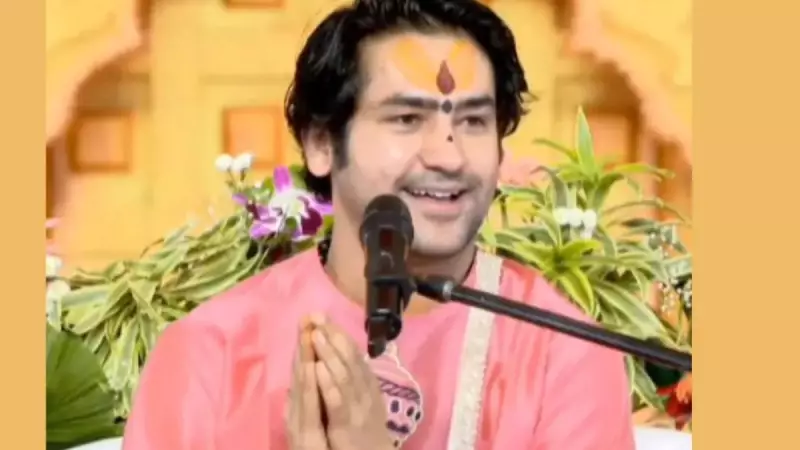
Bageshwar Dham's prominent religious leader, Dhirendra Krishna Shastri, has issued a firm response to the ongoing controversy surrounding his use of a chartered aircraft. The debate, which has sparked significant discussion on social media and political circles, centers on the mode of travel for the spiritual figure.
The Core of the Controversy
The issue came to the forefront when a video clip showing Shastri disembarking from a chartered plane began circulating online. This visual quickly fueled a debate about the lifestyle and expenditures of religious leaders. Critics questioned the necessity and source of funding for such travel, contrasting it with the ascetic image often associated with spiritual figures.
In his direct and unambiguous reply, Dhirendra Shastri addressed the criticism head-on. He stated, "I am also an Indian citizen. If I have done something wrong, then the law should take its course." This statement, made on December 29, 2024, forms the crux of his defense, positioning the issue as one of equal rights under the constitution rather than a matter of religious conduct.

Shastri's Defense and Public Reaction
Shastri's argument hinges on the principle of citizenship. By emphasizing his status as an Indian citizen, he implies the same rights to travel and conduct his affairs as any other individual, provided they are within legal boundaries. His challenge to critics—to let the law intervene if any wrongdoing occurred—shifts the debate from the court of public opinion to the court of law.
The public reaction has been sharply divided. Supporters of the Bageshwar Dham leader argue that he travels extensively for religious discourses and charitable work, and a chartered aircraft can be a matter of convenience, security, and time management. They see the criticism as motivated and an attempt to tarnish his image.
On the other hand, detractors continue to question the opulence, asking whether such resources could be better directed towards philanthropic activities. The controversy taps into a larger, recurring national conversation about the wealth and influence of certain religious institutions and their leaders.
Political Echoes and Broader Implications
The incident has not remained confined to social media debate. It has found resonance in the political arena of Chhattisgarh. The state's Leader of the Opposition, Dharamlal Kaushik, weighed in on the matter. He defended Shastri, stating that the religious leader had not committed any crime and that the controversy was being unnecessarily amplified.
Kaushik's support highlights how such issues can quickly acquire political dimensions, with parties and leaders aligning their stance based on their constituency and voter base. The defense from a senior political figure adds another layer to the ongoing narrative.
This episode underscores the intense scrutiny public figures, especially those with a religious following, face in today's digital age. Every action, from travel to lifestyle choices, is subject to public dissection and judgment. Dhirendra Shastri's response sets a precedent by invoking fundamental civic identity over religious justification.
The final outcome of this controversy remains to be seen. Whether it fades away as a momentary news cycle or leads to more sustained inquiries likely depends on whether any formal complaints regarding financial or legal irregularities are filed and investigated. For now, Shastri's assertion of his citizenship rights stands as his primary rebuttal to his critics.