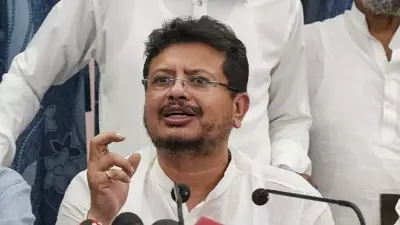
The Dravida Munnetra Kazhagam (DMK) has formally intervened to protect the rights of voters in Tamil Nadu who are facing hurdles during the electoral roll revision process. On Wednesday, the party's organising secretary, R S Bharathi, wrote a strong representation to the state's Chief Electoral Officer, Archana Patnaik, urging an immediate end to practices that burden electors placed under the contentious 'no-mapping' Aadhaar category.
What is the 'No-Mapping' Aadhaar Issue?
The core of the dispute lies in the identification of electors whose details could not be matched or 'mapped' during the intensive revision exercises conducted in 2002 or 2005. The Election Commission of India (ECI) has issued notices to a staggering more than 12.43 lakh (1.243 million) electors across Tamil Nadu, asking them to submit documents for verification of their credentials.
According to the DMK's complaint, despite a clear Supreme Court direction that an Aadhaar card should be accepted as a valid proof of identity, several Electoral Registration Officers (EROs) and Assistant EROs are insisting on the production of additional documents from these voters. This creates an unnecessary and potentially disenfranchising barrier for citizens.

DMK's Key Demands to the Election Commission
In his letter, R S Bharathi outlined specific demands to ensure transparency and uniformity in the process. The party has called for the discontinuation of the practice of demanding extra paperwork and personal appearances from those in the 'no-mapping' group.
Furthermore, the DMK has sought a booth-wise list of all electors who have received these verification notices. This would allow for greater oversight. A significant request is to permit the presence of party representatives or legal counsel to assist and guide voters during the verification proceedings, ensuring their rights are protected.
The representation also emphasized the need for the commission to properly record and report forms submitted by recognized political parties. It called for uniformity in the forms and procedures used to correct logical discrepancies in the electoral rolls, preventing arbitrary application of rules in different constituencies.
Implications for Voter Rights and Upcoming Elections
This intervention highlights a critical tension between bureaucratic verification processes and the fundamental right to vote. The DMK's move is seen as a proactive step to safeguard voters from potential harassment or exclusion, especially with the Lok Sabha elections on the horizon.
The party's stance reinforces the Supreme Court's position on Aadhaar as a sufficient document for identity proof in this context. By demanding systematic changes and transparency, the DMK is pushing the election machinery to adopt a more voter-friendly approach, ensuring that technical categories like 'no-mapping' do not become a tool for disenfranchisement in Tamil Nadu.