

DMK's Coupon Scheme vs AIADMK's Free Fridge: Kanimozhi Explains Women-Centric Rationale
In the high-stakes political landscape of Tamil Nadu, a clear divergence has emerged between two major parties regarding welfare promises for rice ration card holders. The AIADMK's election manifesto has pledged a free refrigerator for every such household, while the DMK has countered with a commitment to issue coupons worth Rs 8,000 to the same beneficiary category. This has sparked a significant public debate: why opt for coupons instead of direct monetary assistance?
Kanimozhi Karunanidhi's Clarification on the Coupon Strategy
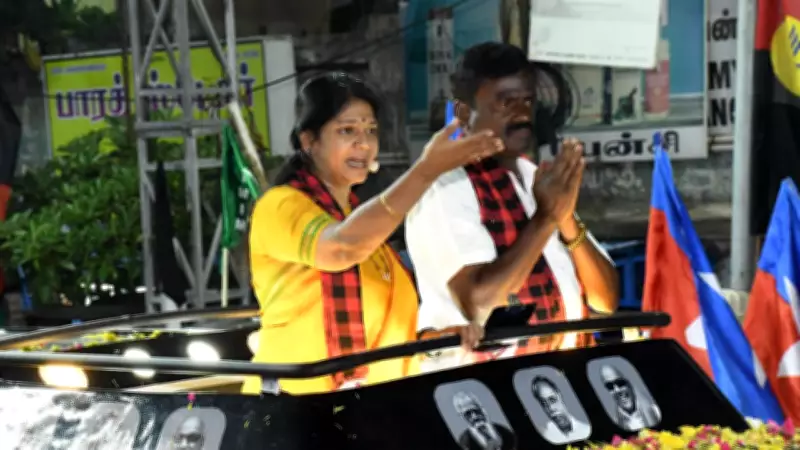
On Wednesday, DMK MP Kanimozhi Karunanidhi provided a detailed explanation for this policy choice during a campaign event in Chennai. She articulated a nuanced perspective focused on gender empowerment and practical utility, directly addressing concerns about the coupon system.
"If we deposit cash directly into your bank account, there is a risk that Prime Minister Narendra Modi's government might deduct it as penalties for not maintaining a minimum balance," Kanimozhi stated. "Alternatively, in many households, male family members might take control of the money, leaving women without access to resources intended for their benefit."

She emphasized that the coupon mechanism is designed to circumvent these issues, ensuring that the assistance reaches and remains with women, who are often the primary managers of household chores and expenses.
Empowering Women Through Targeted Household Support
Kanimozhi elaborated on the practical advantages of the coupon system, framing it as a tool for reducing the domestic burden on women. "By providing coupons, women gain the autonomy to purchase household appliances that directly alleviate their daily struggles," she explained.
- Washing Machines: For women who find hand-washing clothes labor-intensive and time-consuming, coupons can be used to buy washing machines, freeing up time for other activities.
- Grinders: If grinding flour manually is a challenge, women can invest in electric grinders to simplify food preparation.
- Other Appliances: The flexibility allows for purchases of other useful items like mixers, fans, or kitchenware, tailored to individual household needs.
This approach, according to Kanimozhi, ensures that the aid is not only received but also utilized in a manner that enhances the quality of life for women, rather than being diverted or misused.
Contrasting Welfare Visions in Tamil Nadu Politics
The DMK's coupon scheme stands in stark contrast to the AIADMK's promise of free refrigerators. While both aim to support ration card holders, their methodologies reflect differing philosophies on welfare delivery:
- AIADMK's Approach: Offers a standardized appliance (refrigerator) to all beneficiaries, ensuring a tangible asset but with less customization.
- DMK's Approach: Provides coupons worth Rs 8,000, allowing beneficiaries, particularly women, to choose appliances based on their specific needs and preferences.
Kanimozhi's explanation underscores the DMK's focus on gender-sensitive policies, arguing that direct cash transfers might not achieve the intended empowerment due to systemic and social barriers. The coupon system, she asserts, acts as a safeguard, promoting financial inclusion and domestic efficiency without the pitfalls of cash leakage or male appropriation.
As the political campaign intensifies, this issue highlights broader themes of women's agency, household economics, and the role of state assistance in everyday life. The debate between coupons versus cash or goods is likely to remain a focal point, with implications for how welfare schemes are designed and implemented in the state.






