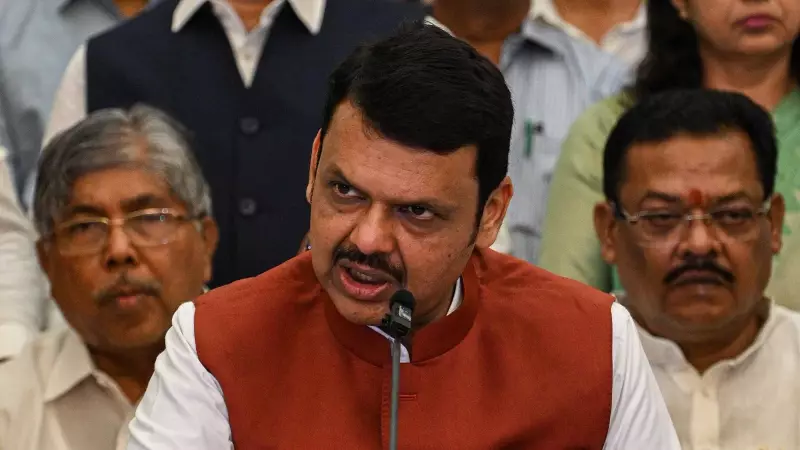
The inaugural year of Chief Minister Devendra Fadnavis's third term at the helm of Maharashtra's government has been a period defined by significant political turbulence and administrative challenges. Spanning from December 2024 to December 2025, the state witnessed a series of high-stakes controversies, internal coalition friction, and social unrest that rigorously tested the stability and efficacy of the ruling Mahayuti alliance.
Coalition Strains and Internal Cold War
The partnership between the Bharatiya Janata Party (BJP) and the Eknath Shinde-led Shiv Sena was marked by persistent tension from the outset. Discontent simmered over portfolio distribution and the allocation of guardian minister posts, with notable disputes erupting over positions in Nashik and Raigad districts. The political rift manifested openly through skipped cabinet meetings, culminating in a high-profile boycott by Sena ministers in November 2025.
Analysts observed a 'cold war' within the coalition, fought not through direct confrontation but via bureaucratic delays, strategic absenteeism, and pointed public statements. The rivalry spilled into the public arena during local body elections, where Fadnavis and Shinde held parallel rallies in the same districts, highlighting the deepening divide.
A Year of Major Controversies and Crises
The government faced its first severe test barely days after taking office. On December 9, 2024, the brutal abduction and murder of Santosh Deshmukh, a sarpanch from Beed district, triggered statewide outrage. The investigation, which implicated aides of a minister, led to significant political fallout, resulting in the resignation of NCP minister Dhananjay Munde in March 2025.
Further scandals rocked the administration. The Shalarth scam exposed a massive network of ghost teachers and fraudulent appointments, leading to the suspension of officials and a comprehensive audit. In July, the state government faced severe backlash over its three-language policy in primary schools. The decision prompted a rare joint protest by Uddhav Thackeray and Raj Thackeray, forcing the administration to withdraw the circular.
The latter part of the year was dominated by the Mundhwa-Bopodi land deal controversy in Pune. The deal, involving land sold below market value to a firm linked to Deputy Chief Minister Ajit Pawar's son, Parth Pawar, raised serious questions about procedural bypasses and transparency, drawing intense scrutiny from opposition parties and the public alike.
Social Unrest and Legislative Misconduct
Social order was tested on multiple fronts. Communal clashes in Nagpur in March 2025 led to a city-wide curfew and dozens of arrests. In late August, activist Manoj Jarange Patil led a major Maratha quota agitation in Mumbai, paralyzing the city for days and exposing caste-based tensions and coalition vulnerabilities.
The legislative assembly itself was not immune to turmoil. In July, violent clashes between supporters of BJP MLA Gopichand Padalkar and NCP MLA Jitendra Awhad erupted within the Vidhan Bhavan premises. In a separate incident, Shiv Sena MLA Sanjay Gaikwad assaulted a canteen staffer, an act captured on video that sparked national outrage and forced Deputy CM Shinde to publicly admonish party legislators.
The year was also marred by tragic incidents, including the alleged suicide of Dr. Sampada Munde in Phaltan in November, who left a note accusing a police officer of harassment.
Electoral Violence and Persistent Friction
As the year progressed, coalition tensions increasingly played out in the arena of local body elections. Both allies accused each other of poaching local leaders, leading to separate campaigns and heightened political animosity. This friction often turned violent; stone-pelting, vandalism, and bogus voting were reported in districts like Beed, Buldhana, and Aurangabad. Police had to resort to lathicharge and tear gas to control situations, with observers describing these polls as 'proxy battlefields' for the ruling coalition's internal rivalry.
In summary, the first year of the Fadnavis 3.0 government was a crucible of political management. It was a period where governance priorities were frequently overshadowed by the need to manage an uneasy coalition, respond to escalating social agitations, and navigate a relentless stream of controversies that challenged the administration's authority and cohesion at every turn.