

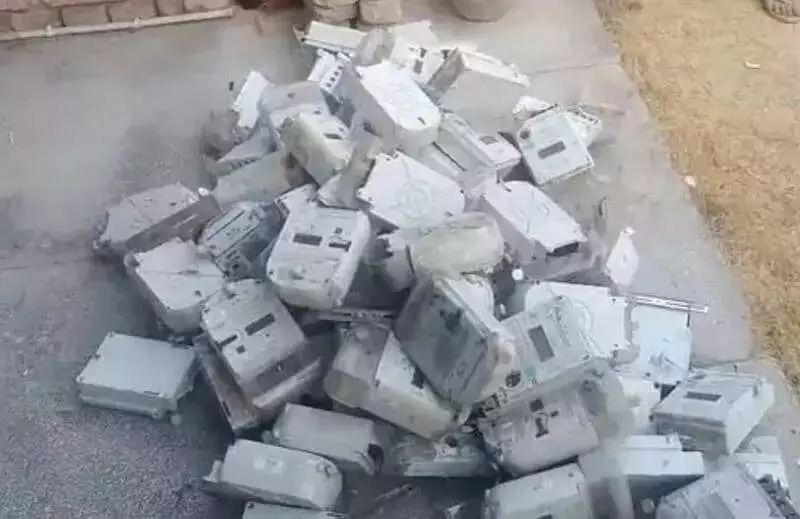
In a significant act of protest, farmers in Punjab's border districts have taken direct action against the installation of pre-paid smart electricity meters, uprooting hundreds of devices over the last few days. The agitation, driven by fears of sector privatisation and rising costs, has brought the contentious issue of power sector reforms to the forefront in the region.
Widespread Removal of Meters Across Villages
Farmers affiliated with major agricultural unions, including the Kisan Mazdoor Sangharsh Committee and the Bhartiya Kisan Union, led the removal of over 500 smart meters. The action spanned multiple villages across Ferozepur and Fazilka districts, specifically targeting areas like Ladhuka, Bahak Khas, Jamal Ke, Khalichian, and Saner.
In a symbolic gesture, the protesters collected the uprooted meters and later presented them to officials at the local electricity department office. According to Kisan Mazdoor Sangharsh Committee leader Yadwinder Singh, a coordinated action on Wednesday alone resulted in the removal of approximately 200 meters from four villages in the Fazilka district.

The Core of the Farmers' Opposition
The protest is not merely against the meters themselves but against the broader policy direction they represent. Farmers and labour unions argue that the push for chip-based smart or prepaid meters is a deliberate step towards the privatisation of the power distribution sector.
They believe this move will dismantle the existing public utility model, allowing private corporations to take control. A major concern is the potential end to subsidies, particularly for irrigation. Farmers fear that smart meters will lead to cost-reflective tariffs, making electricity unaffordable for agricultural use and significantly increasing their operational costs.
Official Stance and Legal Warnings
When contacted, an electricity department official, who spoke on condition of anonymity, defended the installation. The official stated that smart meters are essential to reduce commercial losses, modernise the ageing power grid, and prevent transformer damage due to overloading.
Furthermore, officials highlighted that the new technology provides consumers with real-time data on their electricity usage, empowering them to manage consumption better. The official issued a stern warning, noting that damaging or removing meters is a criminal offence that could lead to legal action and the disconnection of power services.
This clash highlights the deep divide between the government's vision for a modernised, efficient power sector and the ground-level apprehensions of key stakeholders like farmers. The protest against the Draft Electricity (Amendment) Bill 2025 and its perceived implications continues to simmer, with the recent meter uprooting marking a major escalation in the region.






