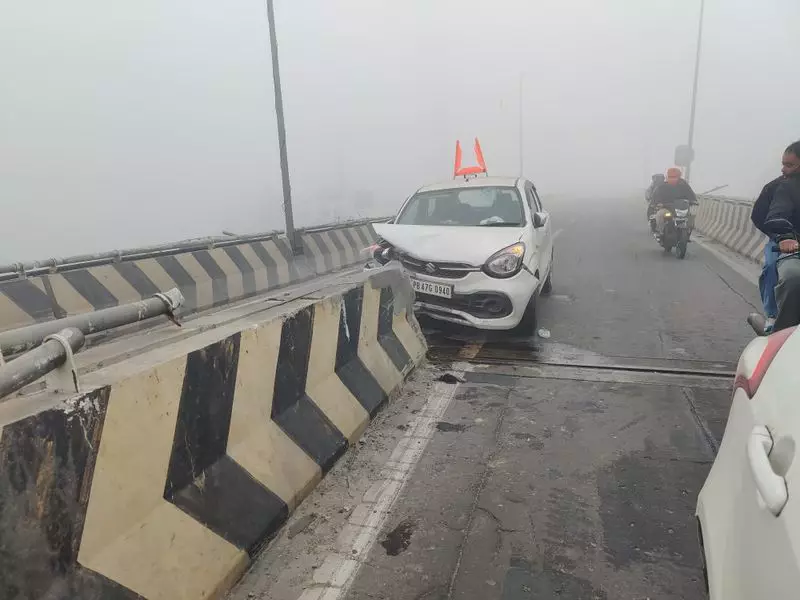
A young man's life was tragically cut short in Amritsar on Wednesday morning, highlighting the deadly combination of dense fog and persistent safety failures on the city's Bus Rapid Transit System (BRTS) corridor. The incident has reignited public anger and serious questions about civic responsibility.
Fatal Collision Amidst Zero Visibility
The victim, identified as 22-year-old Lovepreet Singh, a resident of Gurdaspur, was on his way to work. Traveling on his scooter along the heavily fog-shrouded BRTS corridor near the Verka milk plant, his vehicle collided head-on with a concrete pillar of the elevated track. The impact of the crash was severe, and despite being rushed to a nearby hospital, Lovepreet succumbed to his injuries.
Local police officials confirmed that the accident occurred around 8:30 am on January 29. The prevailing weather condition was a major contributing factor, with visibility reduced to almost zero in many parts of the city. However, residents and eyewitnesses were quick to point out that the dangerous design of the corridor turns it into a death trap under such circumstances.
A Corridor of Perennial Neglect and Danger
This is not an isolated incident. The Amritsar BRTS corridor has a grim history of fatal accidents, often attributed to a combination of factors that authorities have failed to address adequately. The primary complaints from citizens and traffic experts include:
- Inadequate Lighting: Large stretches of the BRTS route remain poorly lit, exacerbating dangers during night-time and low-visibility conditions like fog.
- Hazardous Design: The placement of pillars and support structures in the middle of the road is considered a flawed design, leaving little margin for error for two-wheeler riders and car drivers.
- Lack of Warning Signage: Absence of sufficient reflective signboards, blinkers, or barricades to alert drivers of the upcoming pillars, especially in fog.
- Unauthorized Entry: Despite being designated for buses, two-wheelers and other vehicles frequently use the corridor, often due to a lack of clear alternatives or enforcement.
Following the accident, a palpable sense of anger was evident among the public gathered at the site. Many accused the municipal corporation and the administration of turning a blind eye to repeated warnings and previous tragedies. "This is a murder by negligence," one protester stated, summarizing the community's sentiment.
Official Response and the Road Ahead
In the immediate aftermath, police registered a case and initiated an investigation. However, the long-term solution requires more than just a procedural response. Traffic safety advocates have long demanded a comprehensive safety audit of the entire BRTS corridor.
The recommended measures are clear and urgent:
- Immediate installation of high-intensity, fog-penetrating lights along the entire stretch.
- Fixing reflective tapes, glow signs, and rubber padding on all pillars and hazardous structures.
- Strict enforcement to prevent unauthorized vehicles from entering the bus-only corridor.
- Creating public awareness campaigns about the dangers of using the corridor, especially during adverse weather.
The death of Lovepreet Singh is a stark reminder that infrastructure, without consistent maintenance and safety oversight, can become a public hazard. As Amritsar grapples with another preventable loss, the onus is now on the authorities to implement concrete changes before another life is lost to the same known dangers. The city's fog will return next winter; the question is whether the deadly lapses on the BRTS corridor will still be there to greet it.