Goa Budget Session 2026-27 Commences with Financial Statement Presentation
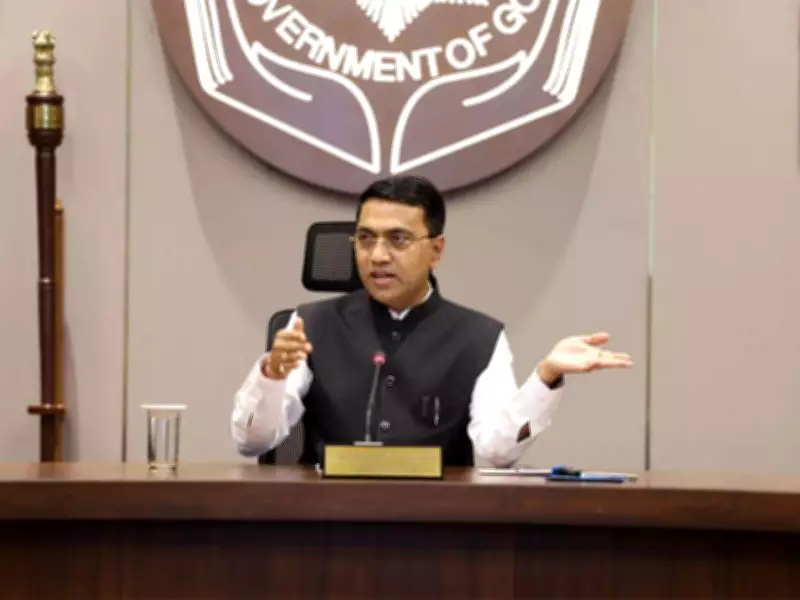
Panaji witnessed the commencement of the budget session for the fiscal year 2026-2027 on Friday, with Chief Minister Pramod Sawant presenting the financial statement on the inaugural day of the Goa legislative assembly proceedings. This session marks a significant political event as it represents the last comprehensive budget to be tabled by Sawant prior to the general assembly elections scheduled for 2027.
Opposition Mounts Pressure on Land Conversion Laws
The state government is poised to confront substantial opposition pressure demanding the repeal of Sections 39(A) and 17(2) of the Town and Country Planning (TCP) Act. These provisions, which govern land conversion processes, have become a focal point of contention following widespread protests across Goa. In a coordinated move, the opposition has submitted a joint private member's bill specifically targeting the abolition of both sections.
Leader of the Opposition Yuri Alemao articulated the opposition's strategic approach, stating they have prepared joint questions designed to expose governmental shortcomings in areas of corruption and environmental degradation. "Casinos have been inflicting damage upon the Mandovi River, while hill cutting operations have severely compromised our ecological balance," Alemao emphasized during his address.
Comprehensive Legislative Agenda Unveiled
The 14-day budget session, spanning from March 6 to March 27 with scheduled breaks for Gudi Padwa on March 19 and Ram Navami on March 26, features an extensive legislative agenda. Government officials will respond to a total of 2,576 questions during the proceedings, comprising 538 starred questions requiring oral answers and 2,038 unstarred questions to be addressed in writing.
Beyond question hour, the assembly will deliberate on approximately 12 government bills, including the crucial appropriation bill, alongside 21 private member bills. Chief Minister Sawant, who concurrently holds the finance portfolio, will be presenting his seventh consecutive budget since assuming office in 2020, establishing a notable precedent in Goa's fiscal governance.
Opposition Criticizes Government Spending and Time Allocation
Alemao launched a scathing critique of the government's fiscal management, highlighting concerns over unlimited borrowing and its impact on citizens. "The burden of government borrowing ultimately falls upon the common man, who is already grappling with inflationary pressures," he asserted. The opposition leader characterized the administration as an "event management government" that allocates crores of rupees toward promotional events and advertisements to enhance its public image.
A significant point of contention emerged regarding speaking time allocation within the assembly. Alemao noted that while the chief minister oversees 51 portfolios, the opposition has been allotted merely one hour of speaking time. "Even if we dedicate one minute to each portfolio, our allocated time proves insufficient. We have formally requested the Speaker to grant additional time for opposition members to articulate public concerns," he explained.
Additional Opposition Concerns and Government Accountability
The opposition has pledged to address several additional issues during the session, including what they describe as the "forceful implementation" of the National Education Policy (NEP) within the state. Alemao expressed concern that public agitation has escalated from previous assembly sessions, necessitating more robust parliamentary discussion of citizen grievances.
As part of the budgetary process, Chief Minister Sawant will table an "action taken" report detailing the implementation status of initiatives outlined in the previous budget. This accountability measure forms a crucial component of the legislative oversight function during the budget session.
The convergence of fiscal planning, environmental legislation, and political accountability sets the stage for a dynamic and consequential budget session in Goa's legislative calendar, with implications extending well beyond the immediate fiscal year.