

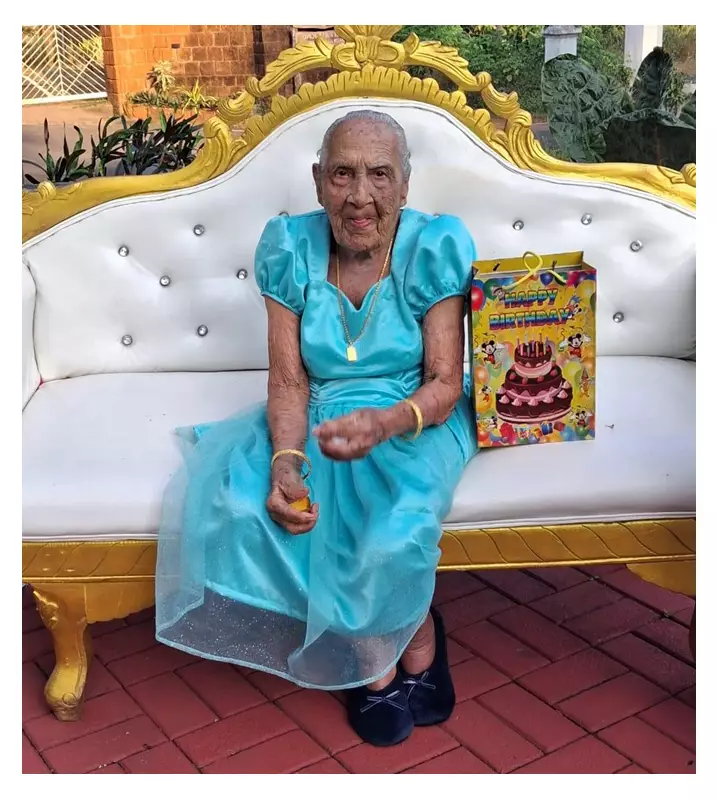
A joyous birthday celebration for a 102-year-old woman in a Goan village took an unexpected and disappointing turn when she discovered the state social welfare department had stopped her monthly pension, apparently under the assumption she had passed away.
Birthday Cheer Turns to Confusion
Parishioners in Azossim, a village in the Tiswadi region of Goa, recently gathered to honour Maria Felicidade Pires on her remarkable 102nd birthday. The festivities followed a mass at the local St Mathew’s Church. However, the happy mood was soon dampened by disturbing news that spread through social media.
It was revealed that the social welfare department had halted her monthly honorarium of Rs 2,000, operating on the presumption that the centenarian was no longer alive. A defiant Pires clarified her status to a media person visiting her home, stating, "I am not dead, I am very much alive."

Official Response and Social Media Uproar
Department sources stated they took immediate action to rectify the error. An official confirmed, "We took note of the matter and acted immediately to release the money. The formalities can wait." Despite this swift administrative response, the incident sparked significant outrage on social media platforms.
Aam Aadmi Party leader Ramrao Wagh, who was present at the church celebration, expressed his dismay to the media. "It is unfortunate that the aid to a centenarian like Pires has been stopped. Now, the span of life has become short," he remarked, highlighting the perceived insensitivity of the system.
Longevity Secrets and a Broader Challenge
Local residents believe Pires's long life is a result of her years of hard work in the fields, healthy living, and positive thinking. She is recognised as the oldest living person in an area once known for its rich agricultural traditions. This year, two other villagers also celebrated their 100th birthdays, though one, Clara Rodrigues, died just over a month after reaching the milestone.
The confusion regarding Pires's status may have arisen because she was absent from home while her daughter was out of state for several months. This incident underscores a larger challenge faced by the social welfare department.
Officials are engaged in the difficult task of identifying and removing ineligible beneficiaries from the Dayanand Social Security (DSS) scheme. Earlier this year, the department stopped aid to 14,000 undeserving persons and recovered a substantial Rs 39 crore. Among those removed, about 2,000 were found to be running full-fledged businesses, disqualifying them from the welfare support intended for the needy elderly and others.
While the drive to clean up beneficiary lists is crucial for the scheme's integrity, the case of Maria Felicidade Pires serves as a stark reminder of the human cost of administrative errors and the need for more compassionate verification processes.






