

Goa Tourism Minister Launches Investigation Into Hotel Category Misclassification
Recent devastating fires that destroyed beach shacks at Arambol and Ashwem in Goa have exposed a troubling pattern of hotels deliberately understating their operational categories when registering with the state tourism department. This deceptive practice allows establishments to evade substantial government taxes and fees, creating significant revenue losses for the state.
Minister Khaunte Directs Immediate Action
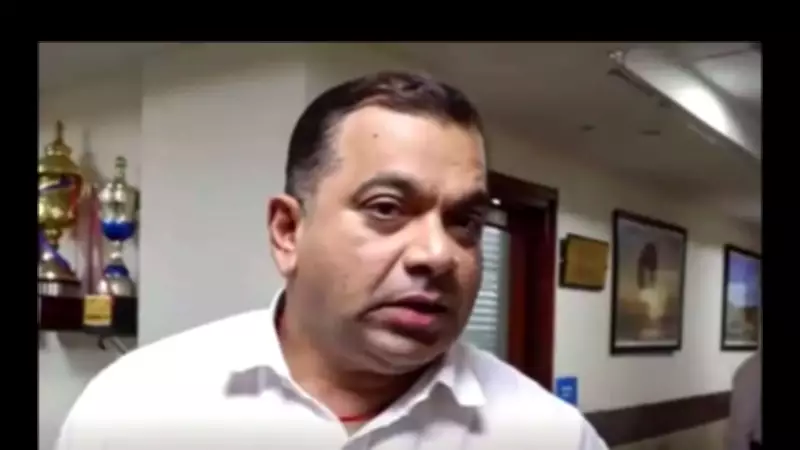
Tourism Minister Rohan Khaunte has responded decisively by instructing the tourism department to assemble a specialized team of officers. This team will conduct thorough reviews of registration records and perform comprehensive site inspections to identify "anomalies" in the documentation submitted by hotels and private beach shacks across Goa's coastal areas.
The recent fires have brought these irregularities into sharp focus. The hotel that caught fire on Thursday night at Ashwem was officially registered as a private beach shack, while the seven air-conditioned cottages destroyed in an April 4 blaze at Arambol were operating as private beach huts without any formal registration with the tourism department whatsoever.

Systematic Category Manipulation Uncovered
Minister Khaunte expressed serious concern about the scale of this deception. "Such issues happen when someone wants to run a business irresponsibly," he stated. "The hotel that caught fire on Thursday, according to the report I received, is registered under Category C, which is specifically for private beach huts. I have demanded a detailed report and want to identify whoever is responsible for granting such permissions."
The minister revealed that the problem extends beyond small establishments. "We have discovered that five-star and four-star hotels that should properly be registered under Category A and Category B are actually registered under Category C," Khaunte explained. "There is a serious question mark on how this happened, and decisive action needs to be taken against those responsible."
Potential Departmental Complicity Investigated
While Khaunte emphasized that the investigation remains in its preliminary stages, he did not dismiss the possibility that tourism department officials might be involved in facilitating these fraudulent registrations. "These powers were previously delegated to the deputy director level, but we recently elevated them to the director level because such episodes were occurring with disturbing frequency," the minister disclosed.
He further noted procedural failures: "Sometimes proper inspections are not conducted at all, or if they are conducted, the inspection reports cannot be located in department files. This creates an environment where violations can flourish undetected."
Comprehensive Review of All Coastal Establishments
The tourism department's newly formed team will examine every hotel, private beach shack, and guest house that has recently applied for permissions or had their existing permissions renewed. This sweeping review aims to identify all instances of category misclassification and ensure proper compliance moving forward.
"I have instructed the department not to grant permissions for private shacks unless complete due diligence is performed," Khaunte emphasized. "If establishments are engaging in these deceptive practices or changing their operational categories after receiving permissions, it constitutes a serious issue that requires immediate government intervention."
Revenue Implications and Regulatory Distinctions
The minister clarified the fundamental distinction between different types of establishments: "A private shack is precisely that—a private shack—and it cannot legally operate as a hotel. Conversely, if an establishment functions as a hotel, it must comply with the specific conditions attached to that category. When we grant permissions for five-year periods and operators subsequently change their operational categories without authorization, it represents a direct loss of revenue to the state government."

This investigation represents a significant crackdown on regulatory non-compliance within Goa's vital tourism sector, which contributes substantially to the state's economy. The findings could lead to substantial penalties for violators and systemic reforms to prevent similar abuses in the future.





